
Hi, I’m Lena — a salon stylist with 10+ years behind the chair. I created this collection of 24 easy braided hairstyles for women to give you reliable, wearable looks you can recreate at home or ask for at the salon. These styles suit busy professionals, moms, bridesmaids, and anyone wanting low-fuss texture — from fine to thick hair and from short bobs to long layers. Each braid is photographed step-by-step so you can see finishing details and placement. My pro tips (use lightweight hold, prep with a texture spray, and protect your ends) help these braids last longer and look more polished. I’ll also show quick variations to add volume, soften the hairline, or adapt a look for curly textures. Whether you want a daily quick style, something for an event, or a protective look for sleep, these 24 braided options deliver versatility and salon-quality results at home.
Textured Dutch Side Braid (Pancaked) for Long, Thick Hair
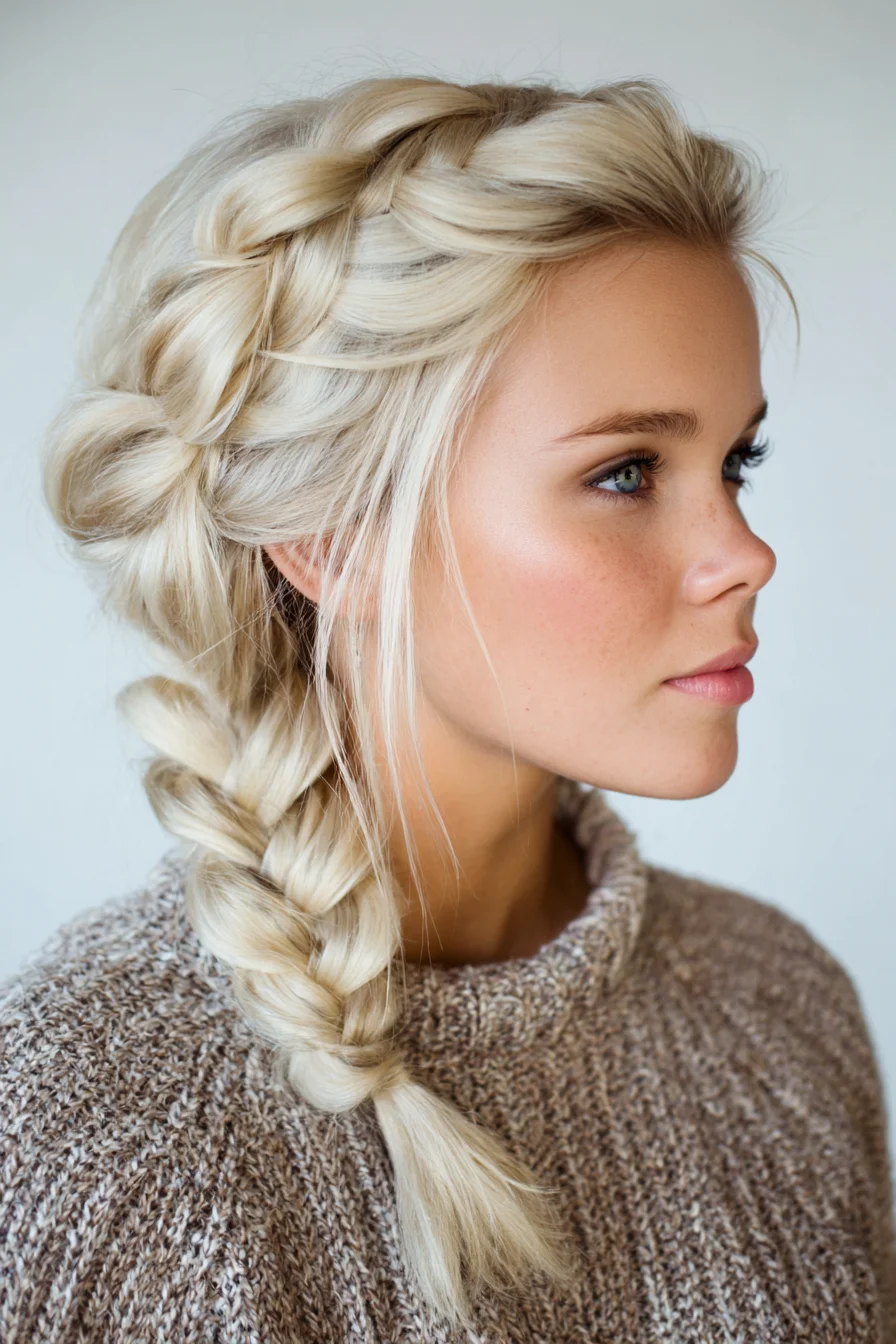
This loose, pancaked Dutch side braid is ideal for long medium-to-thick hair and straight to slightly wavy textures — it also works on fine hair if you add extensions or extra texturizing. Start on dry hair with light texture: apply a salt spray or dry shampoo at the roots and mid-lengths, then gently detangle. Create a deep side part and begin a Dutch braid along the hairline, adding sections from the top and underside as you move toward the opposite shoulder. Secure the braid low with a small elastic, then pancake each outer loop to broaden the braid for that soft, voluminous finish; pull a few face-framing strands for a relaxed look. Tools: paddle brush, fine-tooth/tail comb, small clear elastic, bobby pins, and optional curling wand. Products: texturizing spray or dry shampoo, light-hold hairspray, smoothing serum, and heat protectant if using heat. Difficulty: intermediate — allow 15–25 minutes once comfortable. Maintenance tips: refresh texture with dry shampoo, retighten pins as needed, sleep on a silk pillowcase or loosely wrap to preserve shape, and avoid over-brushing to keep the braid defined.
Textured Pancake French Braid into Low Ponytail

A salon-friendly, loose pancaked French braid finished into a low ponytail — ideal for medium to long hair. Best on medium to thick textures for instant volume; fine hair will benefit from a texturizing spray or clip-in extension for fullness. Start on clean, towel-dried hair: apply a lightweight volumizing mousse or sea-salt spray, blow-dry for body, then smooth with a paddle brush. Begin a French braid at the crown, working in large sections and adding hair as you go. After each stitch, gently pancake (pull the outer edges) to widen the braid and create that soft, airy look. Secure with a small elastic at the nape and conceal with a wrapped strand or bobby pins. Tools: rat-tail comb, paddle brush, sectioning clips, small elastics, bobby pins. Products: volumizing mousse or texturizing spray, dry shampoo for grip, light-hold hairspray, and a smoothing serum for flyaways. Difficulty: moderate — 10–20 minutes with practice. Maintenance tips: refresh with dry shampoo, re-pancake to revive shape, retighten elastic if needed, and sleep with a silk scarf to preserve texture.
Messy Double Dutch Braids with Face‑Framing Tendrils

This relaxed double Dutch-braid look suits fine to medium hair and works well on straight, wavy, or slightly textured hair — add light curls first if hair is very silky. Start with a clean, detangled mane and a precise center part. Take a top section on one side and begin a Dutch braid (weave sections under) along the scalp, incorporating hair to just above the ear, then continue a three-strand braid to the ends; repeat on the other side. Loosen the braid panels by gently tugging (pancaking) to create fullness and pull a few face-framing tendrils loose for softness. Tools: rat-tail comb, sectioning clips, small clear elastics, paddle or soft-bristle brush, and optional 1
Dutch Crown Braid into Textured Low Braided Bun — Romantic Braided Updo
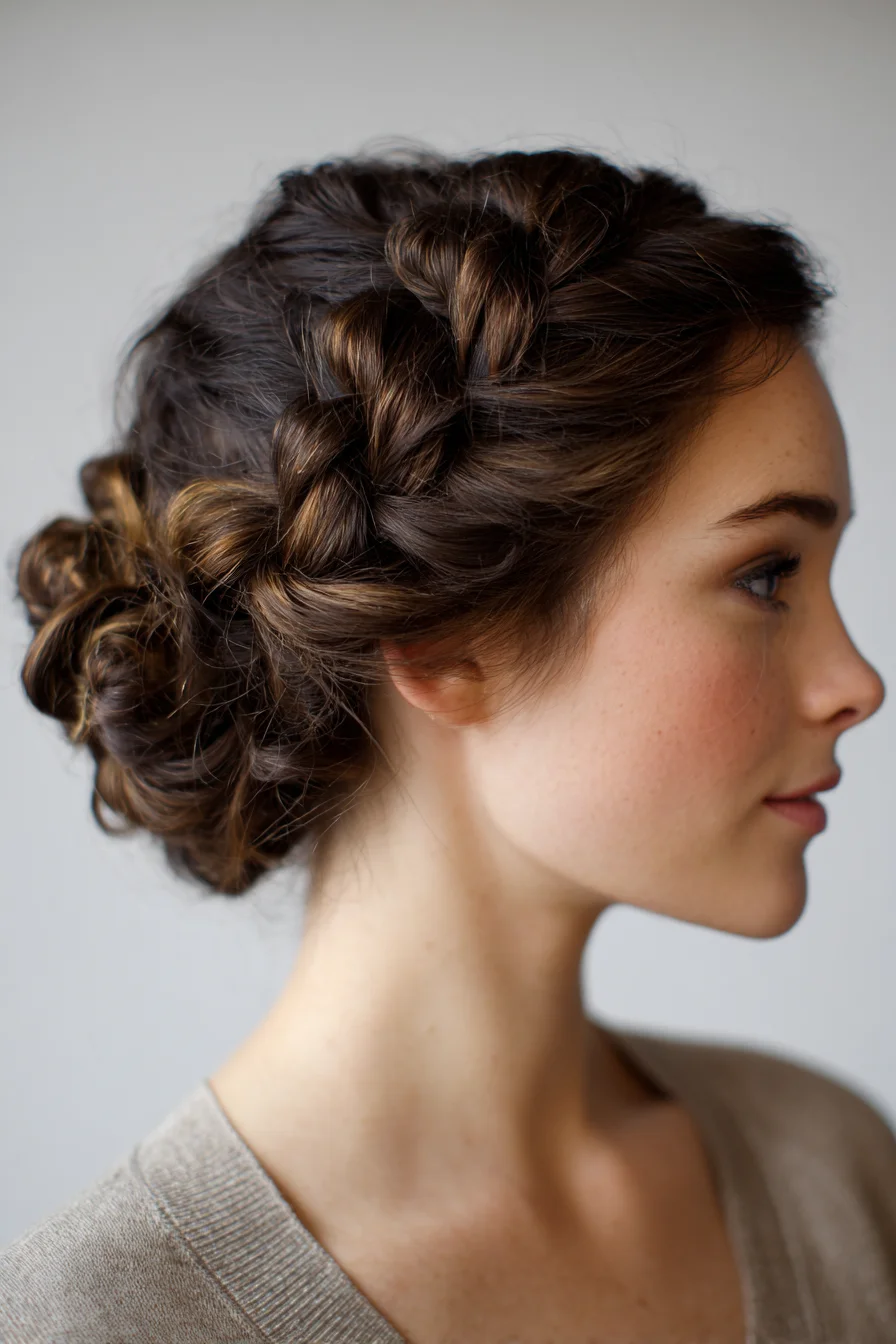
This romantic braided updo suits medium to long hair and works best on medium to thick textures; wavy and slightly curly hair hold the shape beautifully, while fine hair benefits from added texture. Start by creating a Dutch (inside-out) braid along the hairline or crown, feeding in sections toward the nape. Pancake (gently pull apart) the braid for width and softness. Gather the remaining lengths into a low, loosely twisted braided bun, secure with an elastic and plenty of bobby pins, and pinch out face-framing pieces for a lived-in finish. Tools: tail comb, sectioning clips, elastic bands, plenty of bobby pins, optional curling iron for prep. Products: heat protectant, texturizing spray or powder, lightweight mousse (for added grip), smoothing serum for ends, and a flexible-hold hairspray to set. Difficulty: moderate — allow 25–40 minutes depending on practice. Maintenance tips: refresh with dry shampoo and re-pin any loosened sections; sleep on a silk pillowcase or wrap with a silk scarf to preserve shape; use a light mist of hairspray and a drop of serum to tame flyaways before events. Regular trims keep ends neat for a polished bun.
Double Dutch Boxer Braids for Thick, Textured Hair
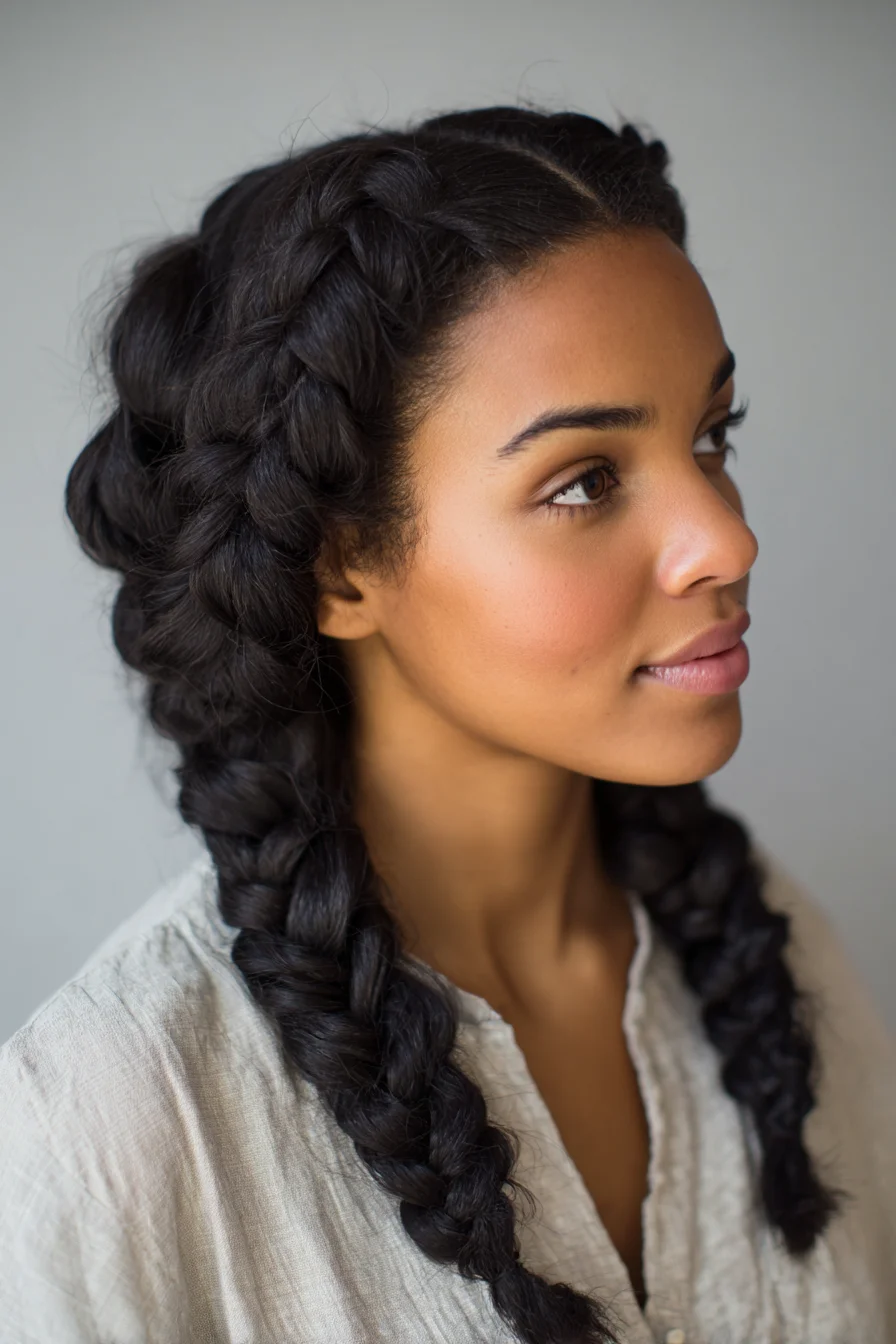
These double Dutch (boxer) braids are ideal for thick, textured, or curly hair and also work well on medium-to-long straight hair when extra grip is created with product. Begin on damp, detangled hair with a clean center part. Section into two panels, apply leave-in conditioner and a medium-hold styling cream, then use a tail comb to start a Dutch braid (cross strands under) at the hairline, adding hair with each pass and keeping tension even. Braid down to the nape and finish with a three-strand braid; pancake gently to widen the plait for that chunky look. Tools: fine tail comb, detangling brush, small elastics, duckbill clips, and a spray bottle. Products: leave-in conditioner, smoothing cream or edge control, lightweight oil for shine, and light-hold hairspray to tame flyaways. Difficulty: intermediate — requires braiding experience; allow 30–60 minutes in-salon depending on density. Maintenance: sleep on a silk/satin pillowcase or tie with a scarf, refresh edges with a water/conditioner mist and oil the scalp twice weekly. Avoid over-tightening to protect the hairline and remove braids after 2–3 weeks to prevent breakage.
Textured Double Dutch Braids with Pancaked Crown and Face‑Framing Pieces
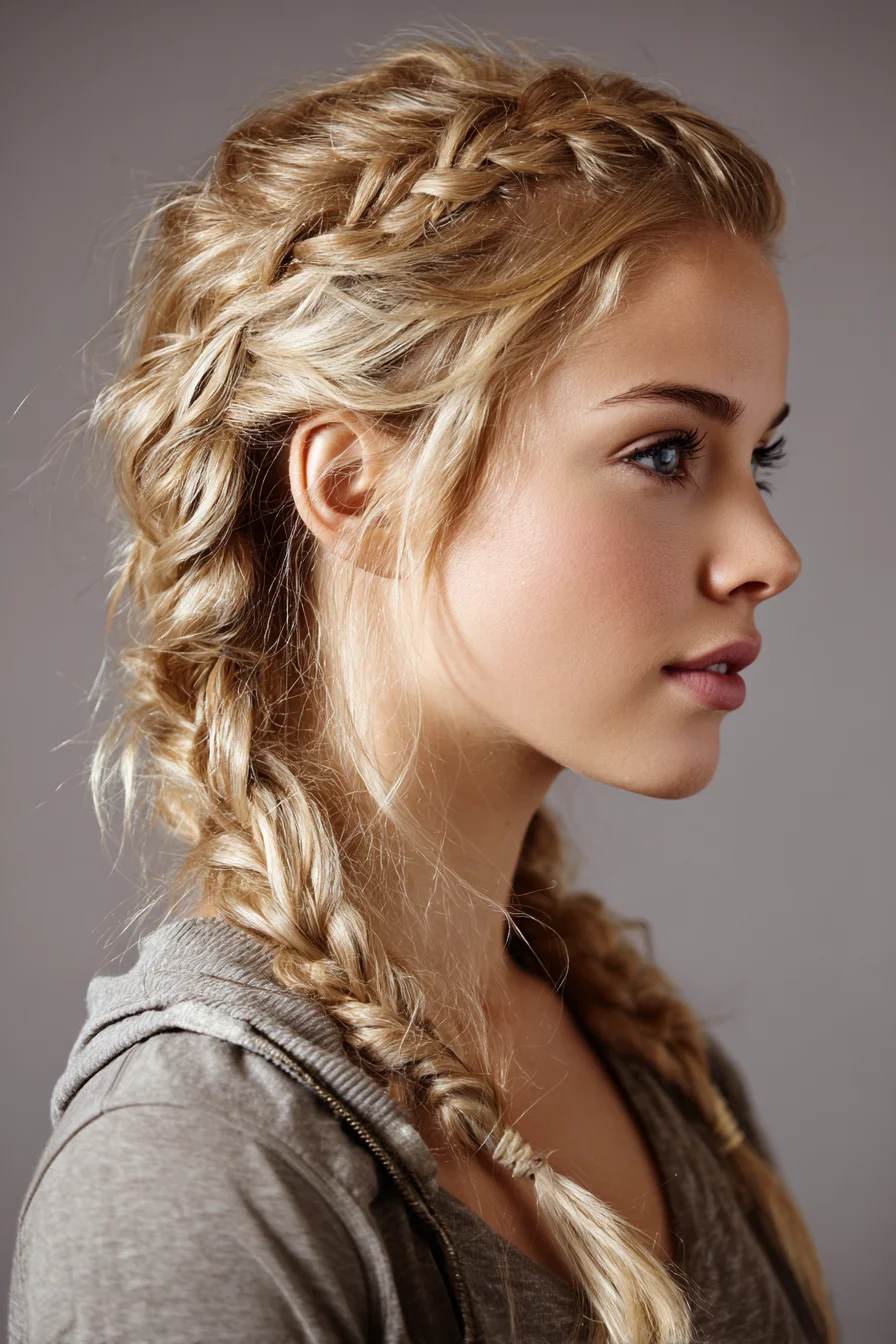
Suitable for medium to long hair with straight to wavy texture; medium-thick density works best, but fine hair benefits from texturizing and root-teasing, and very curly hair should be stretched or blown out first. Technique: part down the center and create two Dutch braids starting at the crown, taking small sections and crossing under to build volume; continue braiding to the nape and finish with three-strand braids to the ends. Pancake each braid by gently pulling outer loops to widen and loosen for a soft, lived-in look. Tools needed: tail comb, small clear elastics, sectioning clips, 1 curling wand (optional), and bobby pins. Products required: texturizing or sea-salt spray, dry shampoo for grip, lightweight hairspray, heat protectant for any pre-styling, and a dab of smoothing serum for flyaways. Difficulty: intermediate — best for stylists or those comfortable with Dutch braiding and pancaking. Maintenance tips: style on second-day hair for better hold, sleep on a silk pillowcase or loosely wrap braids, refresh with dry shampoo and re-pancake loops daily, re-secure loose pieces with pins, and avoid heavy oils that will weigh the texture down.
Double Dutch Braids with Soft Fishtail Finish — Textured Braided Look
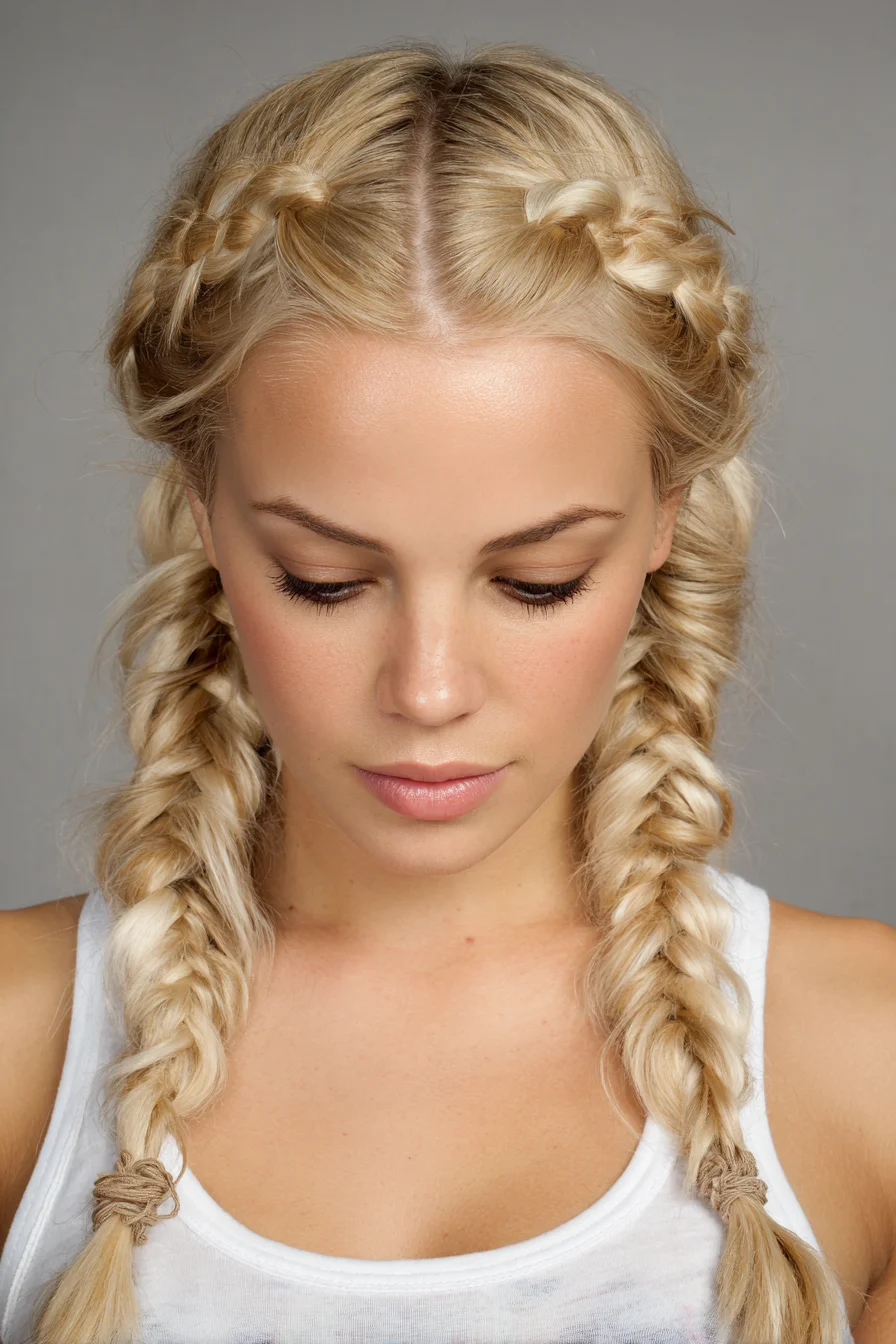
This twin Dutch-to-fishtail braided style suits medium to long hair and works especially well on hair with natural texture or added waves — the texture helps the braids look full and lived-in. Start on a clean, detangled base with a defined center part. Create two Dutch braids by crossing sections under (not over) from the hairline down to the nape, then transition each braid into a loose fishtail or three-strand pancake for width. Tools: tail comb, sectioning clips, small elastics, soft bristle brush. Products: light texturizing or sea-salt spray for grip, smoothing cream or oil for flyaways, and a light-hold hairspray to set. Technique tips from the salon: keep tension even at the crown, pull small sections when switching to fishtail braiding, and gently pancake the finished plaits to add volume. Difficulty: moderate — requires basic braiding competence and coordination. Maintenance: sleep on a silk pillowcase or wrap with a silk scarf, refresh with dry shampoo and a spritz of texturizer, and retighten elastics or loose edges as needed. Refresh by lightly misting and re-pancaking rather than re-braiding daily.
Textured Double Dutch Braids with Pancaked Face‑Framing Pieces
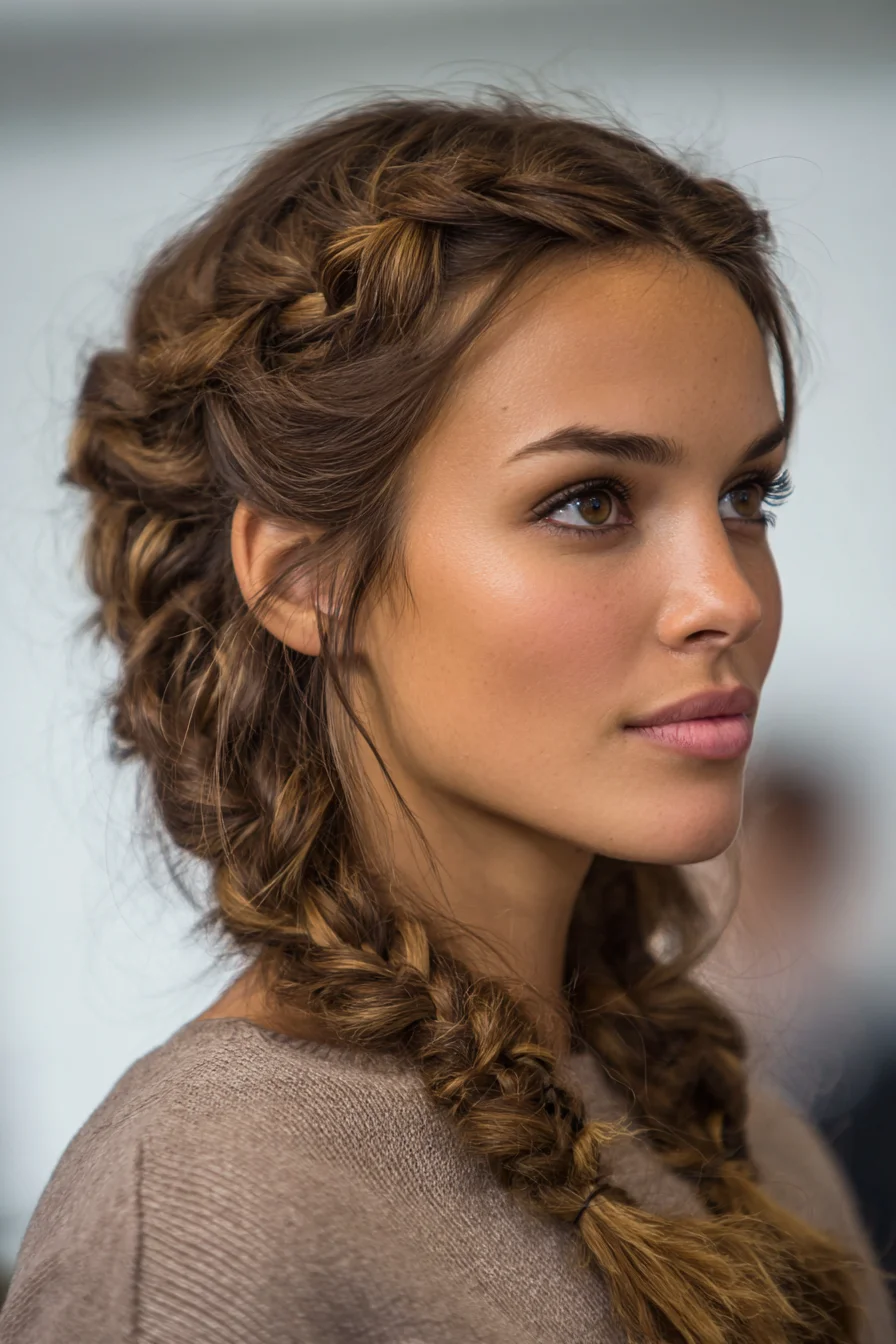
Suitable for medium to thick, wavy or naturally textured hair and for long lengths; can be adapted for fine hair with added texture or extensions. Technique: start on towel‑dried or dry day‑old hair; apply a volumizing mousse at the roots and a sea‑salt or texturizing spray through the lengths for grip. Create a deep side part and begin two Dutch (reverse) braids from the hairline, feeding in sections toward the nape. Secure each braid with a small elastic, then gently pancake (pull apart) the braid loops to widen and soften the shape, leaving a few face‑framing strands loose. Wrap ends under and pin if you prefer more of an updo. Tools: tail comb, sectioning clips, small clear elastics, bobby pins and a wide‑tooth brush. Products: texturizing spray, light mousse, smoothing serum for flyaways and a flexible‑hold finishing spray. Difficulty: moderate — requires comfortable braiding skills and about 20–40 minutes. Maintenance tips: sleep on a silk pillowcase and resecure elastics or pins at night; refresh volume with dry shampoo or a little water and re‑pancake sections; avoid heavy conditioners at the roots to keep grip.
Romantic Half‑Up Crown with Rope Twist and Loose Side Braid
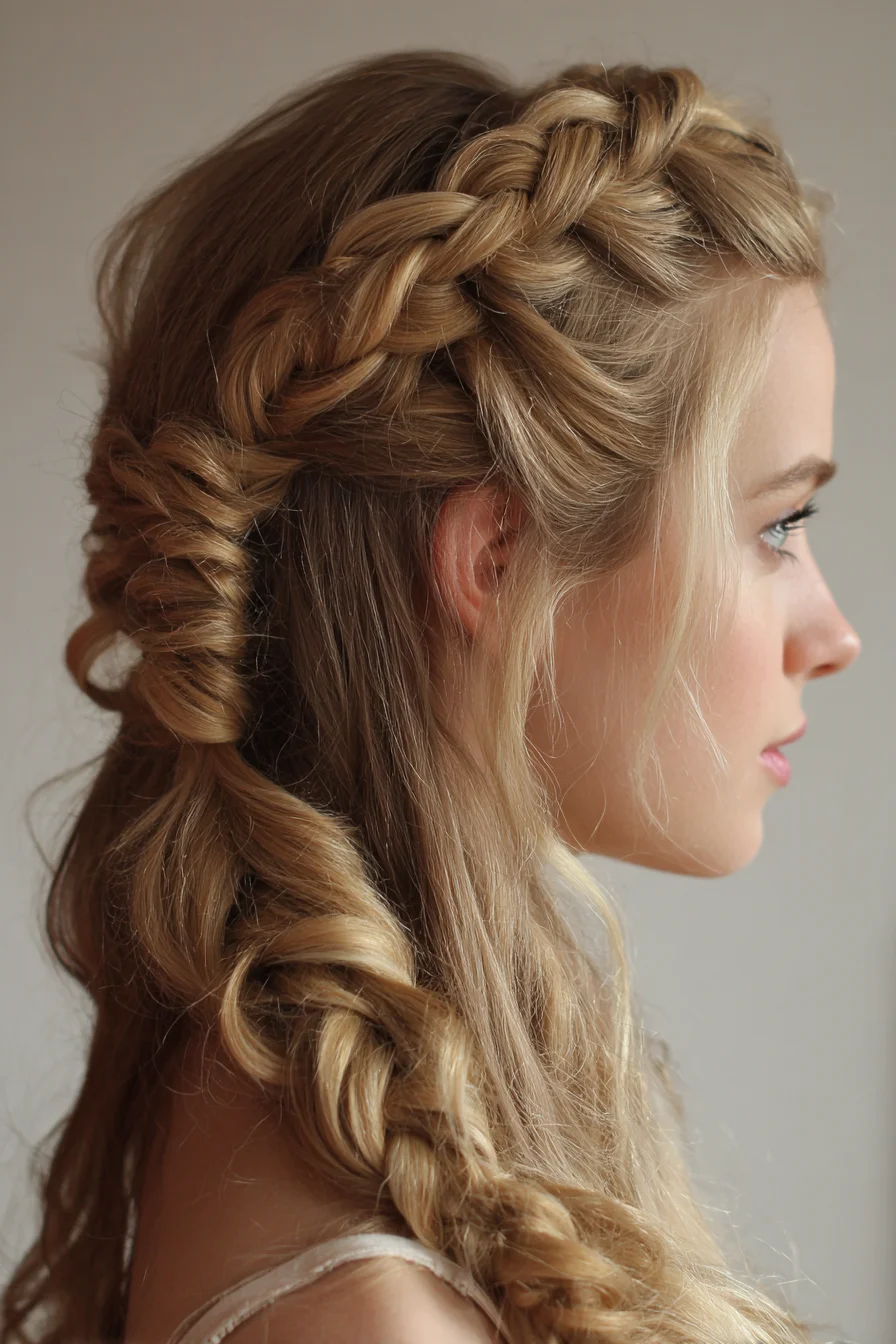
This style pairs a front Dutch/French crown with a loosened rope-style side braid for a soft, romantic finish. Best for medium to long hair; works well on straight, wavy, and loose-curly textures. Fine hair benefits from a volumizing mousse or light backcombing at the crown and/or clip-in extensions for added fullness. Thick hair will carry the chunky braid naturally—thin or very silky hair may need extra texture. Technique: section and secure the crown; create a Dutch/French braid along the hairline, adding hair as you go, then transition into a two-strand rope twist for the length. Pancake the braid (gently pulling strands) to widen and soften the look, and blend the remaining lengths into loose curls or waves. Tools: tail comb, sectioning clips, small clear elastics, bobby pins, 1 curling iron or wand, and a brush. Products: heat protectant, texturizing spray or sea-salt mist, light styling mousse (optional), smoothing serum for flyaways, flexible-hold hairspray. Difficulty: intermediate, 30–45 minutes in salon conditions. Maintenance: sleep on a silk pillow, refresh with dry shampoo and a light mist of sea-salt spray, re-pin any loosened pieces, and re-curl ends if needed.
Textured Double Dutch Braids — Crown-to-Pigtail Style for Medium‑Long Hair
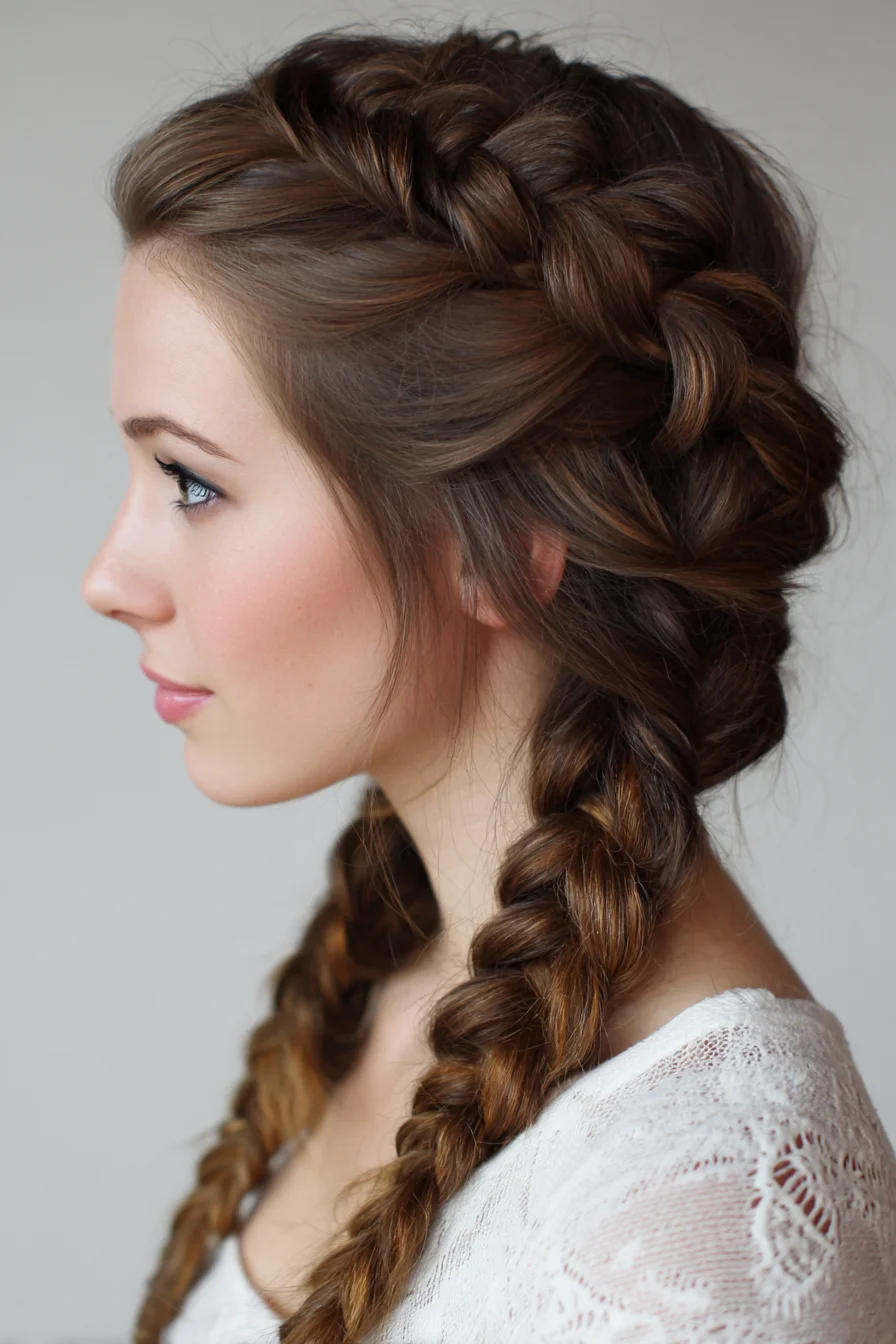
This polished, textured double Dutch braid starts at the crown and travels into two voluminous braids — ideal for medium to long lengths and medium to thick hair. Straight, wavy, or loosely curly textures work best; fine hair can achieve the look with a texturizing spray or lightweight extensions for bulk. Section a deep center or side part, backcomb lightly at the crown for lift, then Dutch-braid (underhand) along each side, adding hair as you go. Finish with oversized pancaking of the braid for softness and secure with clear elastics and a few hidden bobby pins to anchor the crown. Tools: tail comb, sectioning clips, elastic bands, bobby pins, and a soft-bristle brush. Products: sea-salt or texturizing spray for grip, light mousse (optional) for hold, smoothing serum on ends, and a flexible-hold hairspray. Difficulty: intermediate — requires consistent tension and basic braiding skill; allow 20–40 minutes. Maintenance: sleep on a silk pillowcase or wrap with a silk scarf, refresh with dry shampoo and re-pancake or re-tighten sections as needed, and keep ends conditioned to prevent breakage.
Pancaked Side Dutch Braid with Textured, Loose Finish
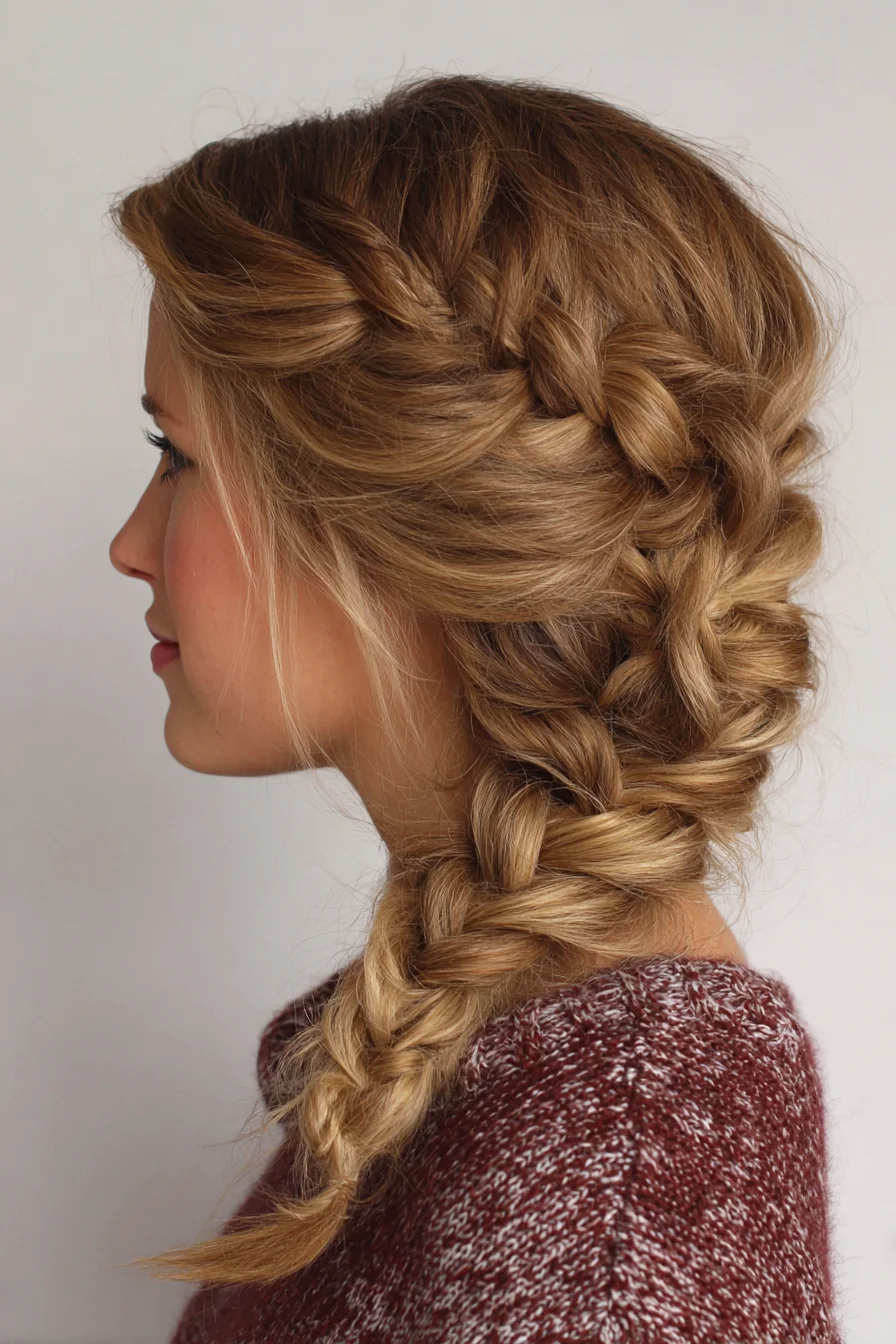
This relaxed side Dutch braid suits medium-to-long hair and works best on fine-to-thick straight or gently wavy textures; very curly hair can be smoothed first and extra-thick hair should be detangled and sectioned. Start on dry hair with texture (dry shampoo or sea-salt spray) for grip. Create a deep side part, begin a Dutch (underhand) braid at the crown, adding hair into each section as you move down the side. Once past the nape, finish with a loose three-strand or fishtail and secure with an elastic. Pancake (gently pull) the braid’s outer loops to widen and add softness; pull a few face-framing pieces free for a lived-in look. Tools: paddle brush, tail comb, sectioning clips, small elastic, bobby pins, optional curling iron to smooth ends. Products: texturizing or sea-salt spray, dry shampoo, light smoothing serum, and flexible-hold hairspray. Difficulty: moderate — requires basic braiding skill and pancaking technique. Maintenance: refresh with dry shampoo, retighten or re-pancake in the morning, sleep on a silk pillowcase or loosely wrap to preserve shape, and avoid heavy oils that weigh the texture down.
Textured Double Dutch Crown Braids with Loose Face‑Framing Strands
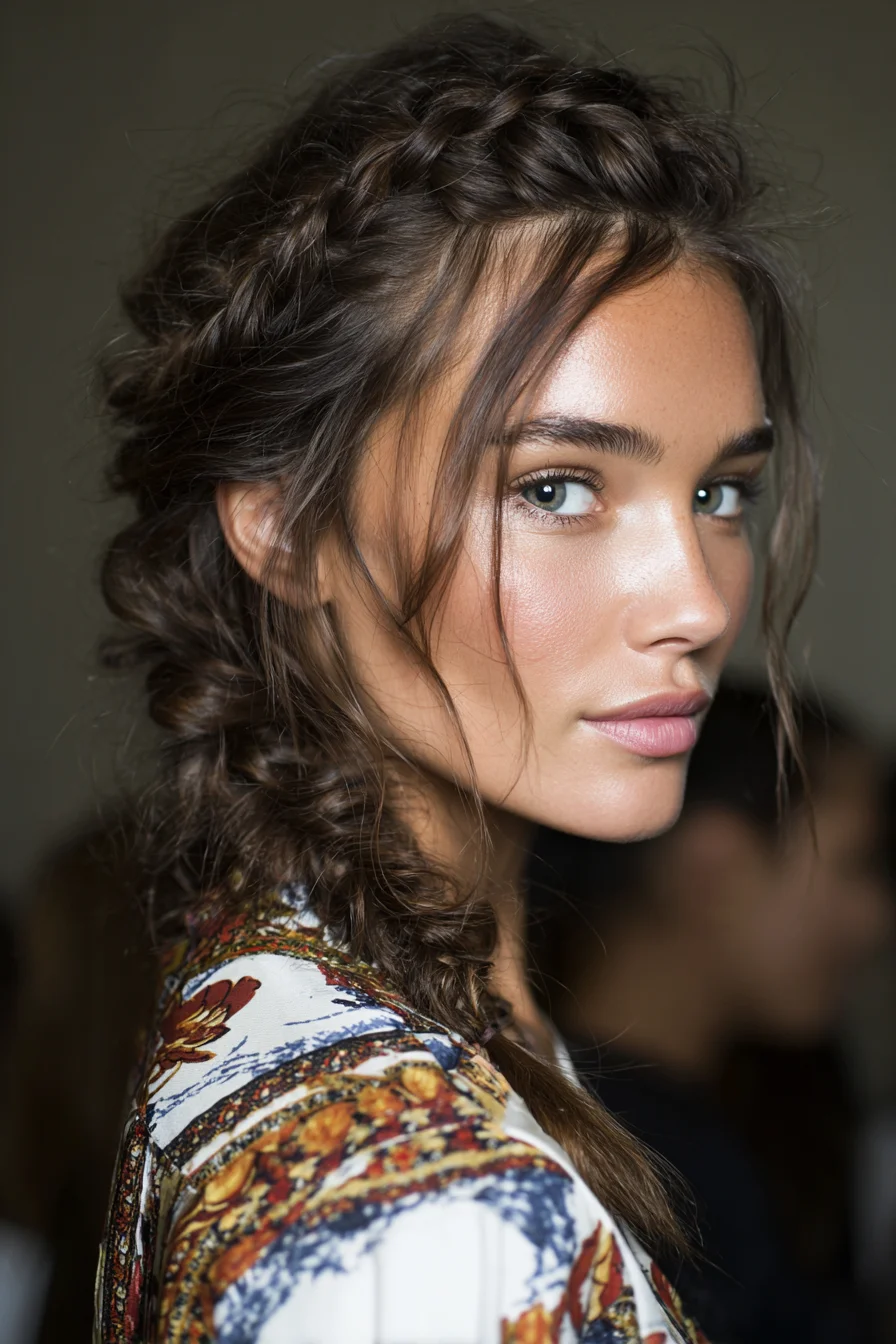
Suitability: Ideal for medium to thick hair and for natural waves or straight hair that can hold texture; fine hair will benefit from texturizing products or clip‑in extensions; very curly hair can be smoothed slightly or embraced for a more bohemian finish. Styling technique: Work on towel‑dried hair prepped with product. Create two Dutch/French braids from the hairline toward the back, pancake each braid slightly for width, then join or continue into a loose side plait. Pull out soft face‑framing tendrils and gently tug the braid sides for lived‑in volume. Tools needed: tail comb for neat sections, sectioning clips, small clear elastics, bobby pins, and optional curling iron to soften pieces. Products required: volumizing mousse or sea‑salt spray on damp hair, texturizing spray for grip, heat protectant (if using hot tools), light anti‑frizz serum for ends, and a flexible hold hairspray. Difficulty level: Intermediate — requires comfort with Dutch/French braiding and pancaking. Maintenance tips: Sleep on a silk pillow or wrap to preserve shape, refresh with dry shampoo and a quick mist of texturizer on day 2, and re‑pin any loosened sections rather than rebraiding completely.
Boho Double Fishtail Braids with Loose Face‑Framing Tendrils
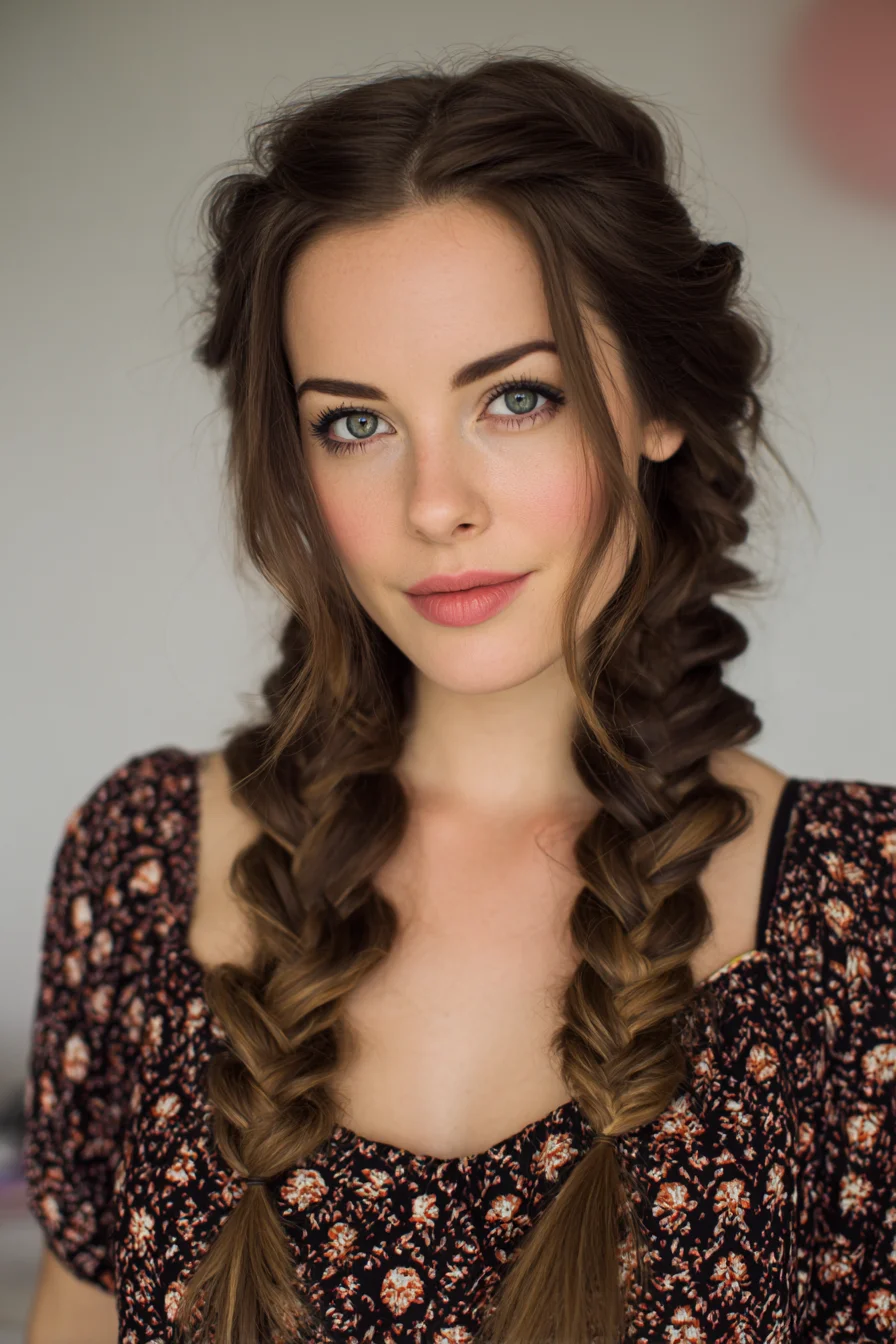
This soft, boho double fishtail braid with face‑framing tendrils suits long to mid‑back lengths and adapts well to straight, wavy, or relaxed curly textures. Medium to thick hair holds the fullness naturally; fine hair benefits from texturizing spray or light extensions for added body. Styling technique: start on towel‑dried or second‑day hair and apply heat protectant if you plan to add waves. Create a clean center part, section into two sides, and fishtail braid each side from the nape down. Secure with small elastics, then gently pancake the braids—pulling outer edges—to widen and soften them. Leave two or three face‑framing strands and lightly curl them for a finished, effortless look. Tools needed: tail comb, sectioning clips, small clear elastics, 1 curling iron (optional), and bobby pins. Products required: dry shampoo or texturizing spray, lightweight smoothing serum for ends, heat protectant, and a flexible‑hold hairspray. Difficulty: moderate (about 20–30 minutes for someone comfortable with fishtails). Maintenance tips: sleep on silk, refresh texture with dry shampoo or powder, re‑pancake braids each morning, and avoid heavy oils at the roots to keep grip.
Textured Double Dutch Braids with Face‑Framing Tendrils

This look suits medium to long hair with natural texture — straight, wavy, or slightly curly hair will hold the braids best. Start on freshly washed or second‑day hair with light grip (dry shampoo works well). Create a clean center part, then Dutch‑braid each side from the hairline toward the nape, adding sections as you go. Keep the braids slightly loose and pancake (gently pull apart) each braid to build volume and a lived‑in texture. Tools: fine tail comb, sectioning clips, small clear elastics, paddle brush, and optional curling iron to soften face‑framing strands. Products: texturizing spray or sea‑salt spray for grip, light hair oil or serum for shine, and a flexible hold hairspray to set. Difficulty: moderate — requires comfortable two‑handed braiding and patience; expect 20–35 minutes in a salon or at home. Maintenance: sleep with a silk scarf or loose braid cap, refresh roots with dry shampoo, and re‑pancake or retighten only where needed to preserve the messy, boho finish. Use a drop of serum on ends to tame frizz between washes.
Loose Dutch Crown into Twisted Side Braid — Boho Half-Up Hairstyle

This boho half-up features a loose Dutch (under) crown braid that transitions into a soft twisted side braid with cascading waves. Best suited for medium to long hair and hair textures from straight to wavy; thicker hair holds the shape easiest, while fine hair benefits from light texturizing or clip-in extensions for more volume. Technique: start with a center or side part, section a crown panel and create a Dutch braid along the hairline, gently pancake the braid for width, then gather remaining hair to form a two-strand twist or loose braid down one side. Release and curl ends for soft waves. Tools needed: tail comb, sectioning clips, small clear elastics, bobby pins, 1–1.25” curling iron. Products required: heat protectant, sea-salt or texturizing spray, light-hold hairspray, smoothing serum for flyaways, and dry shampoo for grip if hair is freshly washed. Difficulty: intermediate (25–45 minutes). Maintenance tips: sleep on a silk pillowcase or loosely re-braid, refresh texture with dry shampoo or a spritz of sea-salt spray, re-pancake braid and pin any loosened sections, and avoid heavy oils at roots to maintain hold.
Loose Dutch Crown Braid with Textured Braided Ponytail

This relaxed Dutch crown flowing into a chunky textured braided ponytail works best on medium to long hair and suits fine, medium or thick textures — fine hair benefits from light texturizing or extensions, while very curly hair should be smoothed slightly before braiding. Start on dry hair: mist roots and lengths with a salt- or texturizing spray, create a deep side part, and begin a Dutch (reverse) braid along the hairline toward the crown, adding sections as you go. Pancake the braid (gently pull outer edges) for width and softness, then gather the remaining hair and continue into one or two loose three-strand braids, securing with elastics and wrapping a small section of hair to hide bands. Tools: tail comb, small clear elastics, bobby pins, sectioning clips, and a light curling iron for soft face-framing pieces. Products: dry shampoo/texturizer, smoothing serum, light-hold hairspray and heat protectant. Difficulty: intermediate — requires basic braiding skills and patience. Maintenance tips: refresh texture with dry shampoo, re-pancake braids as needed, sleep on a silk pillow or loosely wrap to preserve shape, and touch up loose tendrils with a curling iron.
Double Dutch Braids into Chunky Braided Ponytails
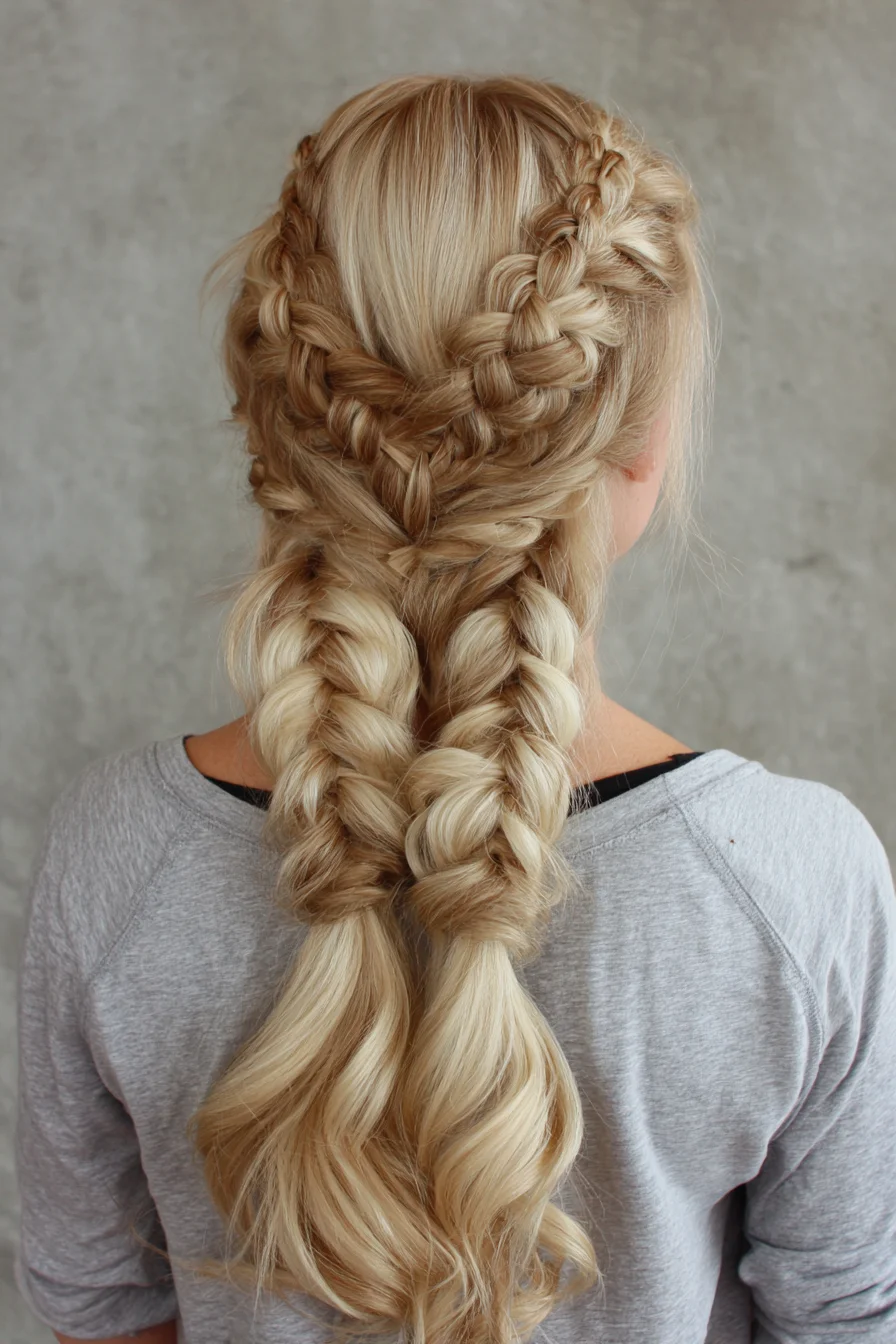
This romantic, textured style suits medium-to-long lengths and works best on medium to thick hair. Fine hair benefits from light extensions or volumizing powder to create the same chunky effect; naturally wavy hair will hold texture easiest. Technique: create a center part and Dutch-braid each side from the hairline down to the nape, incorporating hair as you go. Secure each braid with an elastic, then gently pancake the braid sections to broaden them. Combine each braid into a low chunky braided ponytail or twist and secure with another band; soften with fingers for a lived-in finish and curl the ends for movement. Tools needed: tail comb, sectioning clips, small clear elastics, bobby pins, a 1–1.25” curling wand (optional) and a paddle brush. Products required: texturizing or dry-shampoo spray for grip, heat protectant, smoothing serum or pomade for flyaways, and a light-hold hairspray. Difficulty: intermediate — expect 30–45 minutes. Maintenance: sleep on a silk pillowcase or loosely wrap with silk to reduce frizz, refresh texture with dry shampoo and a quick re-pancake or re-curl of the ends, and avoid heavy oils that will weigh the braids down.
Textured Dutch Braided Pigtails with Face-Framing Pieces
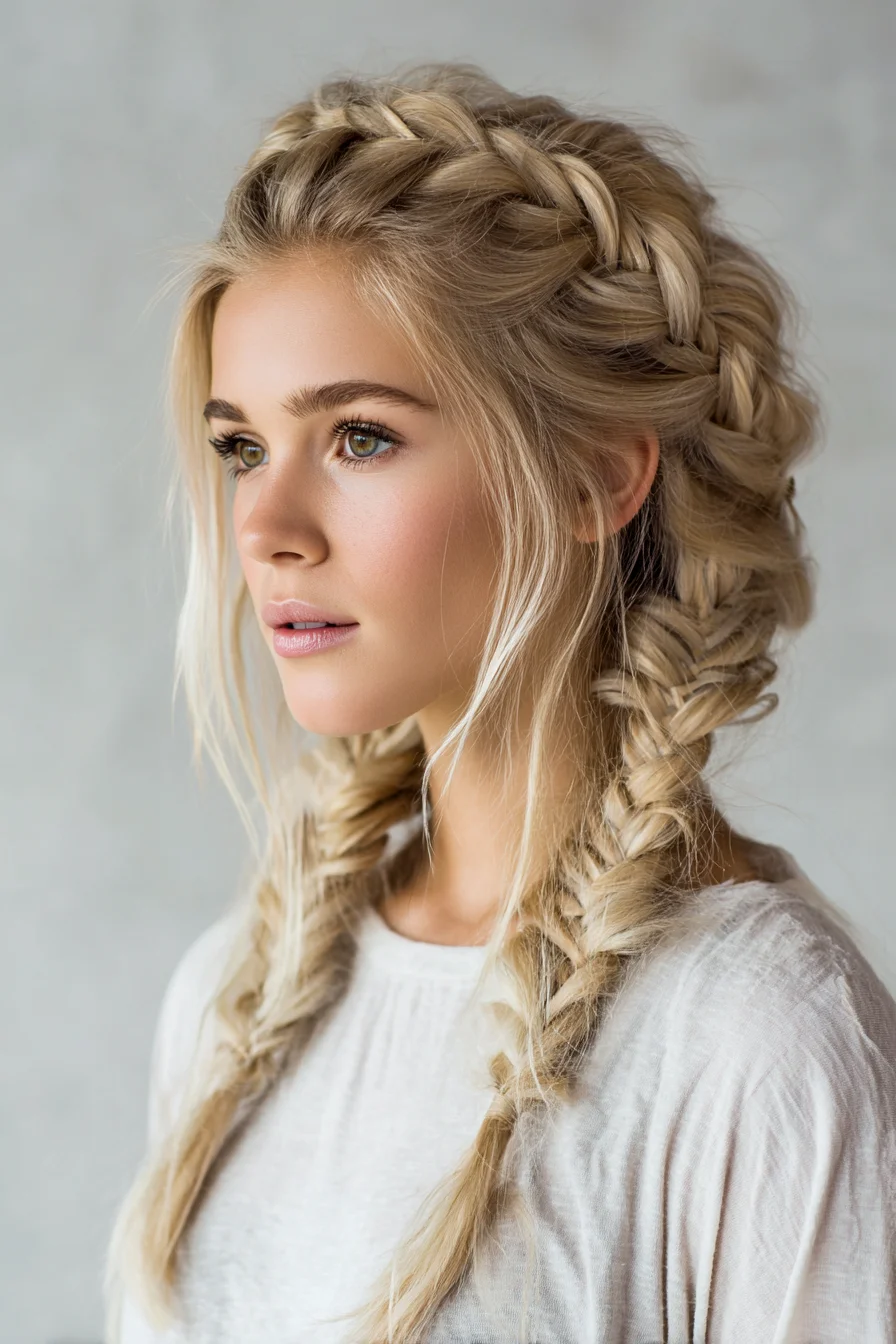
Suitable for medium to long hair, this textured Dutch-to-fishtail double braid works best on medium-to-thick and slightly wavy hair; fine hair benefits from light texturizer or clip-in extensions for hold and volume. Start with a center or soft side part and create a Dutch braid along the hairline on each side, adding hair as you move toward the nape. Transition into a three-strand or fishtail braid below the ear, secure with clear elastics, then gently pancake each braid by pulling outer loops to create width and softness. Tools: tail comb, sectioning clips, small clear elastics, boar-bristle brush and an optional 1 curling wand for adding loose texture. Products: lightweight mousse or root-lift spray applied to damp hair, texturizing or sea-salt spray for grip, dry shampoo for longevity, flexible-hold hairspray and a smoothing serum for flyaways. Difficulty: intermediate — requires confident braiding and even tension; allow 25–45 minutes. Maintenance tips: sleep on a silk pillowcase or wrap with a scarf, refresh with dry shampoo and a light re-pancake in the morning, and avoid heavy oils at the roots to keep texture and volume.
Textured Half‑Up Dutch Braids with Micro‑Braid Accents
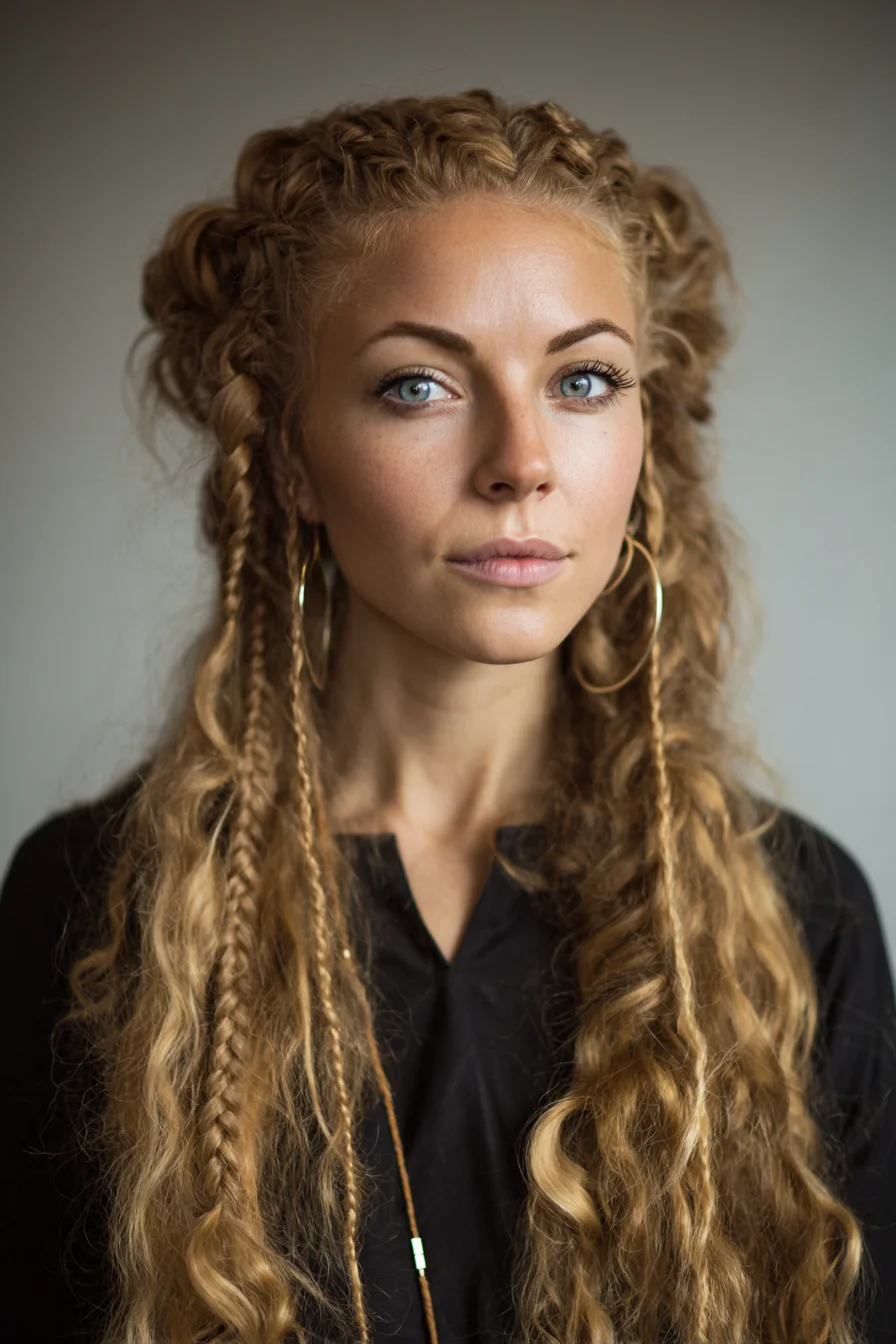
This half‑up style pairs tight Dutch (boxer) braids across the crown with long, loose textured waves and a few fine micro‑braid accents for contrast. Suitable for medium to thick long hair and naturally wavy or curly textures — straight hair will also work when pre‑texturized. Technique: start on slightly dirty hair for grip, section the top into 3–5 crown sections and create Dutch braids toward the back, secure with small elastics, then leave the remaining lengths out. Add 2–4 micro braids by taking very small subsections and tightly braiding to frame the face or add detail. Enhance the loose lengths with a 1
Chunky Dutch-to-Fishtail Braid — Textured Style for Medium–Long Hair
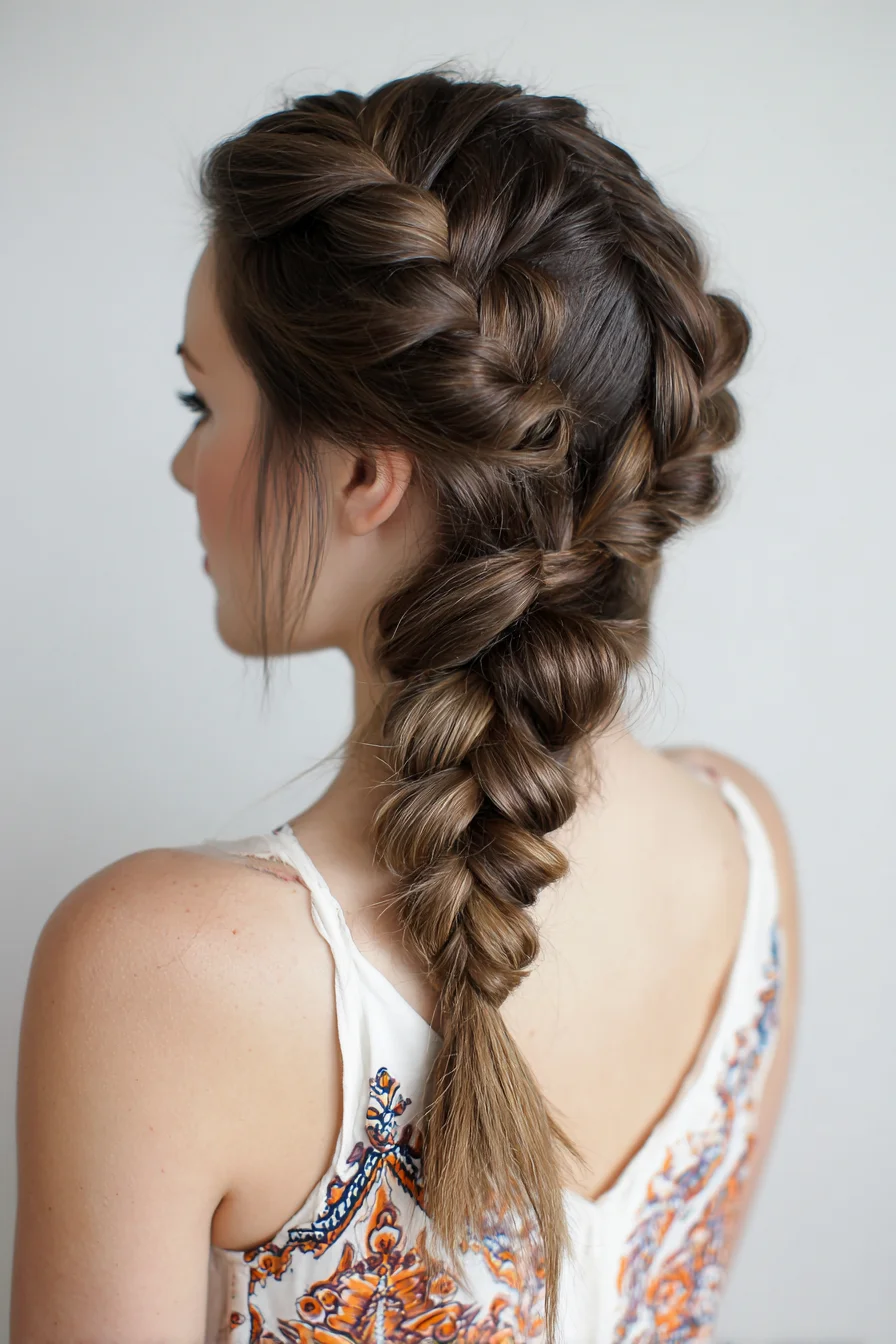
This chunky Dutch-to-fishtail braid works best on medium to long hair with at least light layering. It’s ideal for straight to wavy textures; very fine hair benefits from a bit of texturizing product or light teasing, while thick or coarse hair creates an especially full result. Technique: start with a Dutch (inside-out French) braid at the crown, adding sections down the sides, then transition into a fishtail or three-strand braid at mid-length. Pancake each braid (gently pull outer loops) for volume and a soft, lived-in look. Tools needed: tail comb, sectioning clips, small clear elastic, and a hair tie to secure. Helpful extras: 1
Chunky Double Dutch Braids — Voluminous Braided Pigtails for Thick Hair
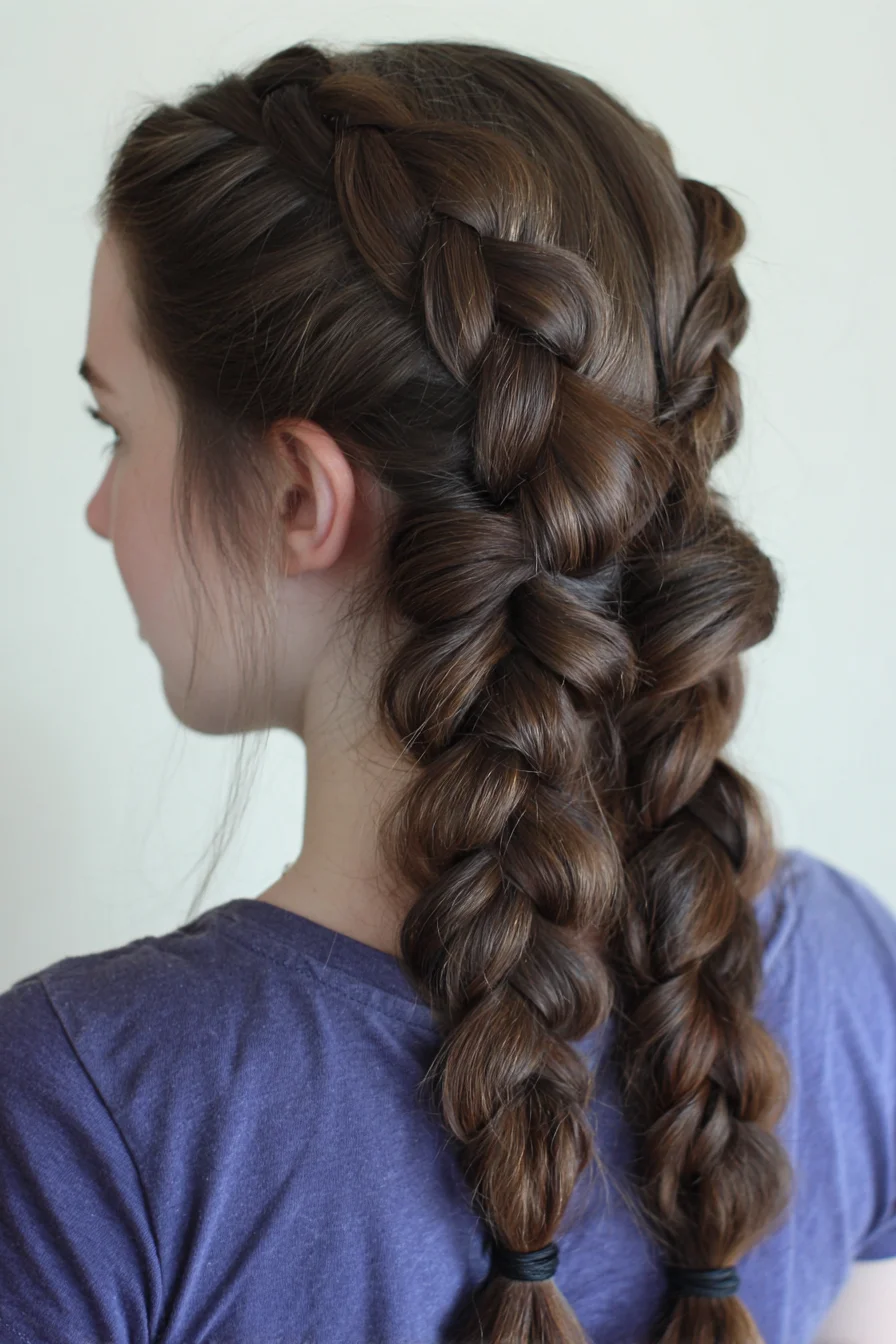
This look features two chunky Dutch (inverted French) braids that create voluminous, polished pigtails — ideal for medium to long hair. Best suited to naturally thick or textured hair, it also works on fine hair after adding grip with a texturizing spray or lightweight mousse; extensions can add fullness. Start with detangled, slightly dirty or product-prepped hair (second‑day texture helps). Create a clean center part, clip one side away, then Dutch‑braid each side by crossing sections under and adding hair as you go. Once at the nape, finish with a three‑strand braid, secure with a clear elastic and pancake (gently pull) each braid to widen and soften the look. Tools: tail comb, detangling brush, small elastics, sectioning clips. Products: texturizing spray or mousse, anti‑frizz serum or lightweight oil, and a medium‑hold hairspray to set. Difficulty: moderate — requires comfort with Dutch braiding and even tension; expect 20–40 minutes. Maintenance: refresh with dry shampoo, re‑tighten or reelasticate ends, sleep on a silk pillowcase or wrap to reduce frizz, and use a few drops of oil on ends between washes.
Messy Double Fishtail Braids with Face‑Framing Tendrils
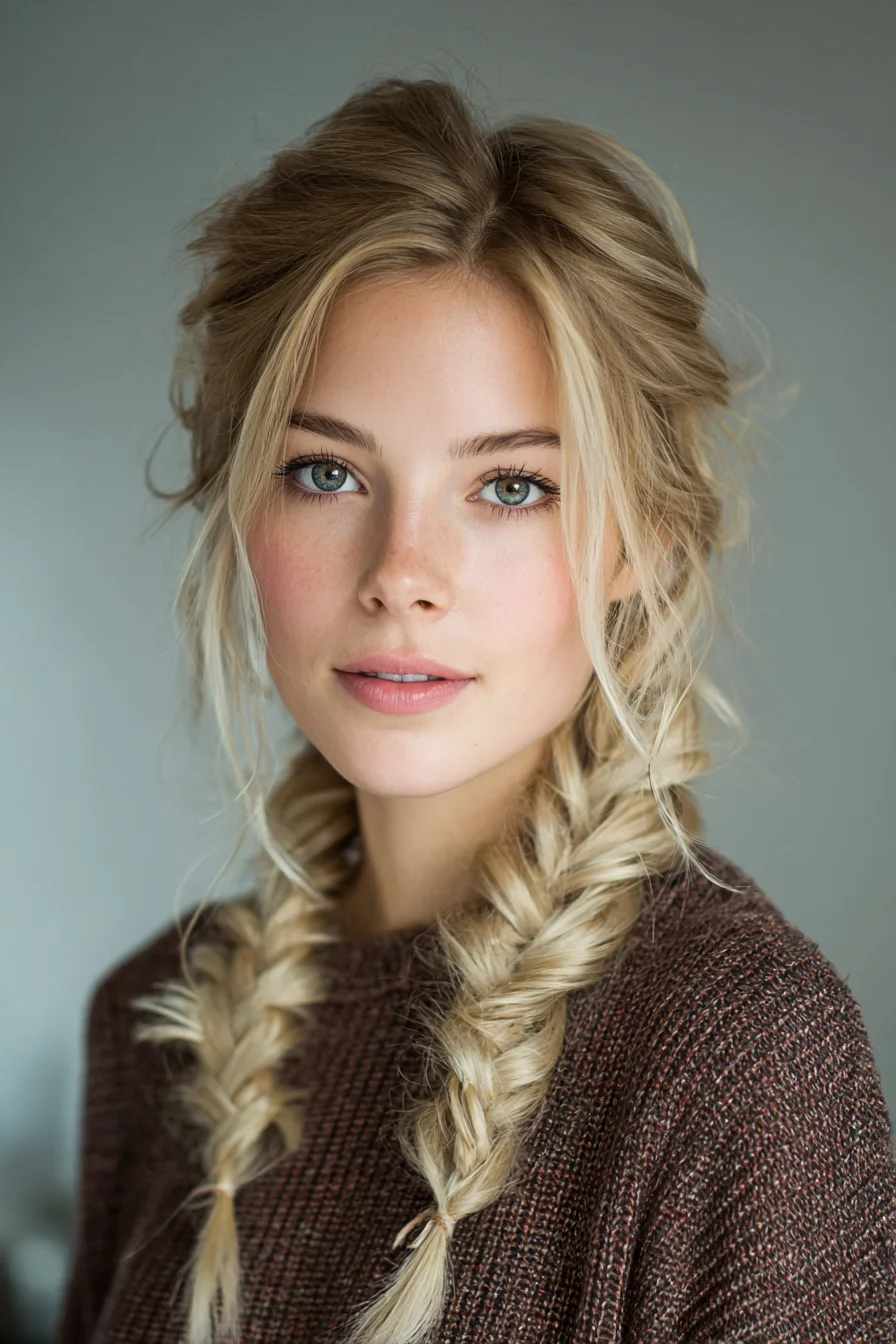
Difficulty: intermediate — expect 15–30 minutes depending on your speed. From salon experience, prep with a mist of texturizer or dry shampoo to add bite, and use a small curling iron to add soft bends if hair is too sleek. Maintenance: sleep on a silk pillow or loosely braid again to preserve shape, refresh with dry shampoo and re-pancake the braids each morning, and avoid heavy oils at the roots which will weigh the style down. For longer wear, secure loose pieces with small pins and re-tie elastics every 2–3 days.
Boho Double Fishtail Braids with Soft Face‑Framing Pieces
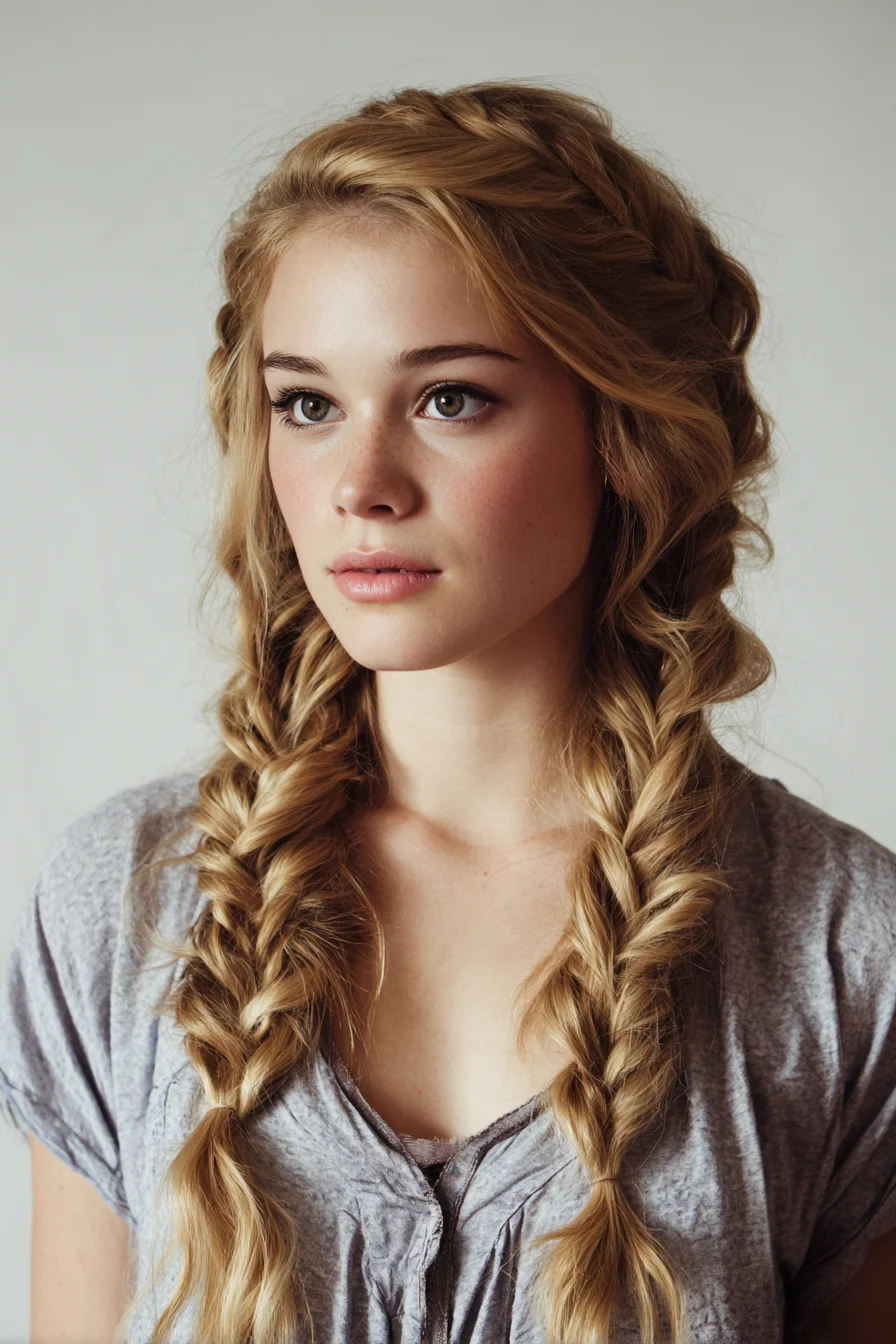
Suitable for medium to long hair of most textures — especially fine to medium hair that benefits from added grip. For very thick hair, work in smaller subsections. Start on dry, detangled hair: apply texturizing spray or dry shampoo for hold, create a center part, then take two even sections and fishtail braid each from just behind the hairline down to the ends. Gently pancake each braid by loosening outer loops for a fuller, boho look and pull a few face‑framing pieces loose. Secure with small clear elastics and hide the elastic with a thin wrap of hair or bobby pins if desired. Tools: fine-tooth comb, sectioning clips, small elastics, bobby pins, 1 curling iron (optional for soft waves). Products: texturizing spray or dry shampoo, light-hold hairspray, smoothing serum for ends. Difficulty: Intermediate — requires basic fishtail technique and pancaking; allow 15–30 minutes depending on hair thickness. Maintenance tips: sleep on a silk pillowcase or loosely wrap in a silk scarf, refresh with dry shampoo and quick re-pancaking, avoid heavy oils at the roots to preserve texture, and resecure elastics as needed. Regular trims keep ends looking tidy.
Crown Dutch Braid into Low Braided Chignon — Textured Updo for Medium to Long Hair
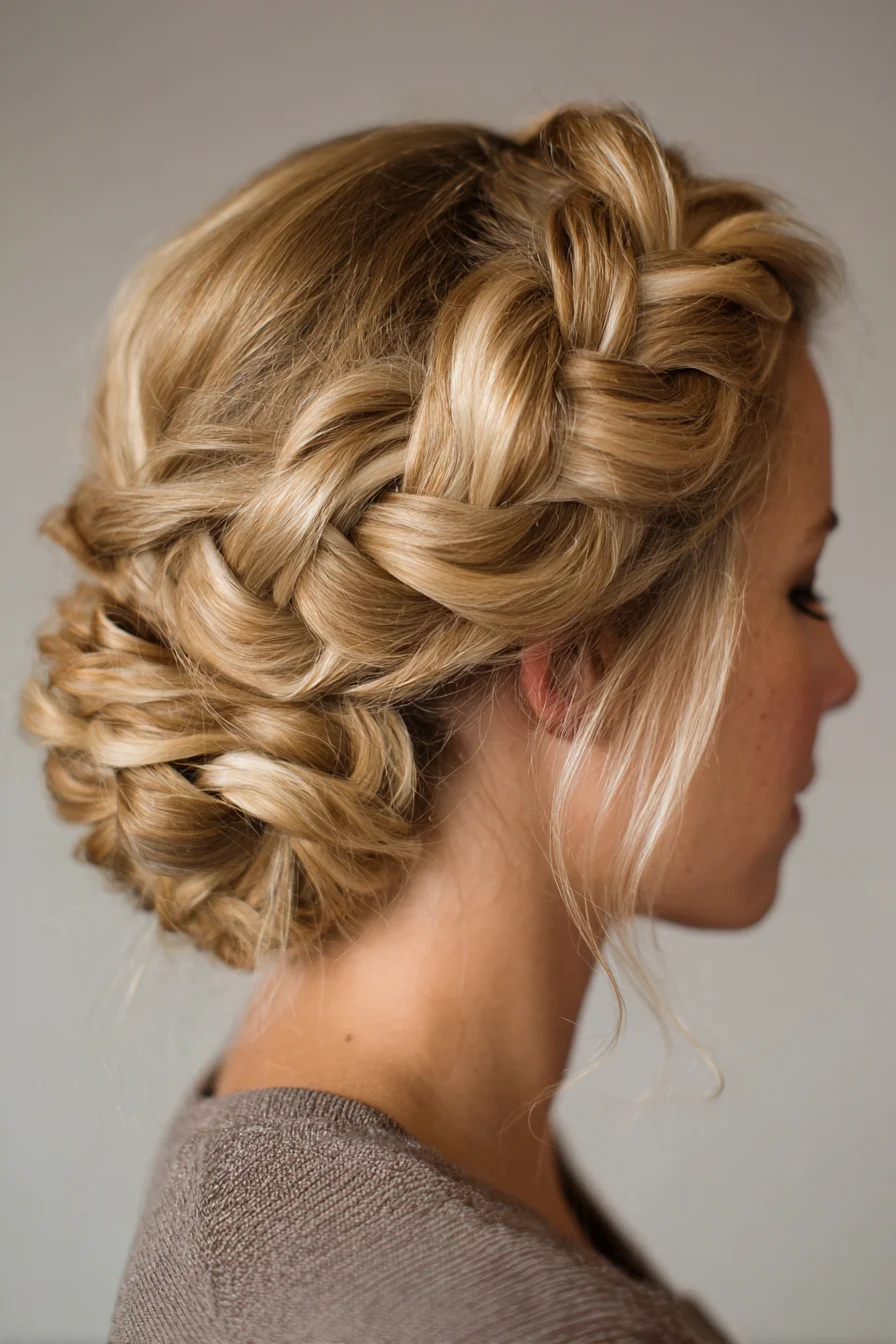
This elegant yet relaxed updo suits medium to long hair and works best on medium to thick textures; fine hair benefits from light backcombing or clip-in extensions, and very curly hair should be smoothed slightly before braiding. Technique: create a Dutch (inside-out) crown braid starting at one temple, continue the braid around the head toward the nape, pancake the braid for width, then gather remaining lengths into a low braided chignon and pin into place. Tools: tail comb, sectioning clips, small clear elastics, bobby pins, curling iron (optional for shaping face-framing pieces), and a wide-tooth brush. Products: light mousse or root-lift at damp hair, texturizing or sea-salt spray for grip, smoothing serum for flyaways, and a medium-hold hairspray to finish. Difficulty level: intermediate — allow 30–45 minutes if you’re comfortable braiding; beginners may need extra time. Maintenance tips: refresh texture with dry shampoo or texturizing spray, re-pin any loosened sections, sleep on a silk pillow or wrap with a scarf to preserve shape, and schedule touch-ups for long events to control frizz and hold.
As a stylist, my number-one piece of advice is to respect your hair’s health while styling. Braid loosely at the root to avoid tension, alternate partings to reduce strain, and limit daily heat. For best results, prep with a light leave-in conditioner or texture spray, secure with snag-free elastics, and finish with a mist of flexible-hold spray. Sleep on a silk pillowcase or use a silk wrap to preserve shape and reduce frizz. If you want added volume or length, consider clip-in pieces rather than permanent extensions for occasional wear. For event looks, book a quick consult so we can customize braid placement for your face shape and outfit. Keep experimenting — slight changes in braid tightness, height, or accessories can completely transform a look. If you’d like salon guidance, bring a favorite image from this set and I’ll tailor the braid to your hair type and lifestyle.

Lena is a content creator who focuses on hairstyles and hair care. She loves sharing practical tips, step-by-step guides, and inspiration for anyone looking to try new looks. From everyday easy hairstyles to trendy cuts and elegant updos, her articles are written to help readers discover styles that match their personality and lifestyle. On Mardingezituru, Lena’s goal is simple: to make hair styling more fun, creative, and accessible for everyone.