A crochet blanket is the biggest thing most of us make, so it is worth picking a stitch you will enjoy for a few hundred rows. This page sorts six blanket stitches by skill, from plain rows you can work while watching TV to textured stitches that need a little more attention. Every idea comes with the stitch counts that make it work.
The moss stitch baby blanket is written out in full below, with a printable PDF.
In this post7 sections
Before you pick a stitch
- Size: a baby blanket is about 30 x 35 in / 76 x 89 cm, a throw about 50 x 60 in / 127 x 152 cm. A throw takes roughly three times the yarn and time.
- Yarn: worsted (weight 4) acrylic or a cotton blend with a 5 mm (US H/8) hook is the easy default; it washes well and is soft enough for a baby.
- Gauge: crochet a swatch of 20 rows first. A blanket that is 1 stitch per inch off ends up 6 in / 15 cm too wide or too narrow.
Beginner: one stitch, straight rows
1. Striped half double crochet blanket
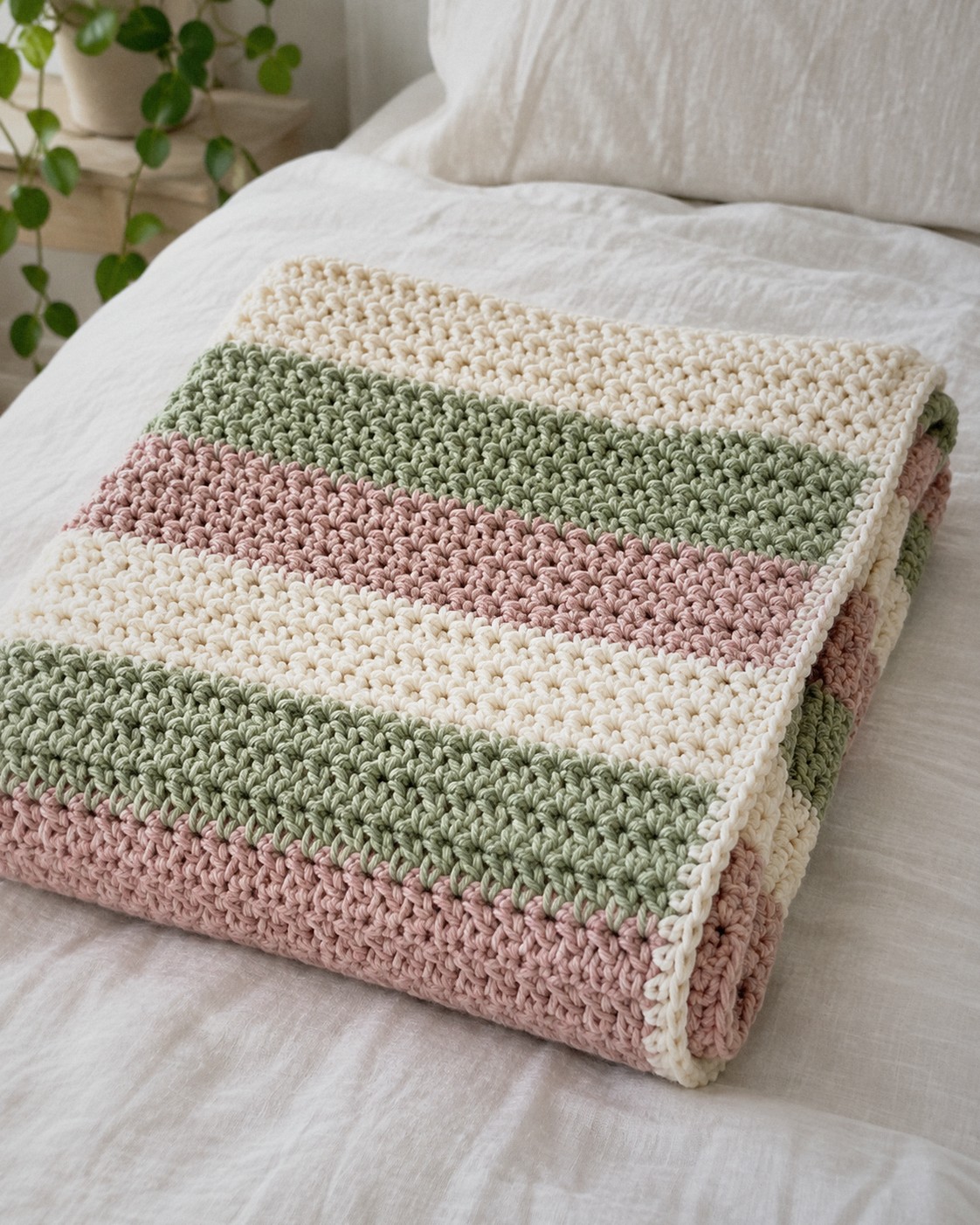
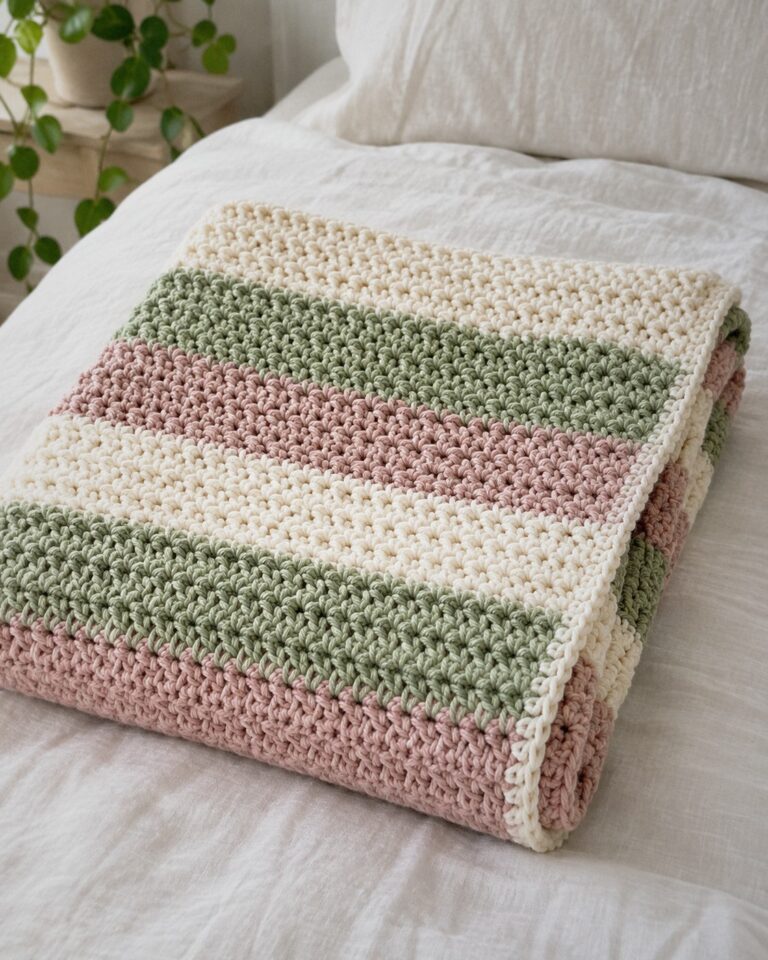
Half double crochet in rows from start to finish, with a color change every 11 rows and a single crochet border. The easiest blanket on the site.
Quick facts: Baby 30 x 36 in or throw 50 x 60 in; 14 hdc x 11 rows = 4 in.
Get the striped blanket pattern →
2. Moss stitch blanket
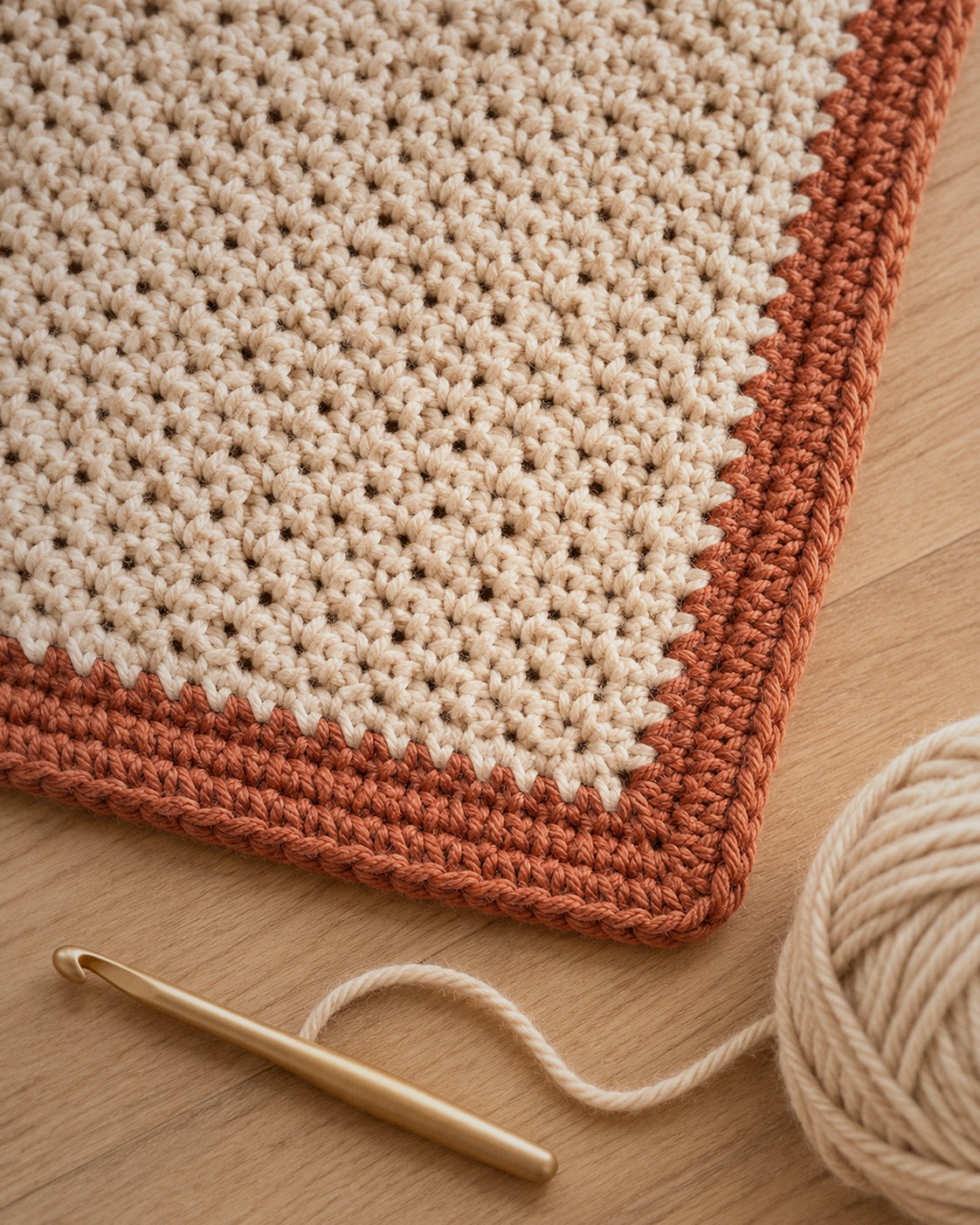
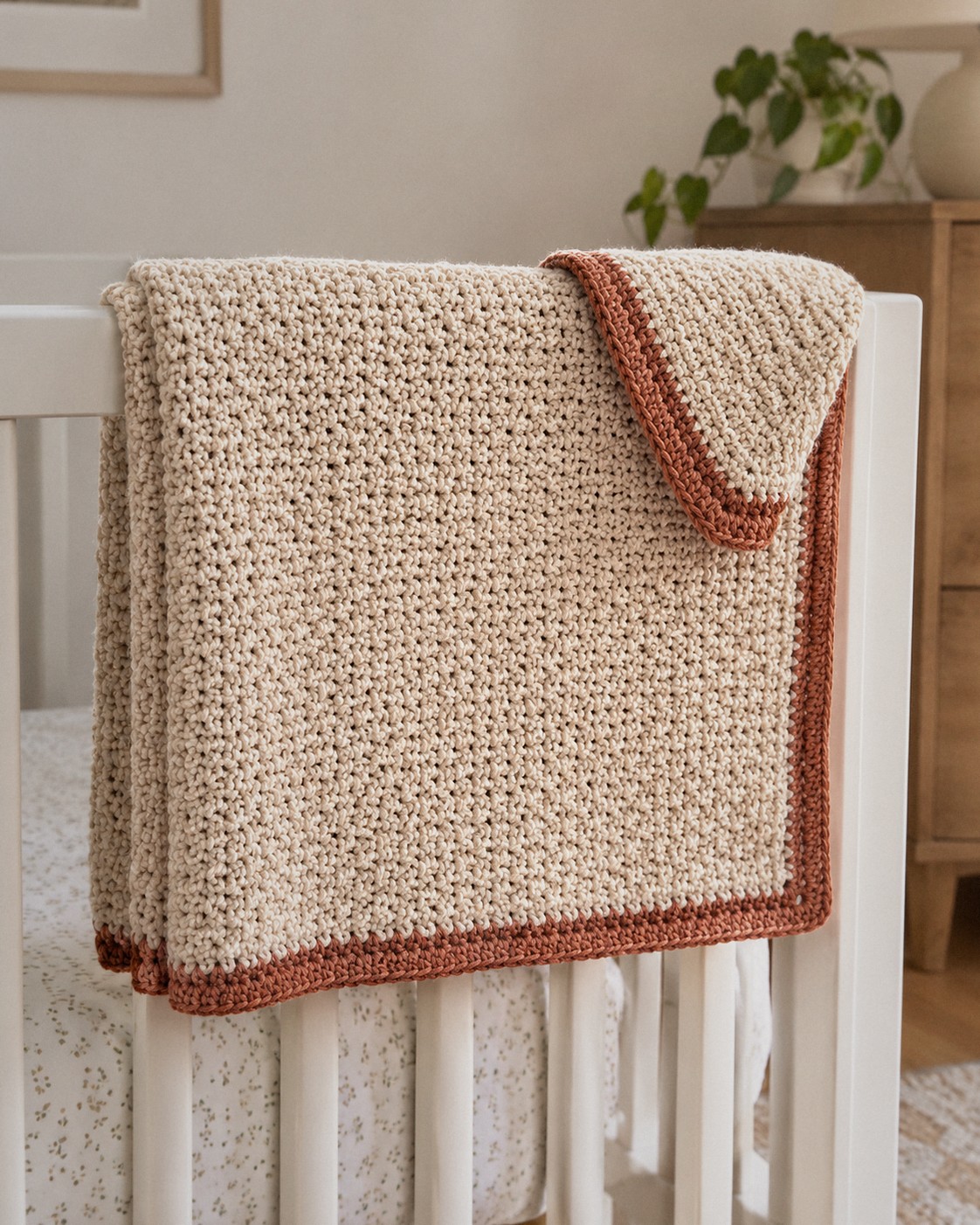
Single crochets and chain-1 spaces, shifted by one stitch every row. It looks woven, lies flat, and uses only sc and chains.
Quick facts: Odd number of stitches; this baby size is 121 stitches x 150 rows, about 30 x 33 in before the border. Full pattern below.
Jump to the moss stitch pattern →
Easy: a new technique, still relaxed
3. Granny square blanket
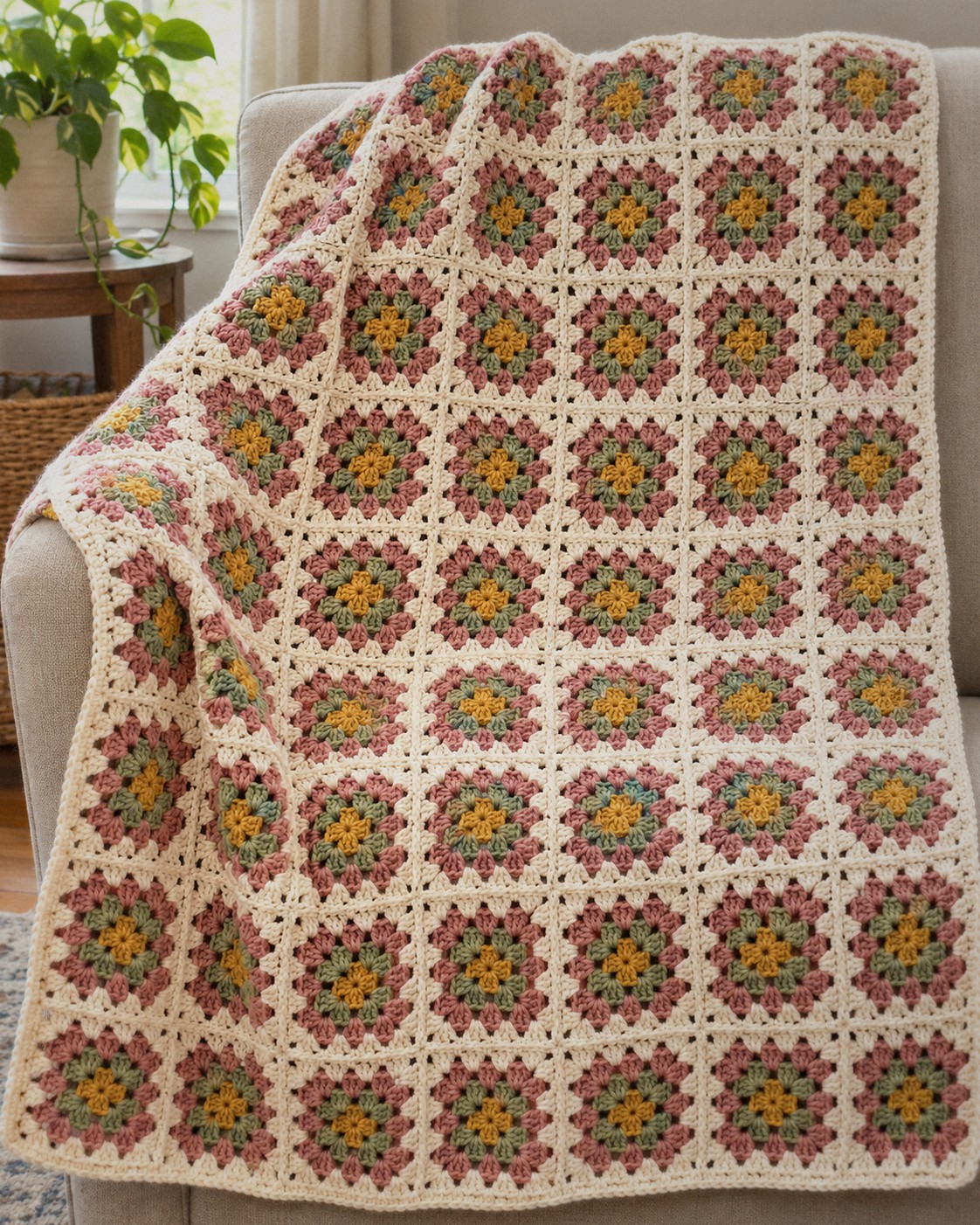
Classic four-round granny squares in clusters of three double crochets, joined into a grid. Small squares travel well and you can stop at any size.
Quick facts: Round 1: (3 dc, ch 2) x4 in the ring = 12 dc. Each round adds 12 dc: 24, 36, then 48 dc in round 4. A square is about 5 in / 12.5 cm in worsted: 42 squares (6 x 7) make a 30 x 35 in baby blanket, 63 squares (7 x 9) a 35 x 45 in throw like the one above.
4. Corner to corner (C2C) blanket
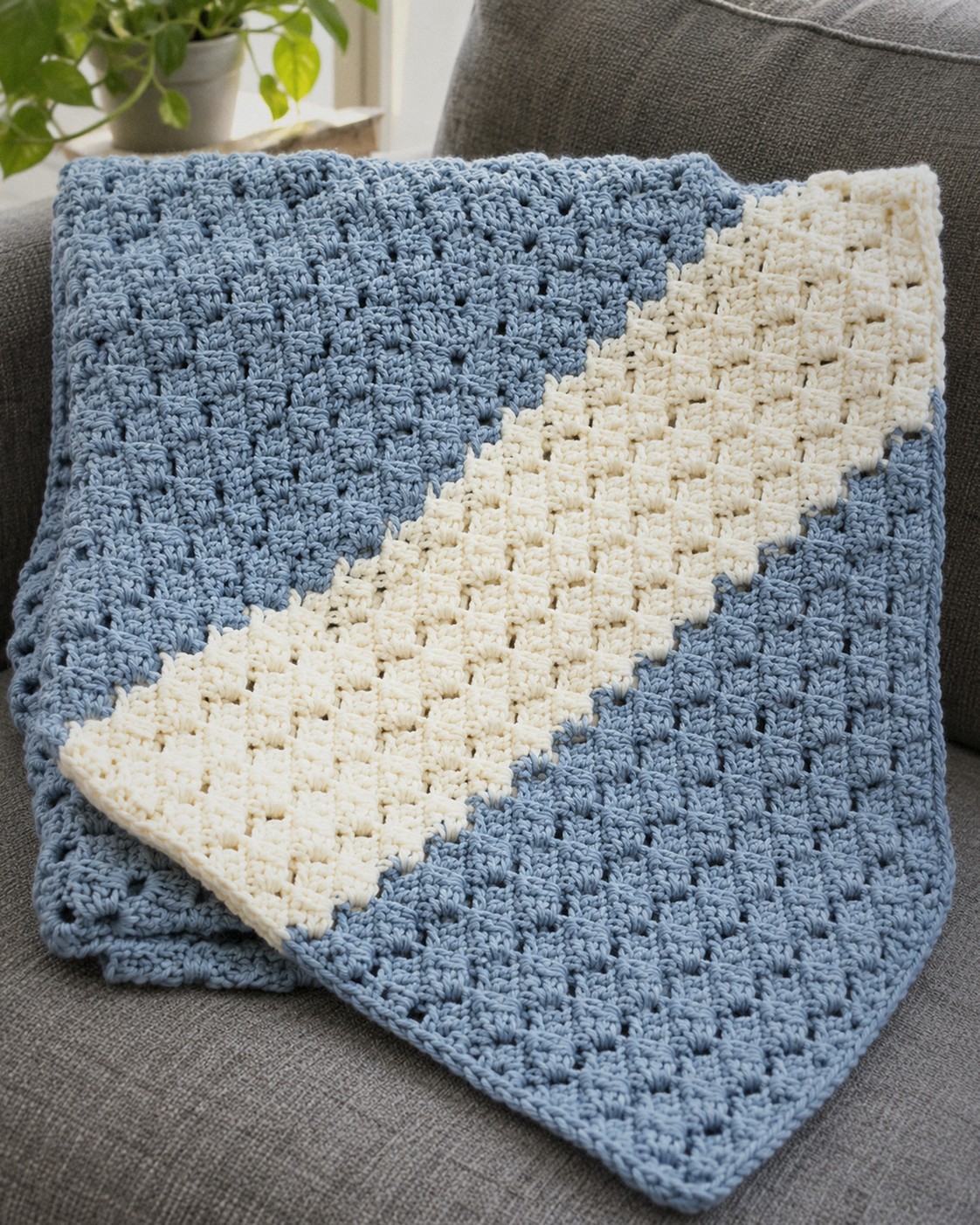
Small tiles of three double crochets worked on the diagonal, starting at one corner. The rows grow by one tile until the blanket is wide enough, then shrink by one tile to the opposite corner.
Quick facts: Each tile is about 0.8 in / 2 cm in worsted. A 30 in / 76 cm square is 38 tiles a side: 38 rows growing, then 37 rows shrinking, 75 diagonal rows in all.
Intermediate: textured stitches
5. Chevron ripple blanket
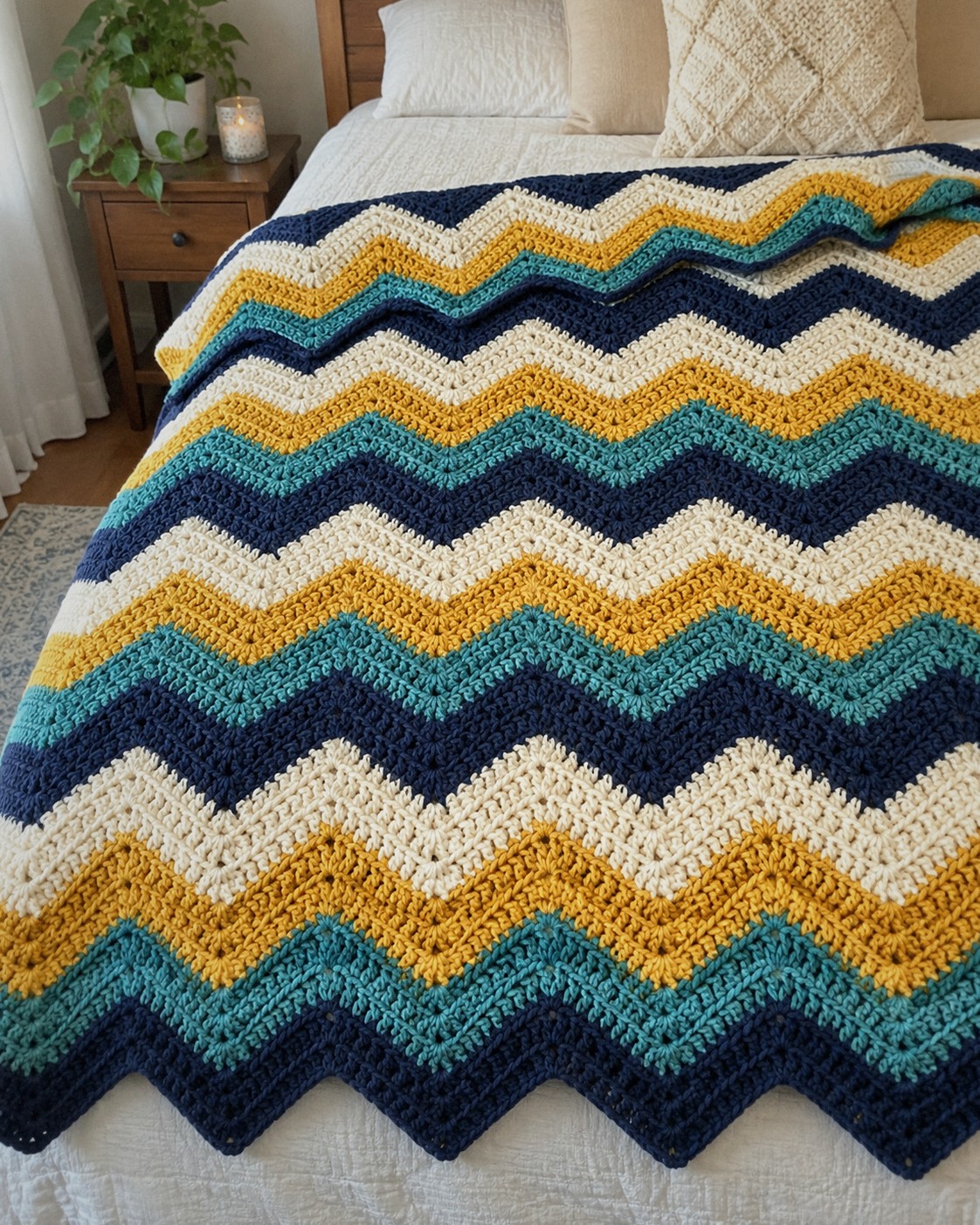
Double crochet rows with peaks and valleys. The rhythm is easy once it sets in; the tricky part is the first row, where every peak and valley has to land in the right place.
Quick facts: A 12-stitch repeat: 3 dc in the next st, dc in the next 4, dc3tog, dc in the next 4. That uses 12 stitches and makes 12, so the count never changes and the zigzags stay in line.
6. Waffle stitch blanket
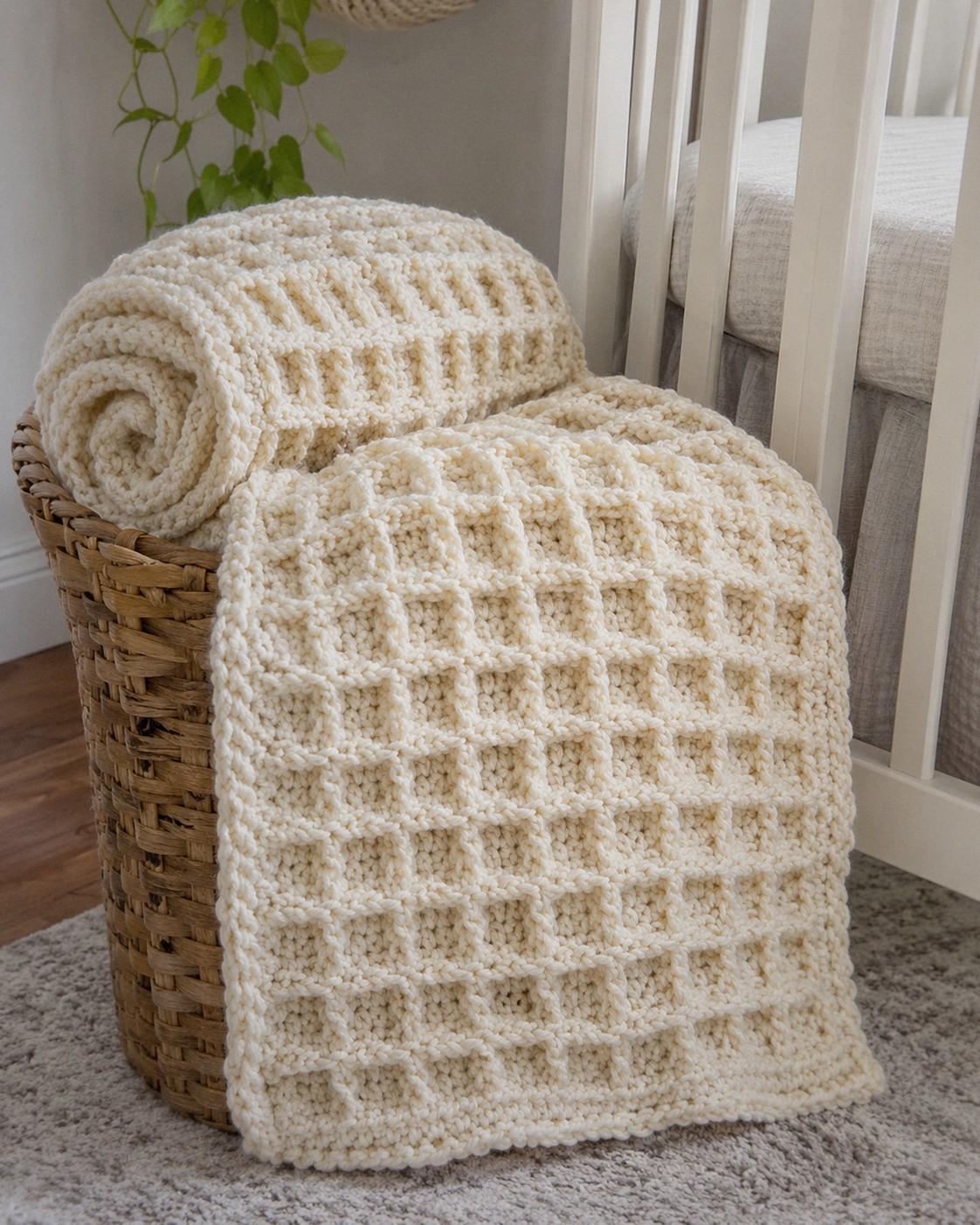
Front post double crochets and plain double crochets swap places every row, building a grid of little raised squares. Thick, squishy and warm, but it uses about a third more yarn than plain double crochet.
Quick facts: A multiple of 3 stitches plus 2 for the edges. The stitch count stays the same on every row.
Free pattern: moss stitch baby blanket
- Size: about 30 x 33 in / 77 x 85 cm before the border, about 31.6 x 34.7 in / 80 x 88 cm with it
- Yarn: worsted (aran / 4) acrylic or cotton blend; oatmeal (A) about 939 yd / 859 m, terracotta (B) about 106 yd / 97 m for the border
- Hook: 5 mm (US H/8)
- Gauge: 16 stitches x 18 rows = 4 in / 10 cm in moss stitch, counting every sc and every ch-1 as a stitch
- Time: about 20 hours
Gauge swatch first
Chain 22. Work row 1 into the 2nd chain from the hook (21 stitches), then rows 2 and 3 below, and repeat rows 2 and 3 to 22 rows. The square should be about 5 in / 13 cm each way. If it is bigger, go down half a hook size.
How the stitch works
- Every row starts and ends with a sc into the edge sc, so the sides stay straight.
- In between, each sc goes into a ch-1 space of the row below, and each ch 1 sits over a sc. That shift is what makes the texture.
- The turning ch 1 does not count as a stitch. Count 121 on the first few rows (60 sc pairs plus one).
Baby Blanket
Color: start with A (oatmeal).
Chain 122 in color A.
- Row 1: Sc, (ch 1, skip 1, sc) ×60. (121)
- Row 2: Ch 1 turn, sc, (sc in next ch-1 sp, ch 1, skip 1) ×59, sc in next ch-1 sp, sc. (121)
- Row 3: Ch 1 turn, sc, (ch 1, skip 1, sc in next ch-1 sp) ×59, ch 1, skip 1, sc. (121)
- Rows 4–150: Repeat rows 2 and 3, ending with a row 2. (121)
Finish: Chain 122 and work R1 into the 2nd ch from the hook; border: 3 rounds of sc in color B with 3 sc in each corner.
Border
- Join color B in any corner. Work sc evenly all around: one sc in each sc and ch-1 space along the top and bottom, one sc in the end of each row along the sides, and 3 sc in each corner.
- Join with a sl st to the first sc. Work two more rounds the same way, with 3 sc in the middle stitch of each corner.
- Fasten off and weave in the ends through at least 2 in / 5 cm of stitches of the same color.
FAQ
Which blanket stitch uses the least yarn?
Of these six, moss stitch and C2C: the chain spaces stretch the yarn further than solid stitches. Waffle stitch uses the most.
Which is the fastest?
Double crochet stitches grow fastest: the ripple and C2C. Moss stitch is slower because single crochet is short, but each row goes quickly.
How do I keep the edges straight?
Put a stitch marker in the first and last stitch of each row and count the stitches every few rows, especially in the first 10.