The best yarn for amigurumi is usually a smooth DK or worsted cotton: it shows every stitch, holds its shape when stuffed and doesn’t get fuzzy after a few months on a shelf. That said, acrylic and chenille both have their place, and the right choice depends on what you are making and who it is for.
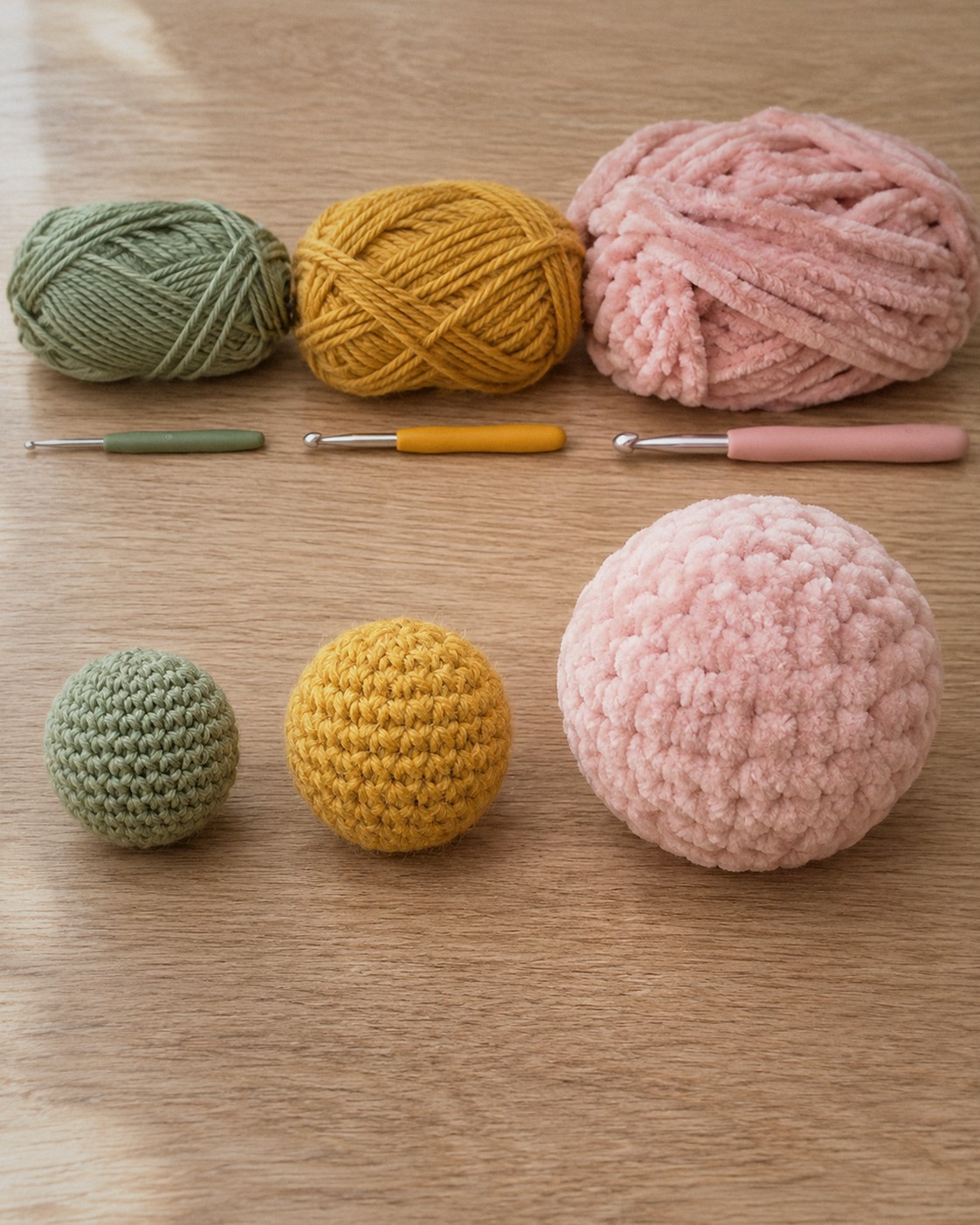
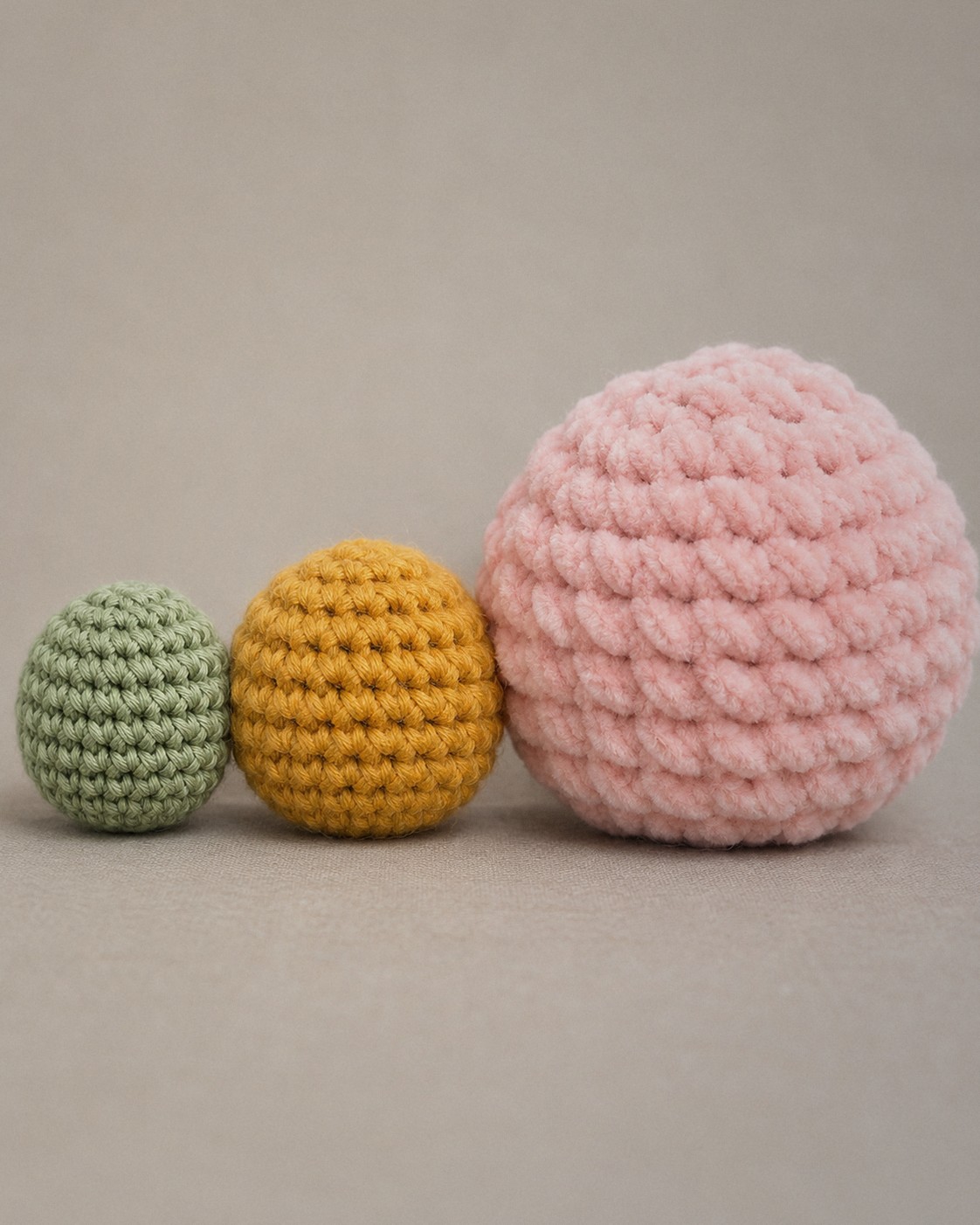
To make the differences concrete, we worked out the same small test ball in three yarns, from the same 11 rounds. Only the yarn and hook change. The size and the yarn each ball needs are calculated from typical amigurumi gauges for each yarn, and the full test-ball pattern is below so you can try it with your own yarn.
In this post9 sections
Quick answer: which yarn for which project
- Cotton (DK or worsted): the best all-rounder. Crisp stitches, firm shape, no fuzz. Our first pick for ornaments, small animals and anything with fine details like faces.
- Acrylic (worsted): soft, cheap and available in every color. Good for bigger toys and for practicing. Stitches are a little fuzzy and it can pill over time.
- Chenille / plush yarn (super bulky): very soft and squishy, made for cuddly plushies. Stitches are hard to see, so it is not the easiest yarn to learn with.
- Cotton blends (cotton-acrylic, milk cotton): softer than pure cotton and still smooth. A good middle ground for baby toys.
The same test ball in three yarns
Each ball is the 11-round pattern below: 6 stitches up to 24, four straight rounds and back down to 6. Amigurumi is crocheted tighter than the yarn label suggests, so each hook is smaller than the label hook for that yarn.
| Yarn | Hook | Typical gauge | Ball size | Yarn per ball |
|---|---|---|---|---|
| DK cotton | 2.5 mm (US B/1-C/2) | 6 sc x 6.5 rnds = 1 in | 1.3 in / 3.2 cm | about 10 yd / 9 m |
| Worsted acrylic | 3.5 mm (US E/4) | 5 sc x 5.5 rnds = 1 in | 1.5 in / 3.9 cm | about 12 yd / 11 m |
| Super bulky chenille | 5 mm (US H/8) | 3 sc x 3.5 rnds = 1 in | 2.6 in / 6.5 cm | about 17 yd / 16 m |
So the same pattern in chenille comes out about 2.0 times as wide as in cotton. That is the easiest way to scale a pattern up: keep the rounds, change the yarn and hook. The sizes are calculated from the gauges in the table; check your own gauge, because tension changes everything.
Cotton: the clean, crisp choice
Cotton has almost no stretch, so tight single crochet stays tight and the stuffing stays inside. It doesn’t shed or pill, it takes a crisp color change, and small pieces like caps, noses and ears keep their shape. Mercerized cotton adds a soft shine that suits ornaments.
The downsides: it is harder on your hands, a little splitty in cheaper brands, and it shows uneven tension. If your wrists get tired, take breaks or try a cotton blend.
Acrylic: soft, affordable, forgiving
Acrylic stretches, which hides small tension mistakes, and it comes in every color you can think of. It is the natural choice for bigger toys where cost adds up. Because it stretches, go down a hook size or two and check that the stuffing doesn’t show between stitches. Over time, acrylic can get a little fuzzy where it is handled most.
Chenille and plush yarn: cuddly but tricky
Chenille gives the soft, velvety plushies that are everywhere on Pinterest. It works up fast because it is so thick. The catch: you can barely see the stitches, it can form small loops (“worms”) if you pull too hard, and frogging it often ruins the yarn. Count every round, use stitch markers generously, and choose simple shapes for your first chenille project.
How to choose the hook
- Start 1–2 sizes smaller than the hook on the yarn label.
- Make the test ball. If you can see stuffing through the stitches, go down another half size.
- If your hands hurt or the stitches are hard to work into, go up half a size; a slightly looser ball is better than a sore wrist.
Colors and safety
- Light colors show stuffing more; dark colors hide mistakes but make stitch counting harder.
- For baby toys choose cotton or a baby-safe blend, embroider the eyes, and skip small sewn parts.
- Machine-washable yarn helps for toys that will be loved hard. Check the label before you start.
Practice pattern: the yarn test ball
Make this ball with any new yarn before you start a bigger project. It takes 15–30 minutes and tells you the size your yarn and hook will give, whether the stuffing shows, and how the yarn feels after stuffing.
Test Ball
Color: start with A (sage green).
Written for DK cotton and a 2.5 mm hook. For other yarns use the hook from the table; the rounds stay exactly the same.
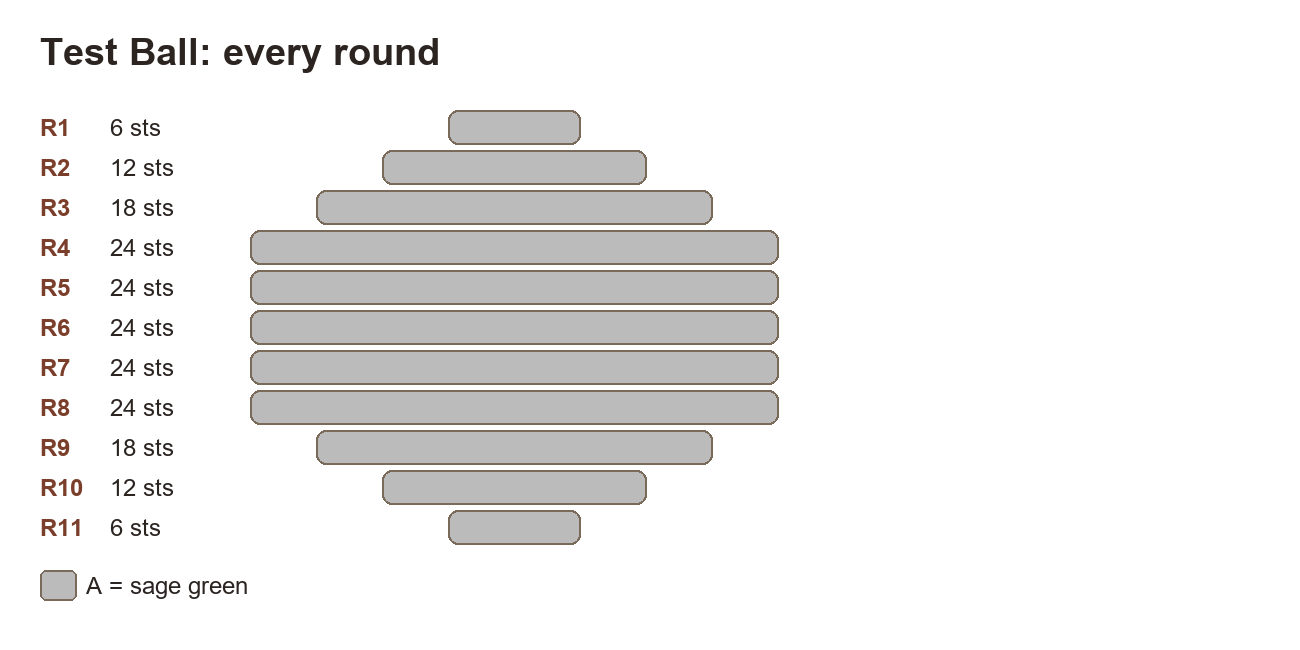
- Rnd 1: 6 sc in a magic ring. (6)
- Rnd 2: Inc ×6. (12)
- Rnd 3: (sc, inc) ×6. (18)
- Rnd 4: Sc, inc, (2 sc, inc) ×5, sc. (24)
- Rnds 5–8: Sc around. (24)
- Rnd 9: Sc, dec, (2 sc, dec) ×5, sc. (18)
- Rnd 10: (sc, dec) ×6. (12)
- Rnd 11: Dec ×6. (6)
Finish: Stuff firmly after R10, FO and close the hole.
FAQ
What weight yarn is best for amigurumi?
DK and worsted are the most common. They are big enough to see the stitches and small enough for details. Fingering weight gives tiny toys; super bulky gives big plushies from the same pattern.
Can I mix yarns in one toy?
Yes, if they are the same weight. Mixing a cotton body with acrylic details is fine; mixing DK and worsted in the same piece changes the size of those rounds.
Why is my amigurumi bigger than the pattern says?
Looser tension, a bigger hook or a thicker yarn. Make the test ball: if yours is bigger than the table, go down a hook size.
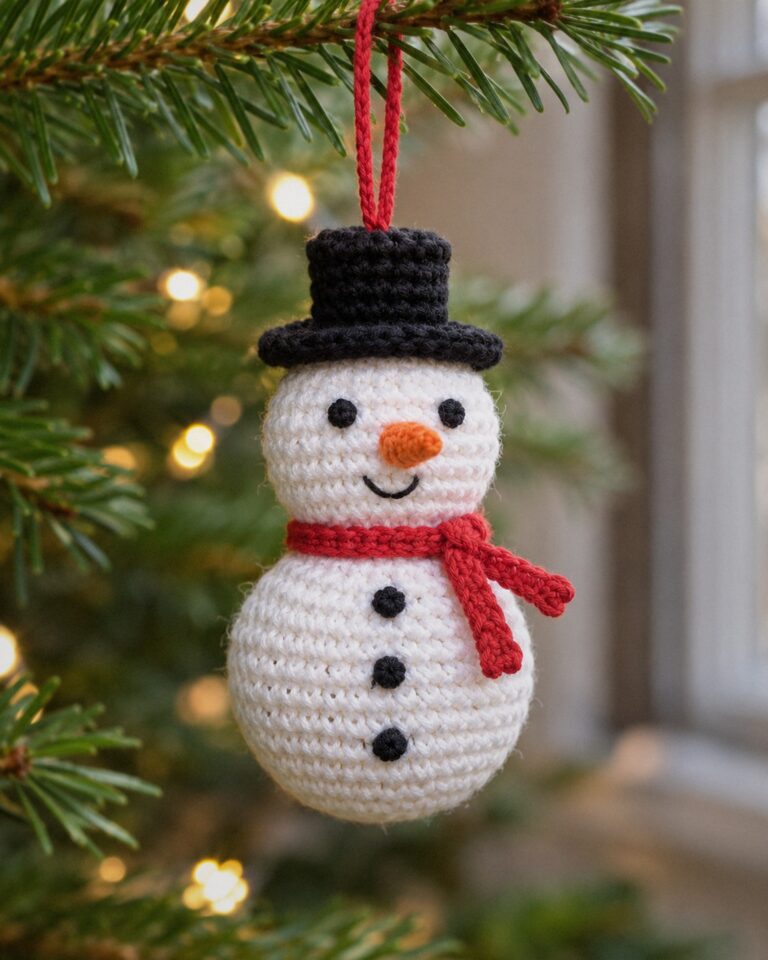
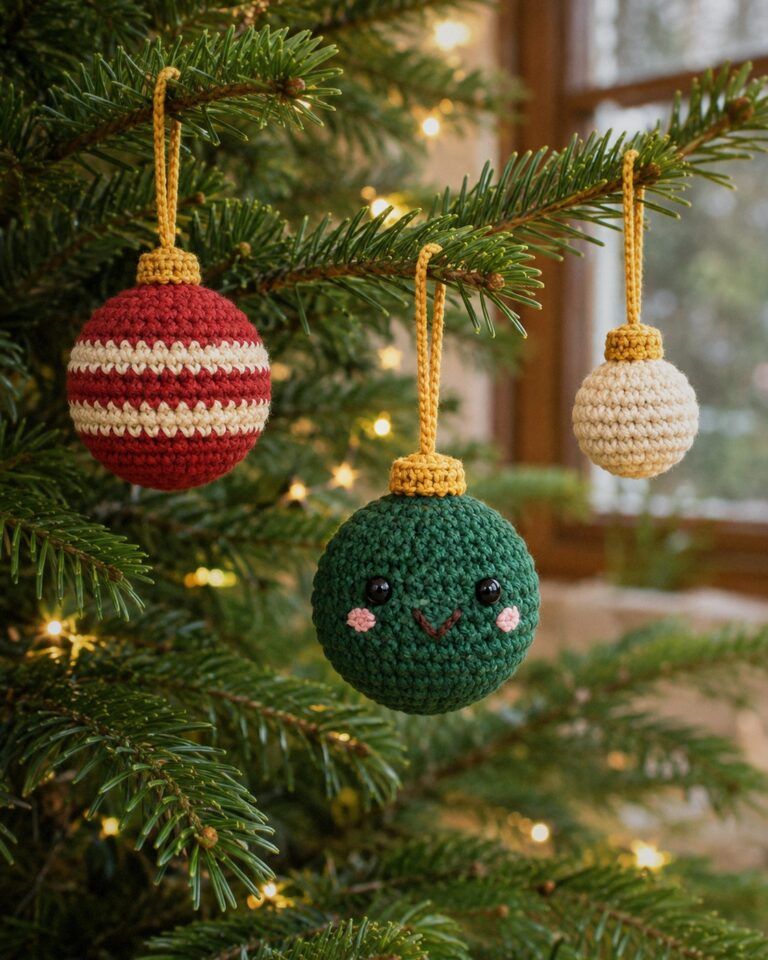
Ready for a first project? The amigurumi bauble ornaments are the test ball with a cap and stripes, and the crochet snowman is two of them stacked.