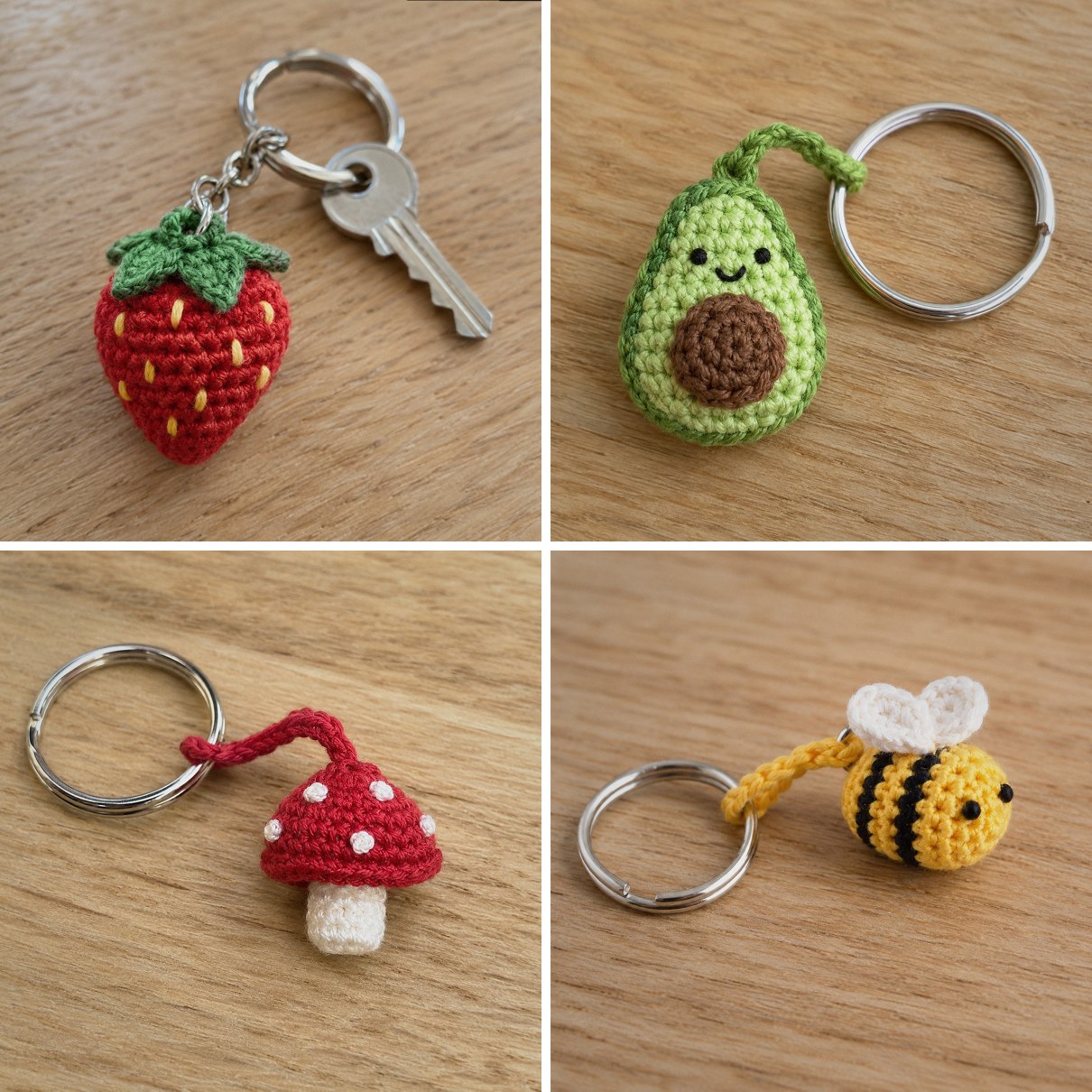
Tiny amigurumi make the best keychains: they use scraps, take 20 to 40 minutes, and survive a bag or a pocket far better than flat motifs. All ten below use DK cotton and a 2.5 mm hook and come out about 1 in / 2.5 cm, a good size next to a keyring.
The strawberry is written out in full at the end. For the other nine, each idea lists its rounds as stitch counts (6, 12, 18 means 6 sc in a magic ring, then inc x6, then (sc, inc) x6). Every one of those sequences was checked so it adds up.
In this post5 sections
What you need for all of them
- Scraps of DK cotton in the colors below, and a little black or dark brown for eyes
- 2.5 mm (US B/1–C/2) hook, stitch marker, tapestry needle, a little fiberfill
- Split keyrings (about 1 in / 25 mm) or lobster clasps with a jump ring
How to attach a keyring
Chain 10 with the same yarn, slip stitch into the first chain to make a loop, and sew both ends deep into the top of the piece, going back and forth through the stuffing a few times. Thread the loop onto the split ring. A sewn loop holds far better than a ring pushed through a single stitch.
10 free mini keychain patterns
1. Strawberry
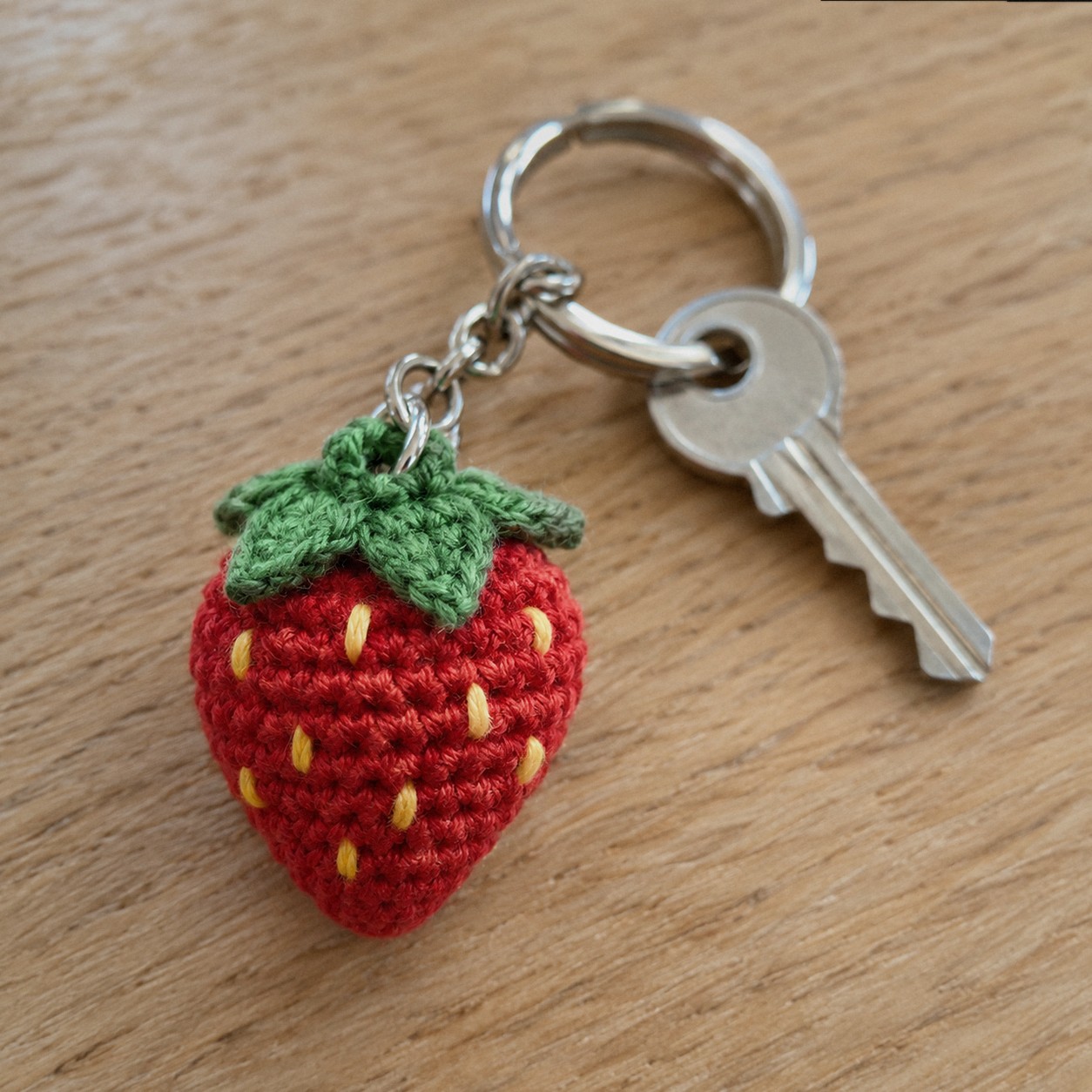
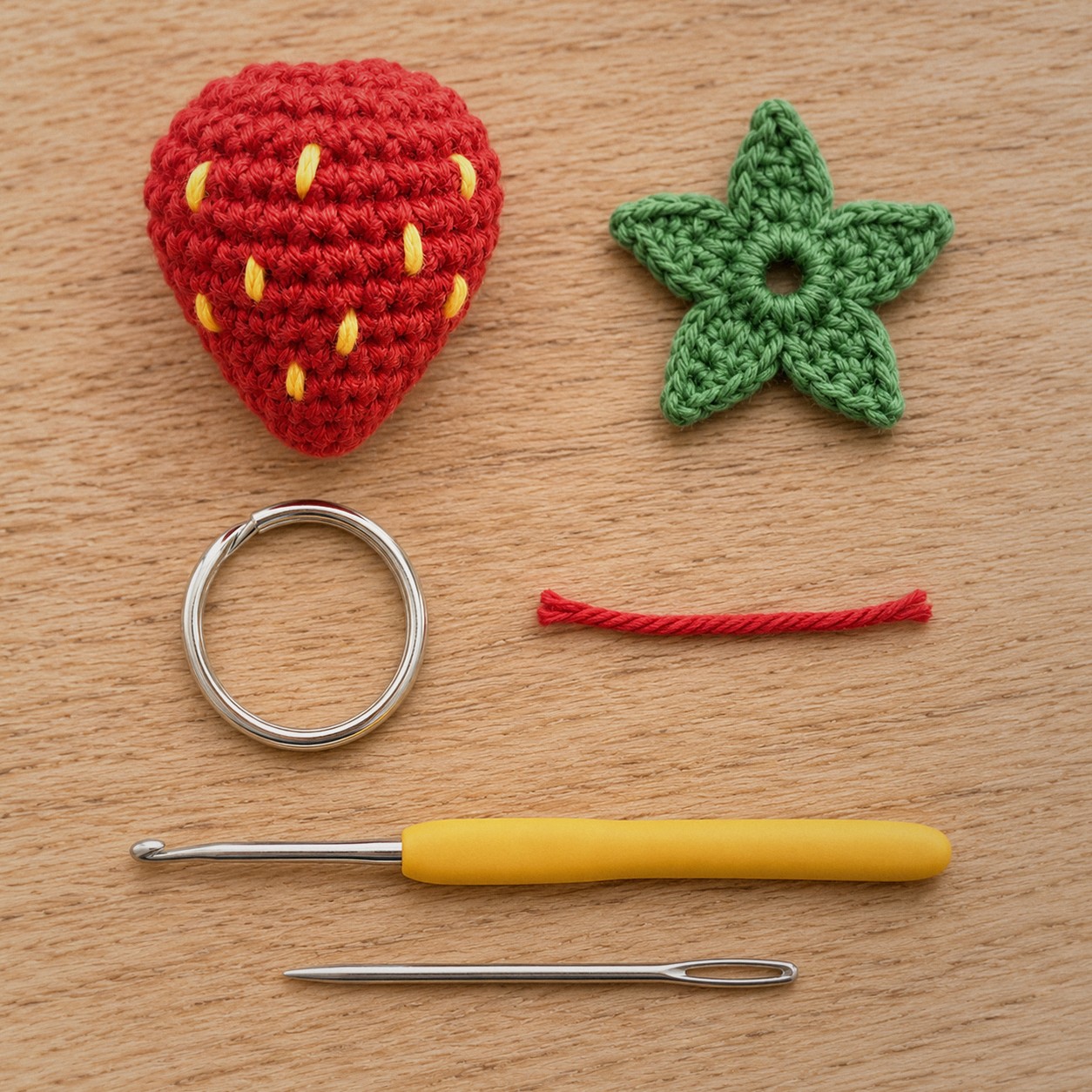
A red cone with stitched yellow seeds and a five-point leaf cap. The full pattern is below.
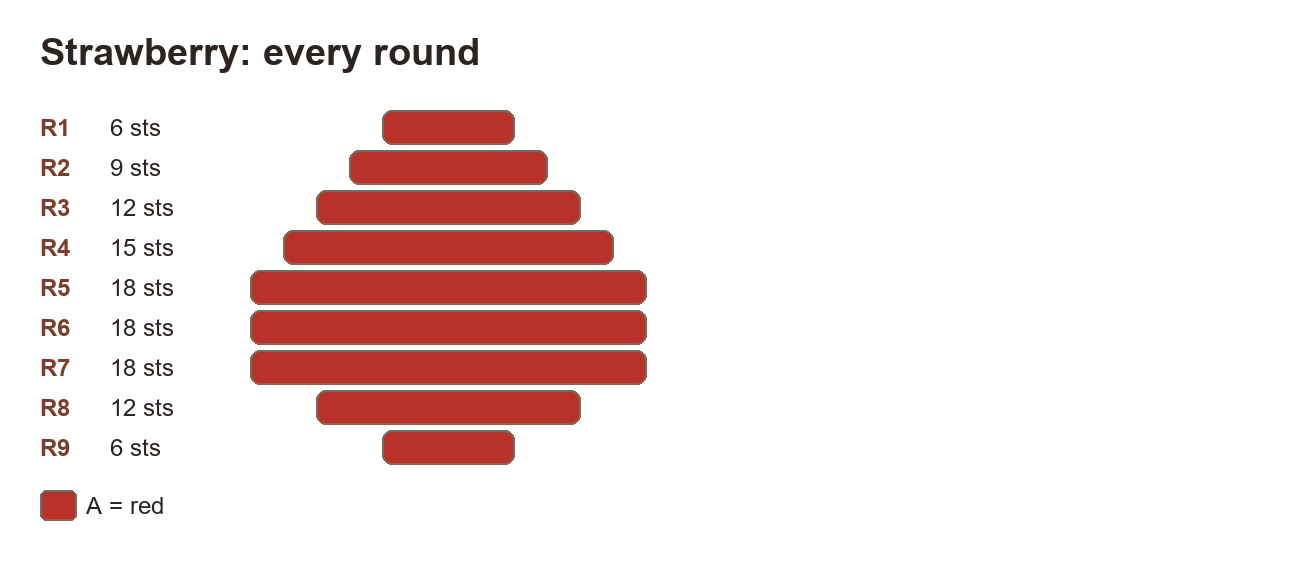
Rounds: 6, 9, 12, 15, 18, 18, 18, 12, 6 (full pattern)
2. Avocado
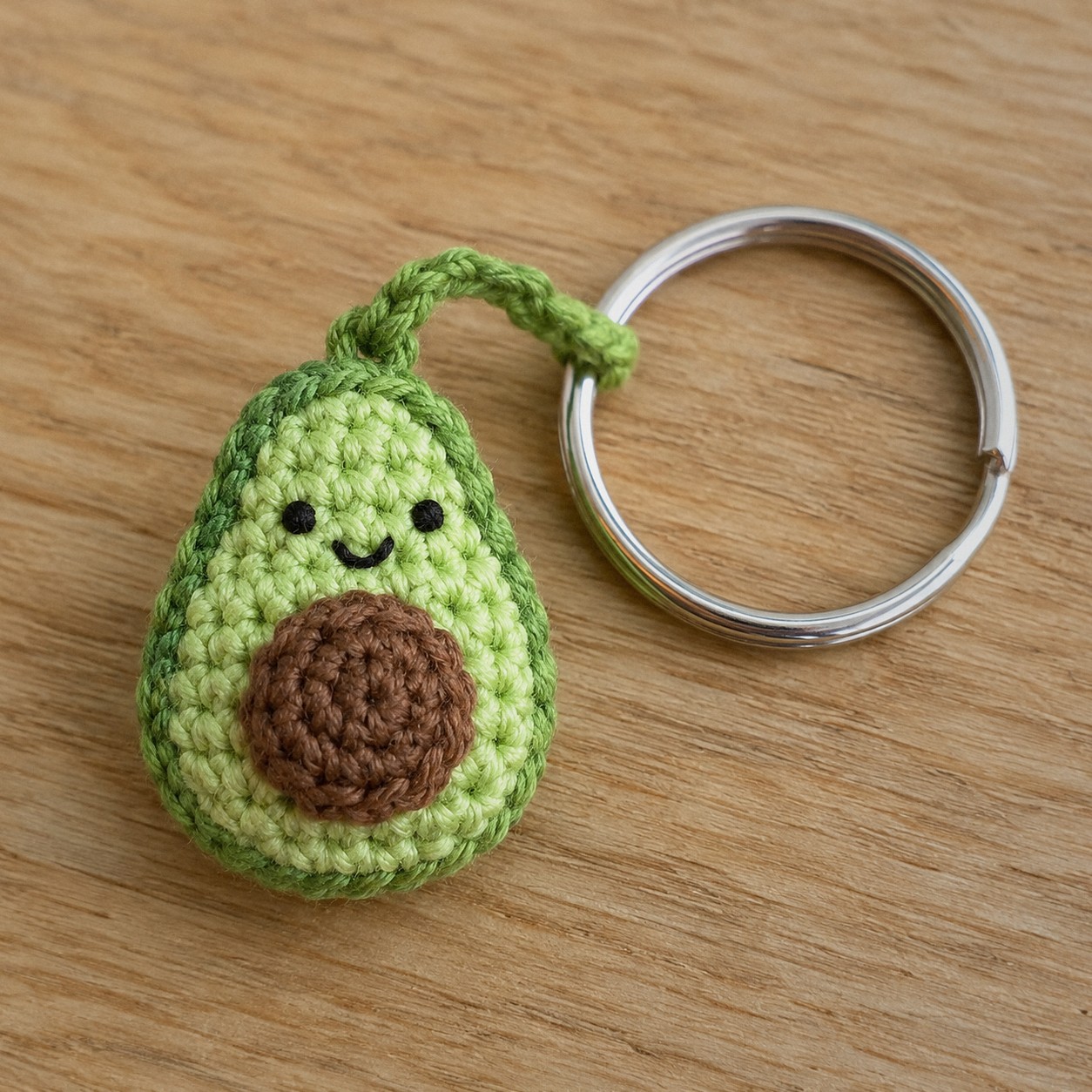
A green egg that is wider at the bottom, with a flat brown circle sewn on as the pit and a tiny face above it. A round of darker green slip stitches around the edge, as in the photo, is optional.
Rounds: body 6, 12, 18, 18, 18, 18, 12, 12, 12, 6; pit 6, 12 worked flat
3. Mushroom
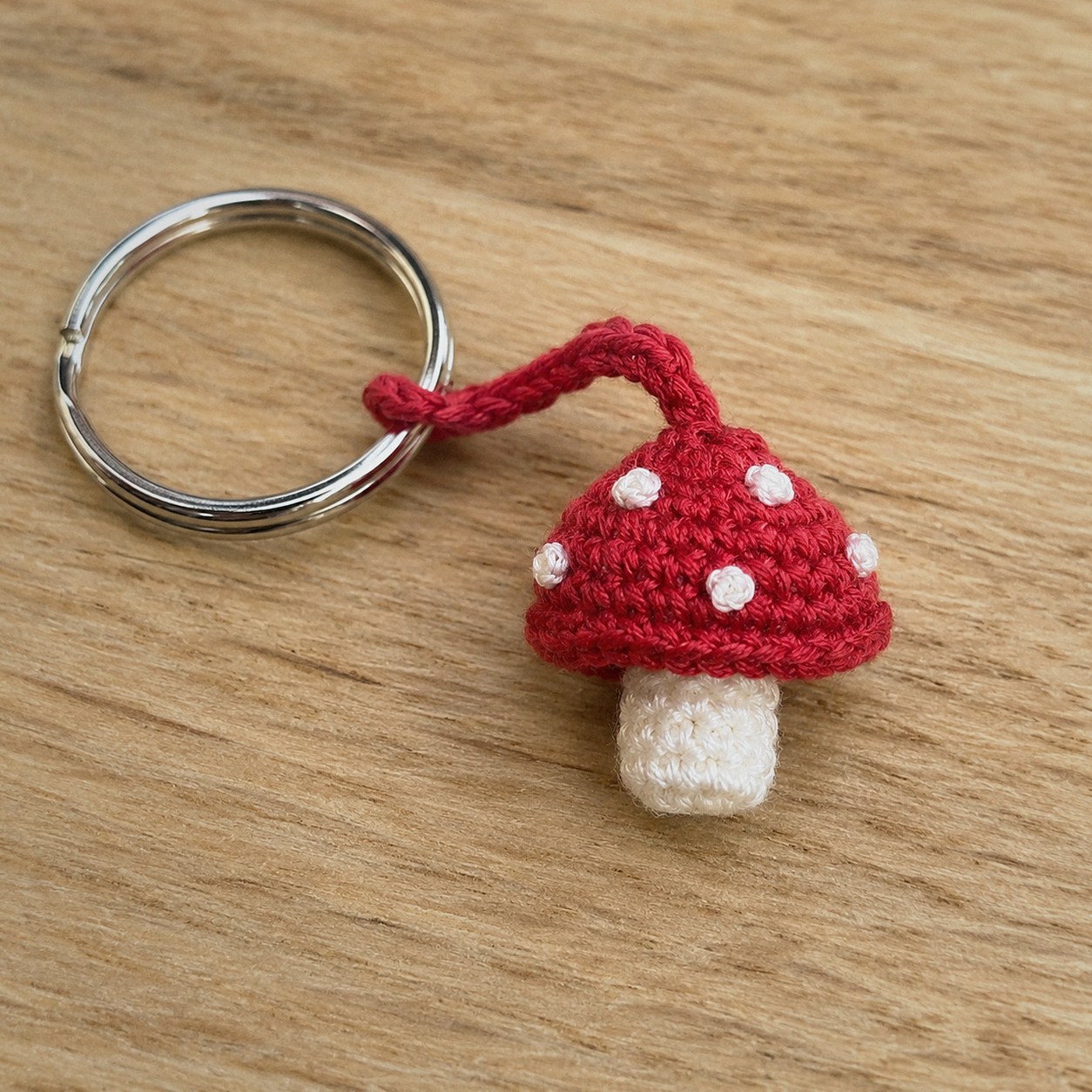
A red cap with white French-knot spots on a short white stem. Round 7 of the cap goes in back loops only so the edge flares.
Rounds: cap 6, 12, 18, 24, 24, 24, 18 (back loops), 12; stem 6, 12, 12, 12, 12, 12
4. Bee
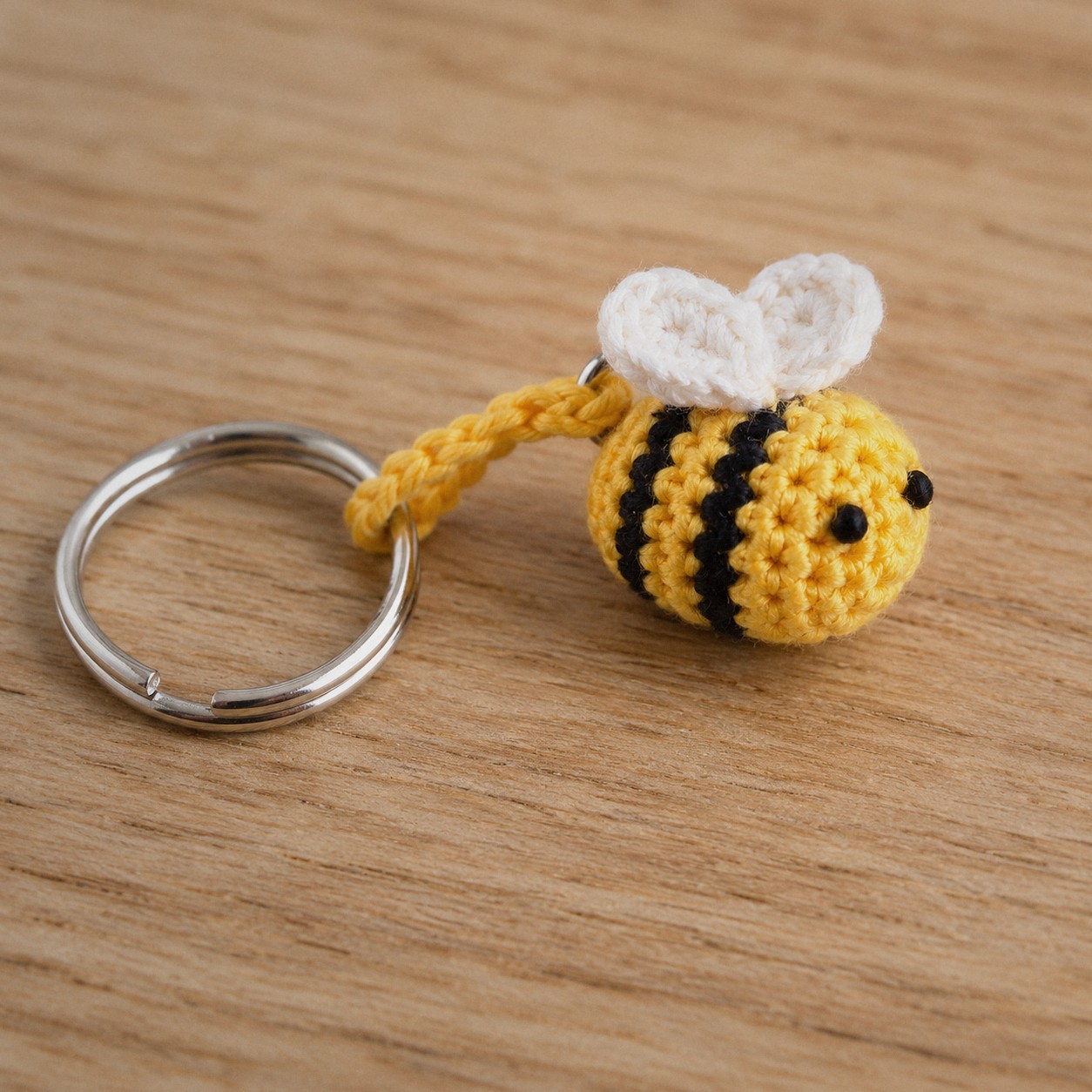
A yellow ball with two black stripes worked in, French knot eyes and two tiny white wings made like flat 6-stitch circles.
Rounds: 6, 12, 18, then 18 for six rounds (rounds 6 and 8 in black), 12, 6
5. Cactus in a pot
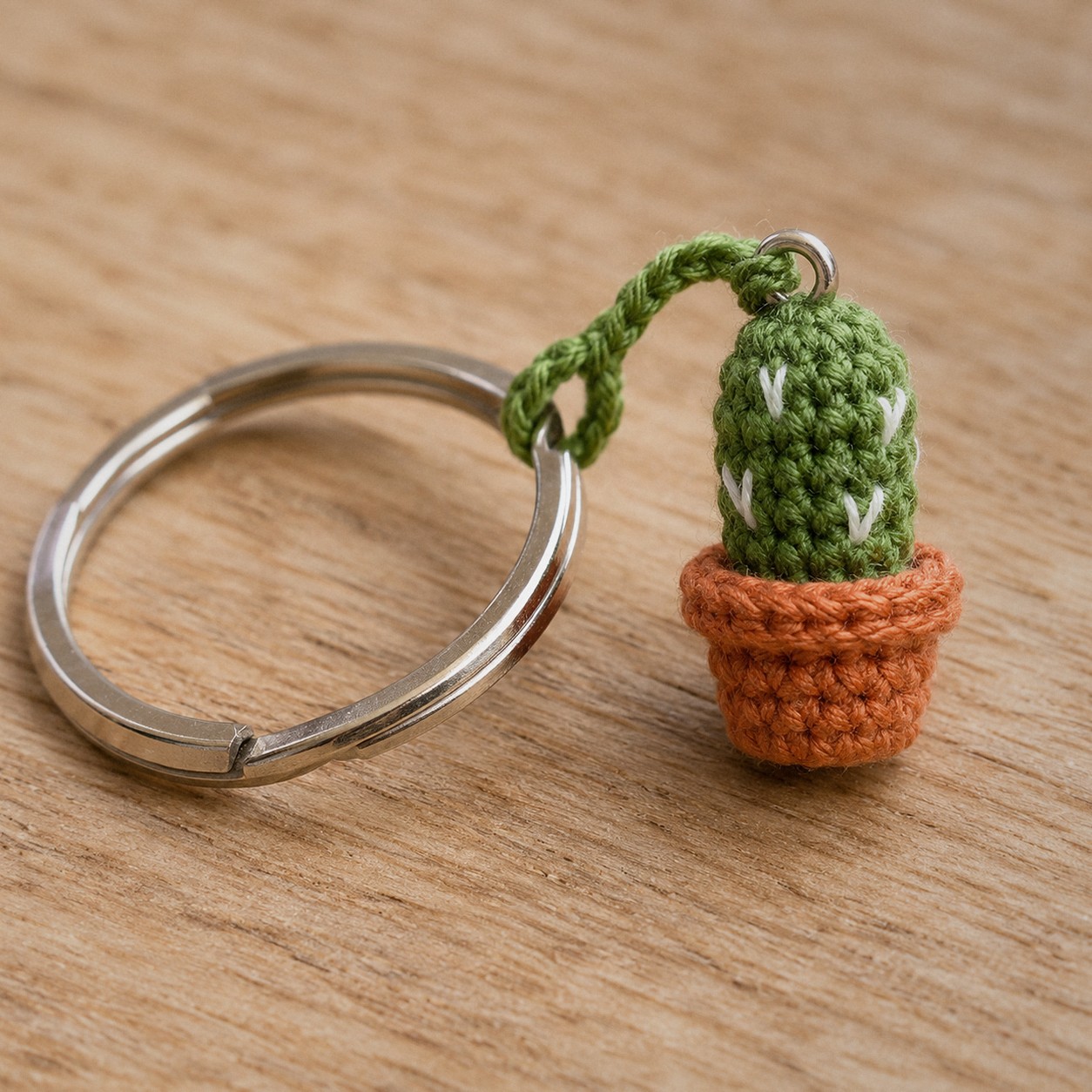
A green tube with white straight-stitch spines, stuffed and pushed into a little terracotta pot. Round 4 of the pot in back loops only gives the folded rim.
Rounds: cactus 6, 12, then 12 for eight rounds; pot 6, 12, 18, 18 (back loops), 18, 18, 18
6. Chick
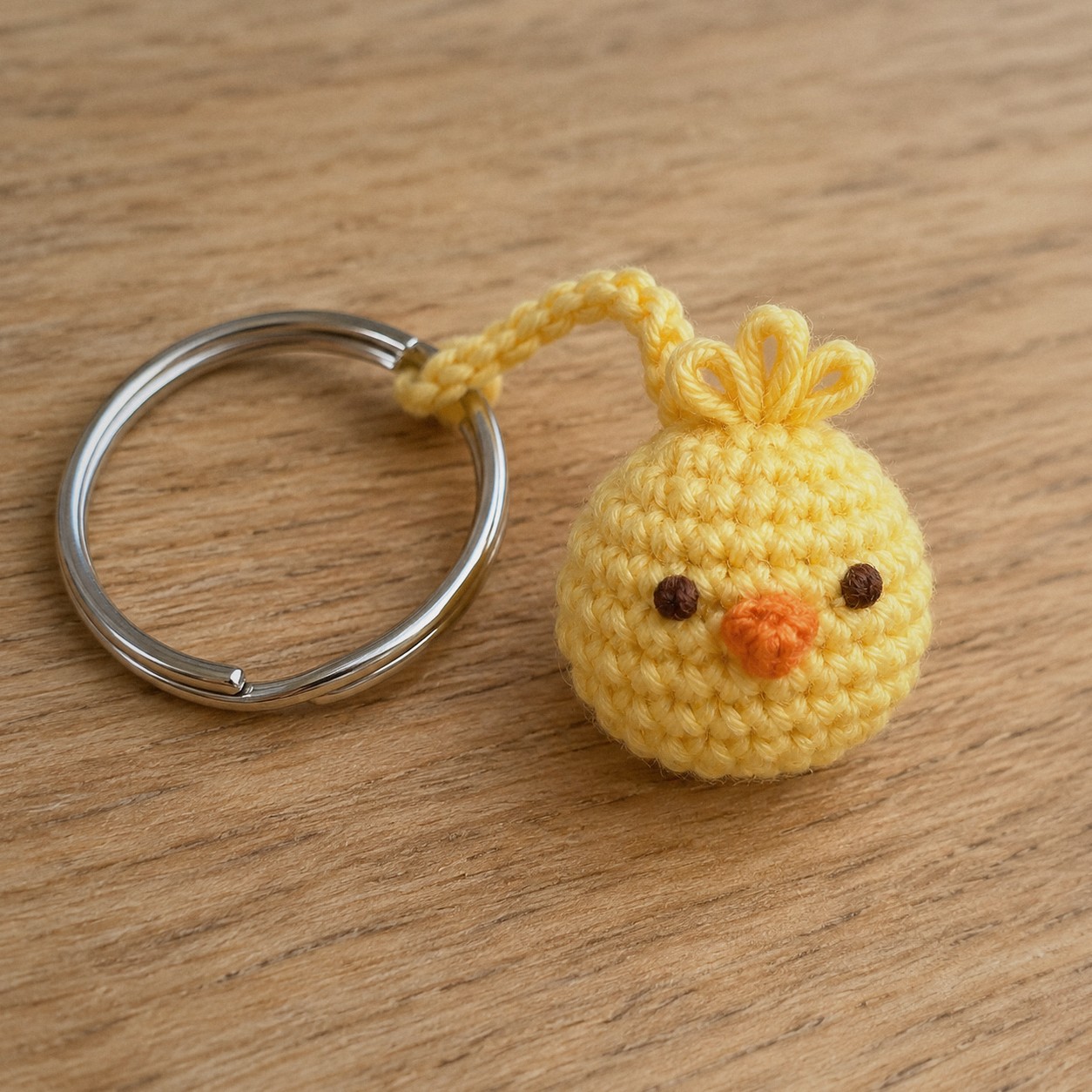
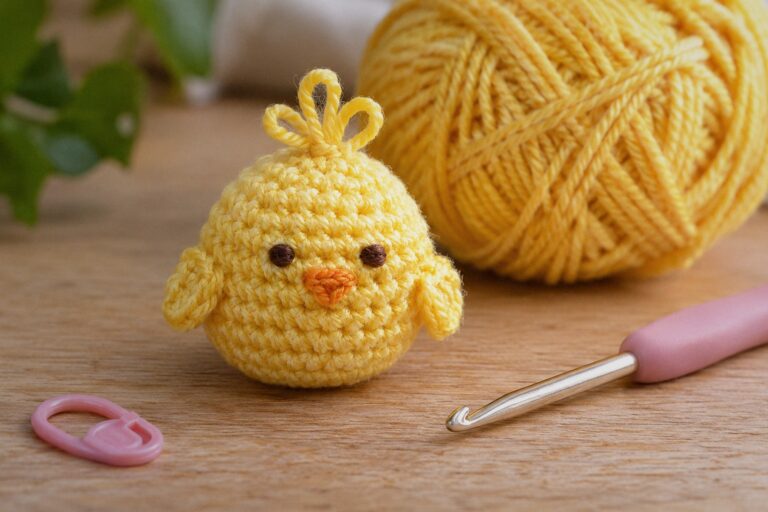
A yellow ball with an orange beak and three little yarn loops on top. A bigger version is our practice pattern in what is amigurumi.
Rounds: 6, 12, 18, then 18 for five rounds, 12, 6
7. Octopus
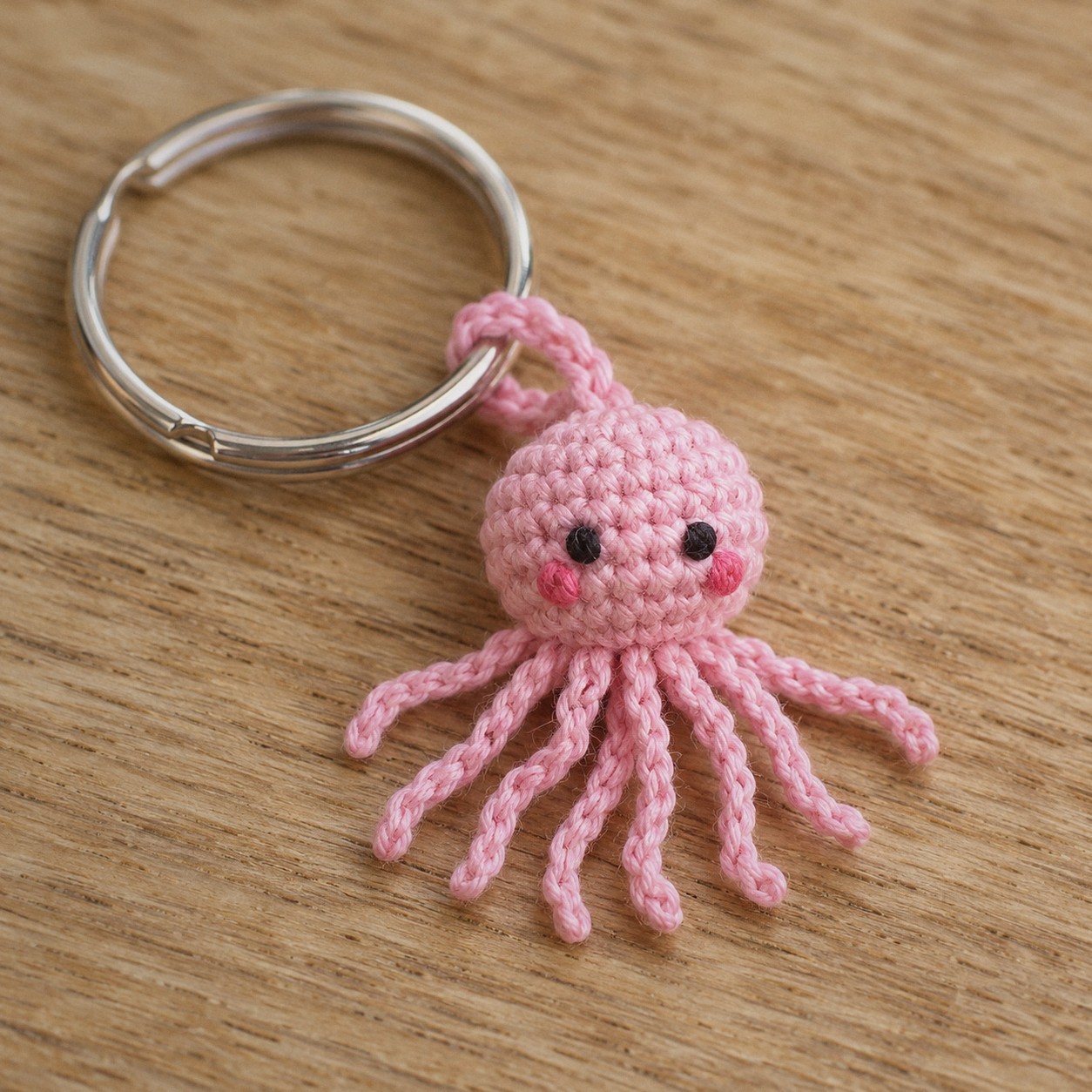
A pink ball with eight curly legs: for each leg, chain 12 and work 2 sc in each chain back toward the body.
Rounds: head 6, 12, 18, then 18 for five rounds, 12, 6; legs ch 12 each
8. Whale
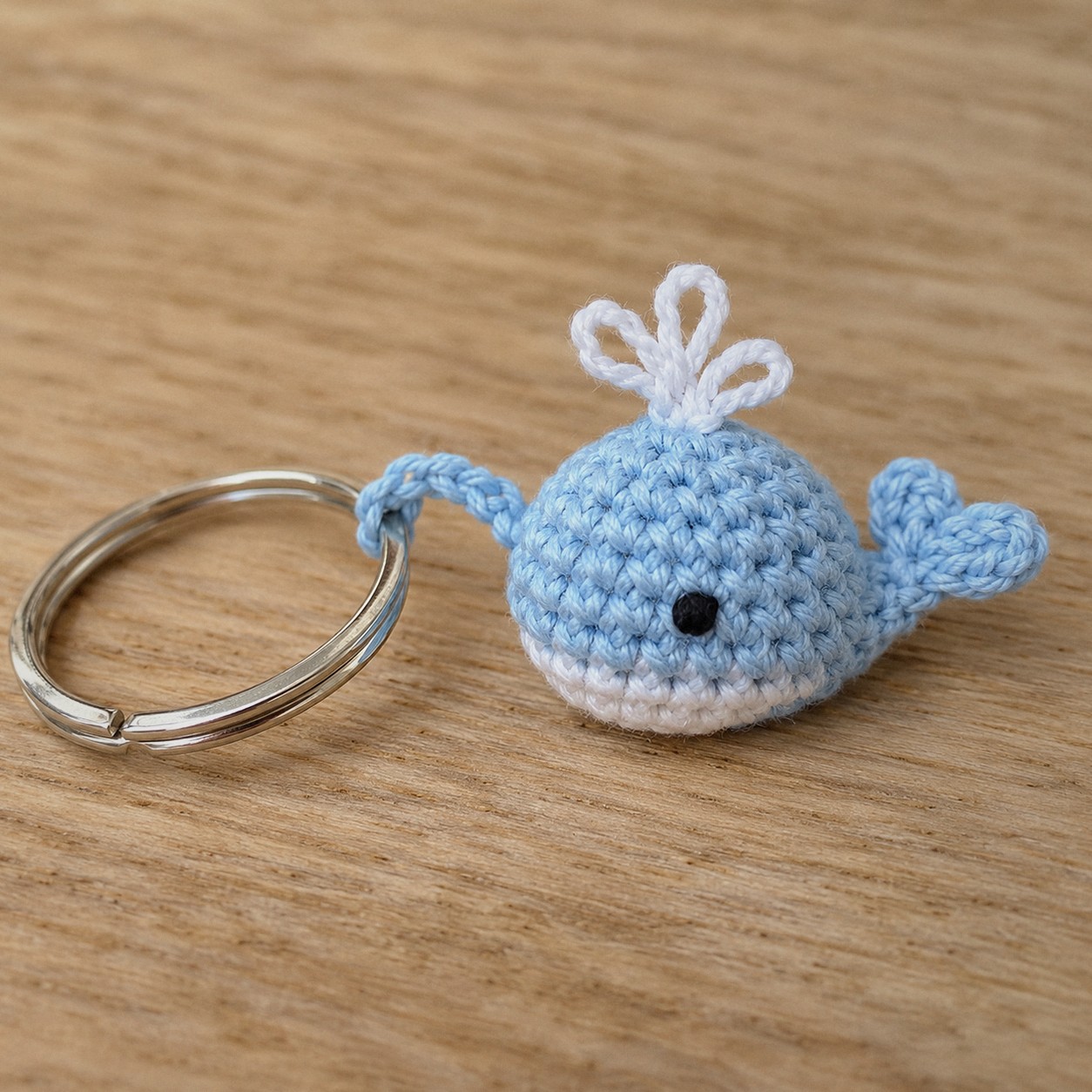
A blue ball a little wider than tall, with the last four rounds in white for the belly, a small flat tail fin and three yarn loops for the spout.
Rounds: 6, 12, 18, 24, then 24 for four rounds, 18, 12, 6 (rounds 8 to 11 in white)
9. Bunny head
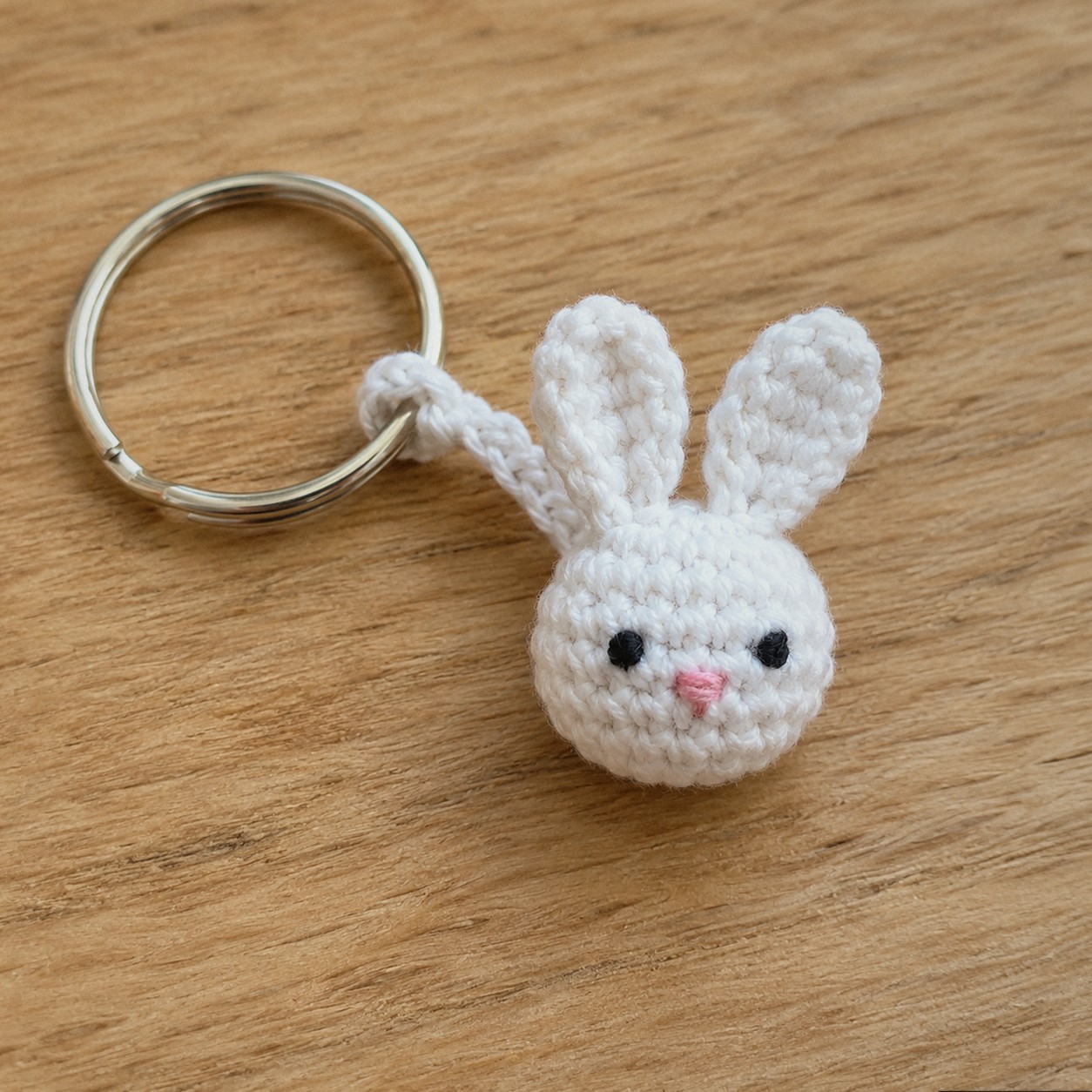
A white ball head with two long flat ears, black French knot eyes and a pink nose.
Rounds: head 6, 12, 18, then 18 for four rounds, 12, 6; ears 5, 10, then 10 for four rounds, flat
10. Lemon
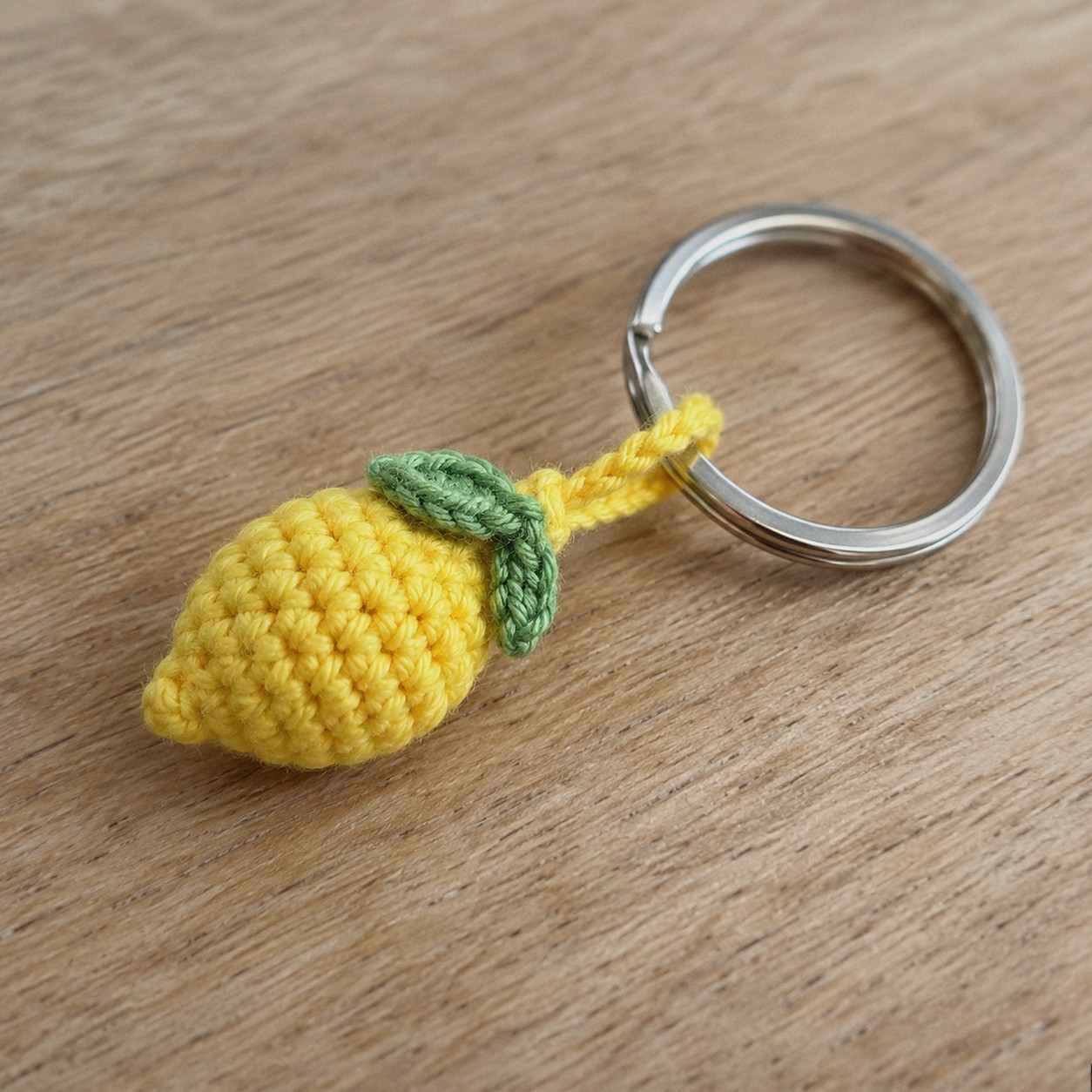
A yellow egg with a point at each end: start with 4 stitches and finish back down to 4.
Rounds: 4, 6, 12, 18, then 18 for four rounds, 12, 6, 4
Free pattern: mini strawberry keychain
- Size: about 0.9 in / 2.4 cm wide and 1 in / 2.5 cm tall
- Yarn: DK cotton, about 8 yd / 7 m in red (A), with scraps of green (B) and yellow (C)
- Abbreviations: MR magic ring, sc single crochet, inc 2 sc in one stitch, dec invisible decrease, point 3 = ch 4, then working back along the chain from the 2nd ch: sc, hdc, dc
Strawberry
Color: start with A (red).
Increases by 3 stitches a round give the cone shape.
- Rnd 1: 6 sc in a magic ring. (6)
- Rnd 2: (sc, inc) ×3. (9)
- Rnd 3: Sc, inc, (2 sc, inc) ×2, sc. (12)
- Rnd 4: (3 sc, inc) ×3. (15)
- Rnd 5: 2 sc, inc, (4 sc, inc) ×2, 2 sc. (18)
- Rnds 6–7: Sc around. (18)
- Rnd 8: (sc, dec) ×6. (12)
- Rnd 9: Dec ×6. (6)
Placement: Seeds in C: 8 to 10 single straight stitches scattered over R2-R7.
Finish: Stuff firmly after R8, FO and close the hole.
Leaf Cap
Color: start with B (green).
- Rnd 1: 5 sc in MR. (5)
- Rnd 2: (sc, point 3) ×5. (5)
Finish: FO, sew on over the closed top with the points spread out; sew the keychain loop through the center.
FAQ
Do keychains get dirty?
Cotton can be hand-washed and dried flat. Darker colors, like the bee or the avocado, hide wear best.
Are these safe for small children?
No. They are small enough to swallow and the rings are metal. Keep them for keys, bags and pencil cases.
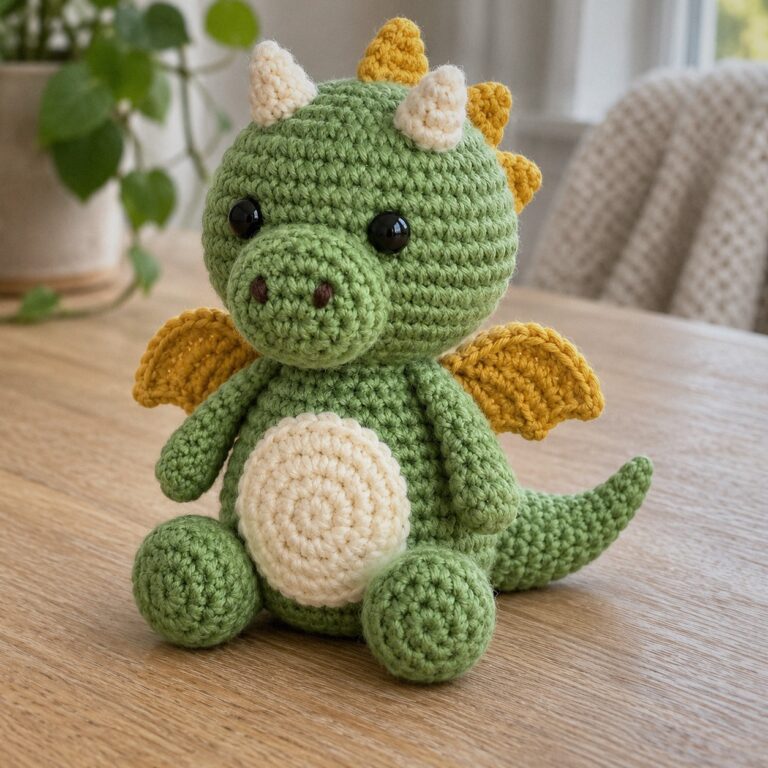
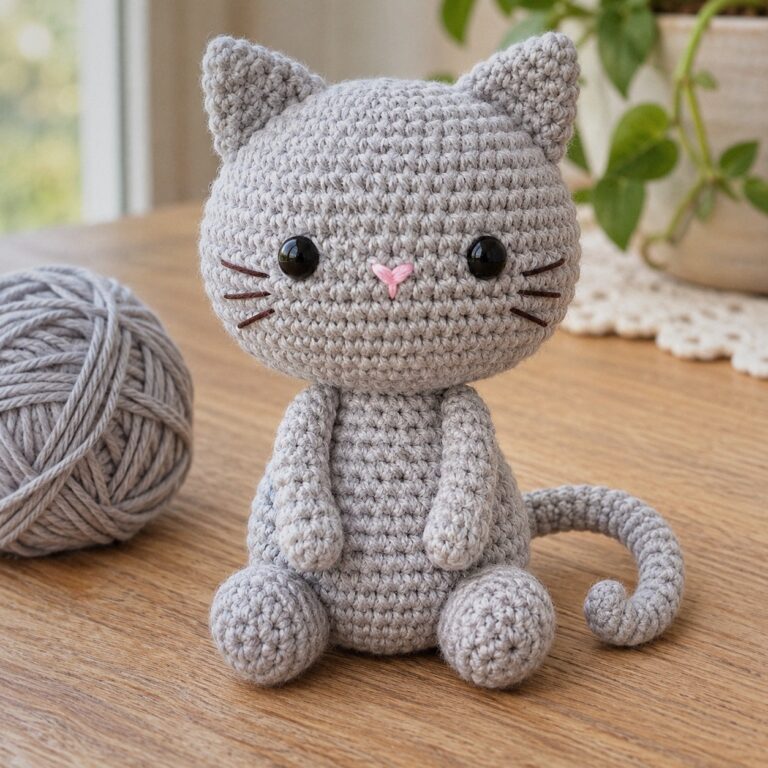
Ready for something bigger? The amigurumi cat and the little dragon are next-step toys.