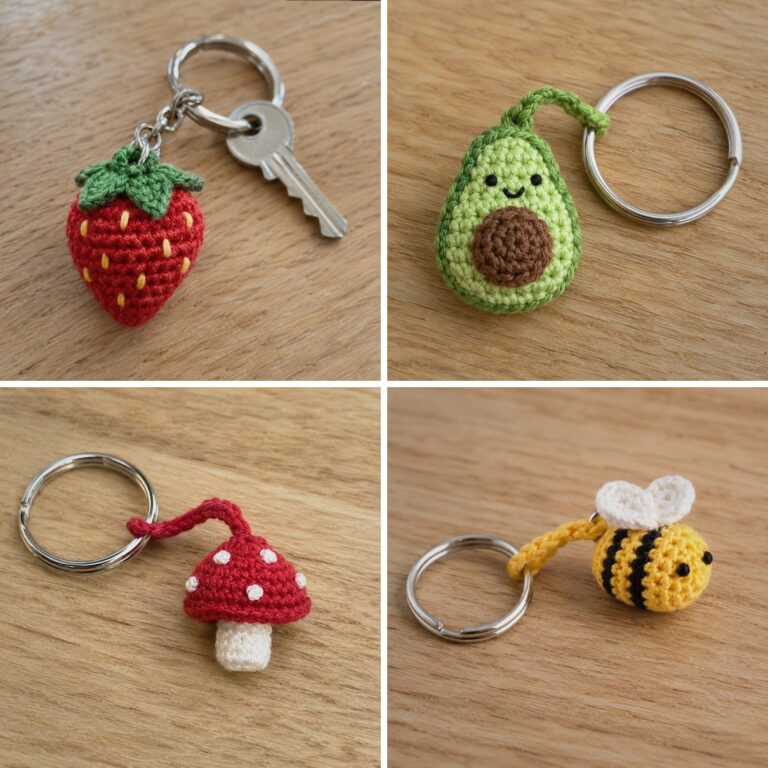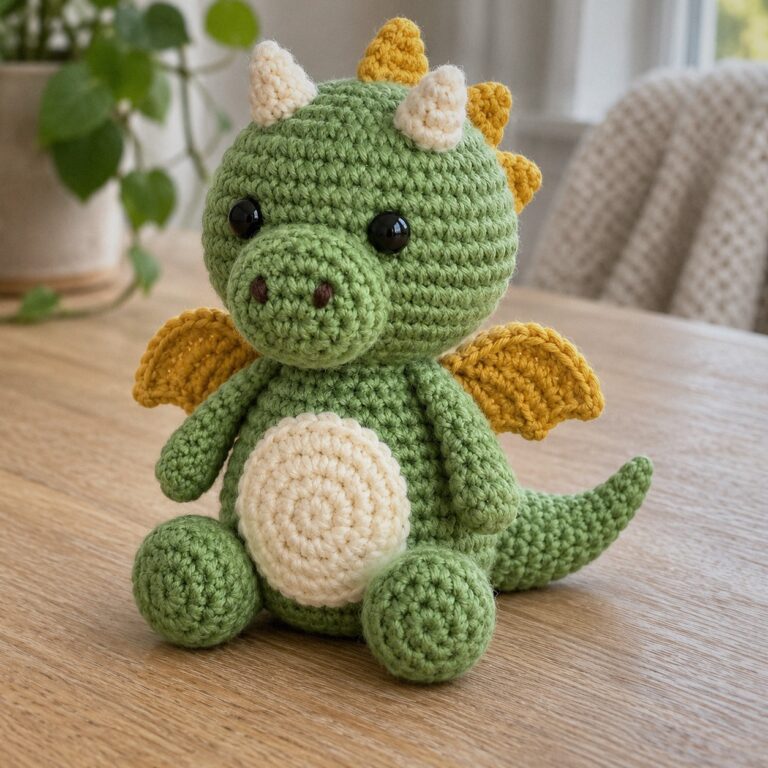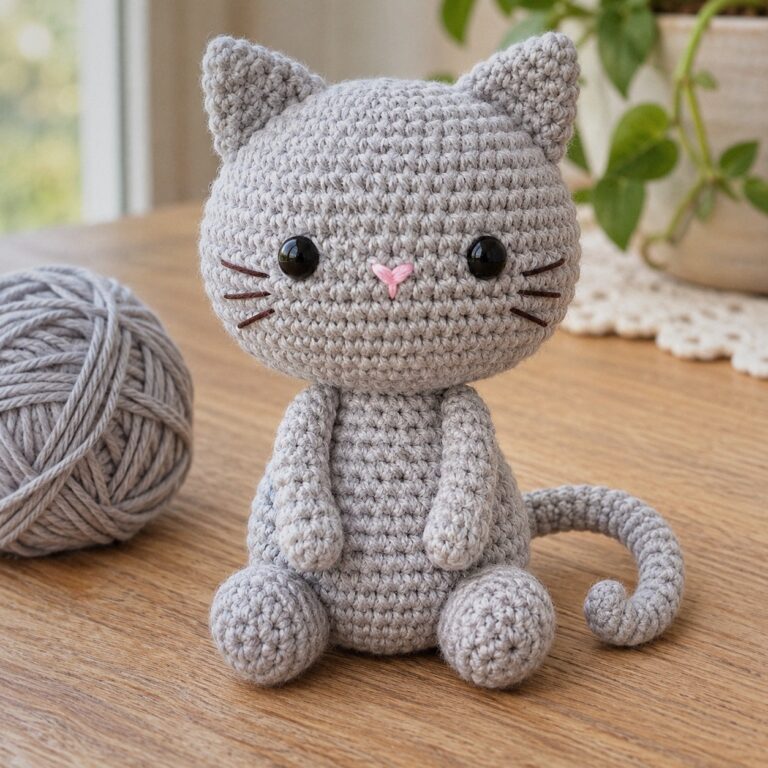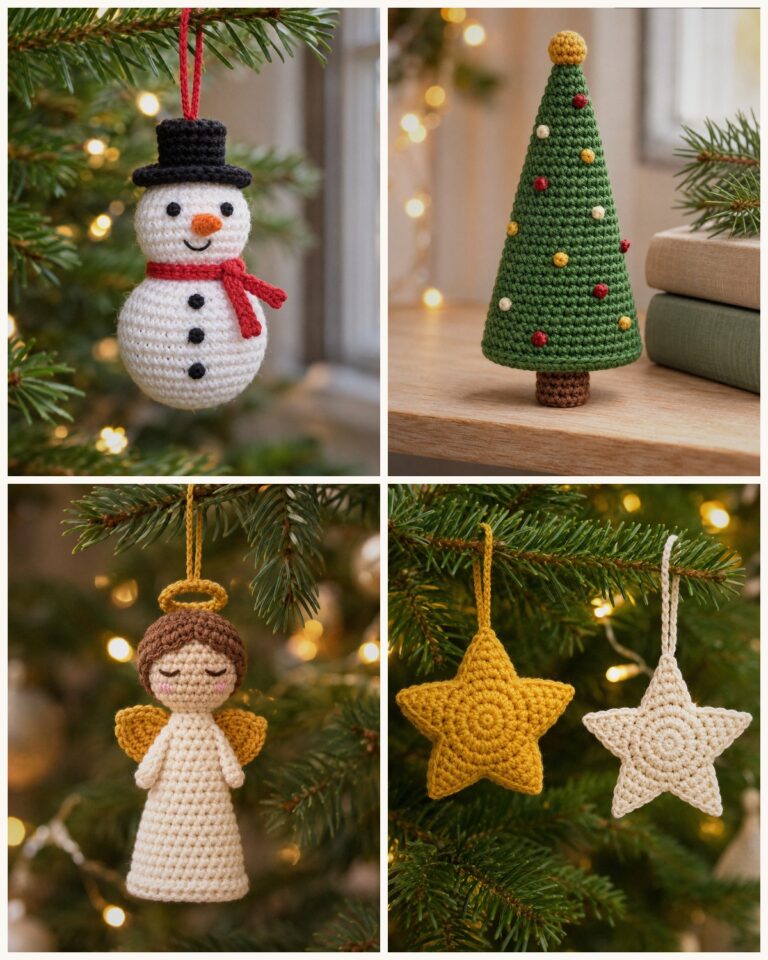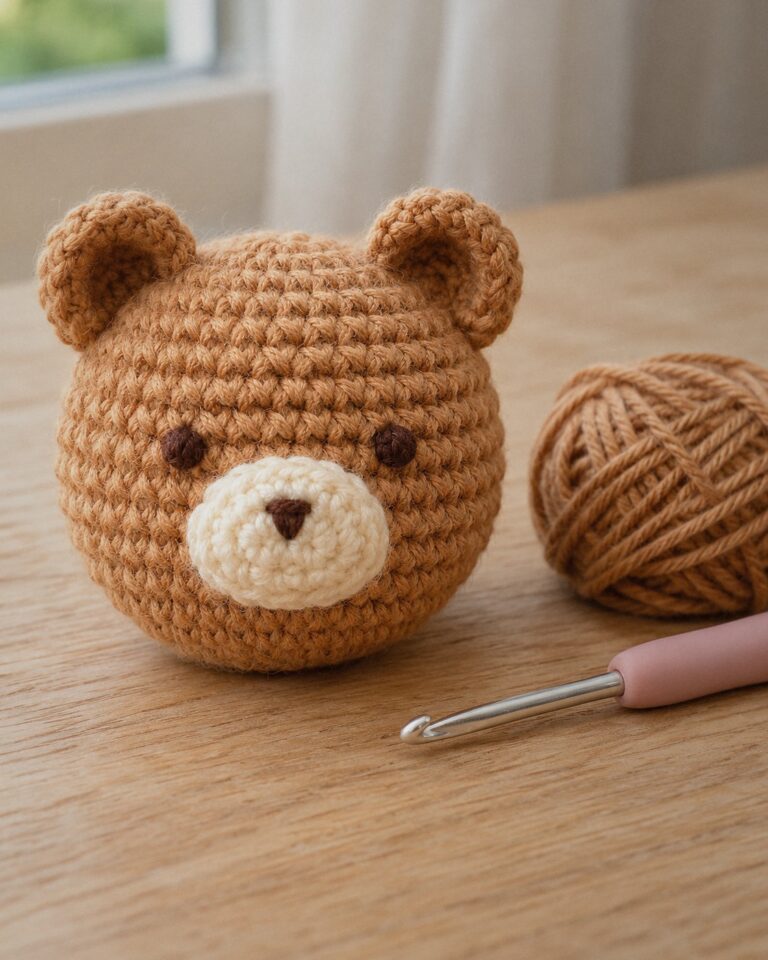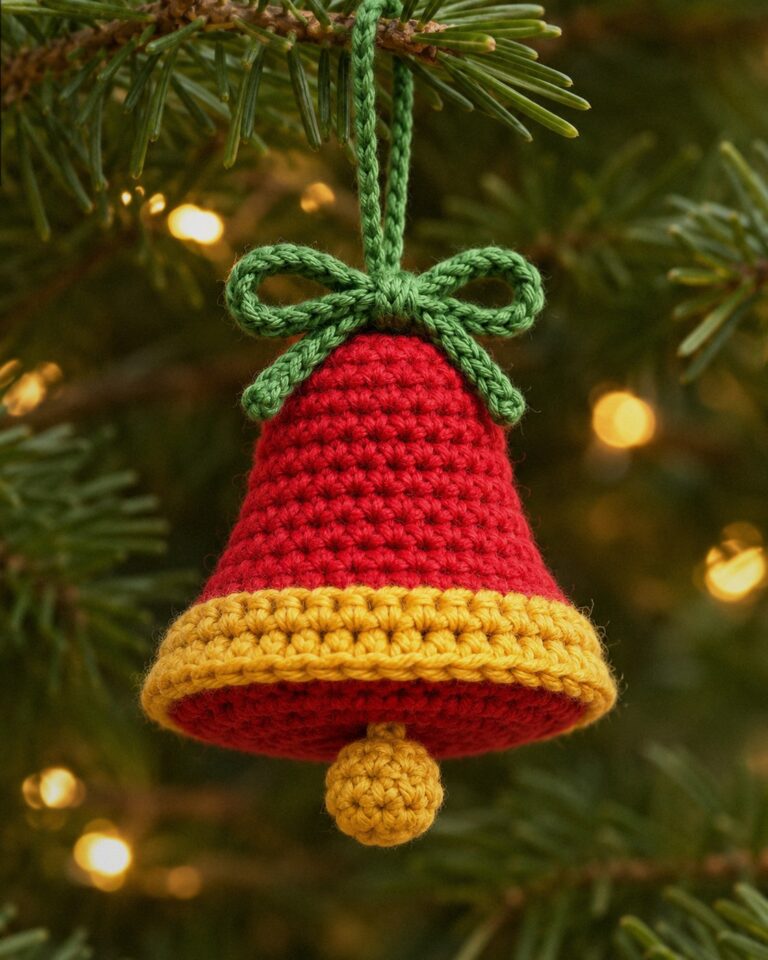
Amigurumi is the craft of crocheting (or, less often, knitting) small stuffed toys and figures. The word is Japanese: ami means crocheted or knitted, and nuigurumi means a stuffed doll. Most amigurumi are small, round and simple, with a big head, a small body and a face made from two eyes and very little else.
This guide explains what makes amigurumi different from other crochet, what you need to start, and how hard it really is. At the end there is a tiny practice chick you can make in about 45 minutes.
In this post8 sections
How amigurumi is different from other crochet
- It is worked in spiral rounds. Instead of rows that turn back and forth, you crochet round and round without joining, like a spring. A stitch marker shows where each round starts.
- It is tight. You use a smaller hook than the yarn label suggests (for DK cotton, about 2.5 mm instead of 4 mm). The fabric comes out dense, so the stuffing doesn’t show between the stitches.
- It mostly uses one stitch. Almost everything is single crochet (US terms). Shapes come from increasing and decreasing, not from fancy stitches.
- It is made in pieces. A head, a body, ears and arms are crocheted separately, stuffed and sewn together. Some patterns join pieces as you go to save sewing.
What you need to start
- Yarn: smooth cotton or acrylic in a light color, DK or worsted weight. Our best yarn for amigurumi guide compares the main options.
- A small hook: 2.5 mm for DK cotton, 3.5 mm for worsted acrylic.
- Stitch markers, fiberfill, a tapestry needle and scissors.
- Eyes: embroidered with dark yarn, or safety eyes. See our safety eyes guide for sizes and how to fit them.
Is amigurumi hard?
The stitches are easy. What takes practice is the tension (keeping it tight and even), counting every round, and sewing the pieces so the face looks right. Most people find their second or third toy looks much better than the first, mainly because they learn where to put the eyes.
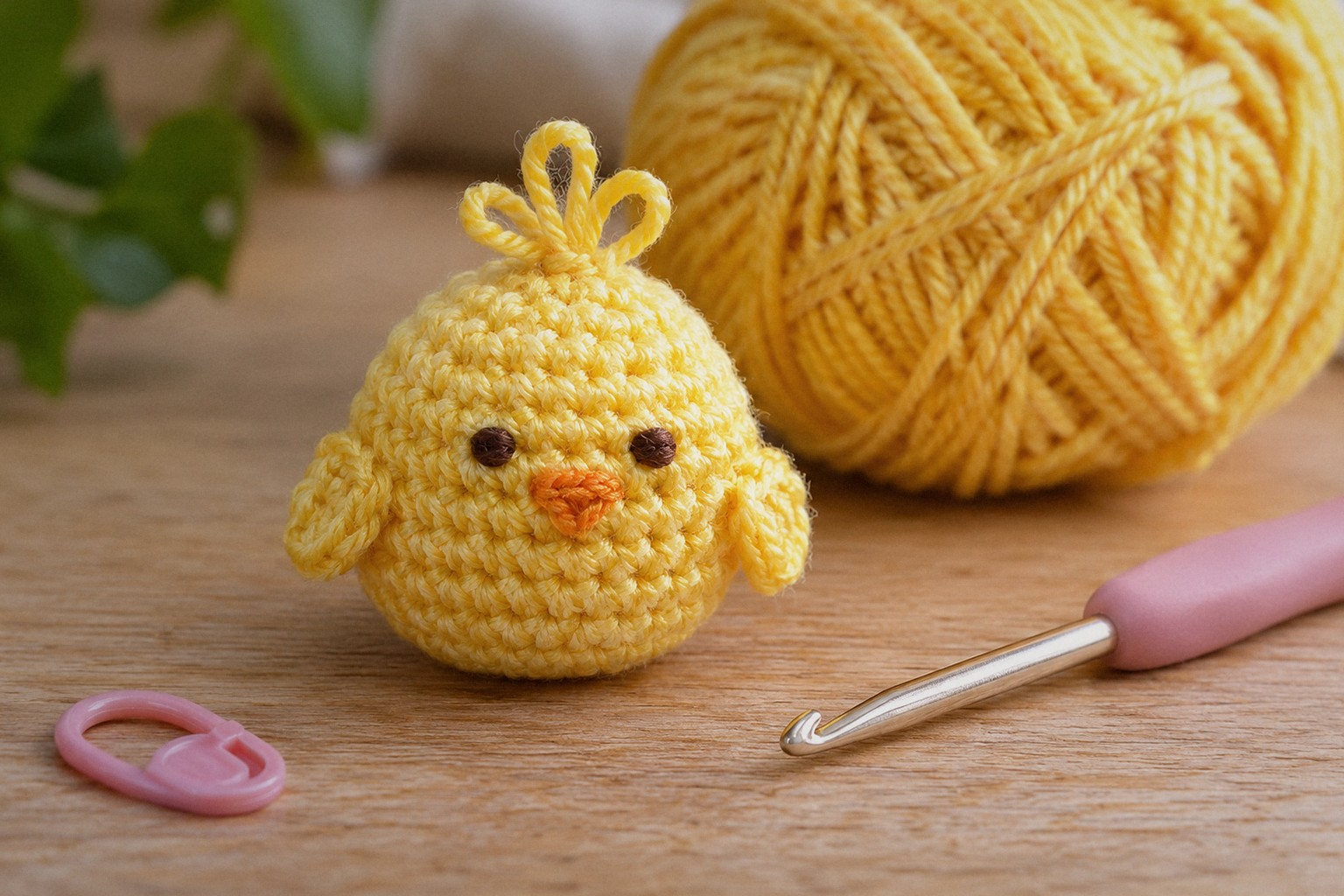
A small ball like the chick below takes under an hour. A typical 4 in / 10 cm animal with arms, legs and ears takes three to five hours.
How to read an amigurumi pattern
A round like R4: sc, inc, (2 sc, inc) x5, sc [24] means: in round 4, work one single crochet, one increase, then repeat “two single crochet, one increase” five times, then one more single crochet. The number in brackets is how many stitches you should have at the end. If your count is different, fix it before you go on.
Our amigurumi for beginners guide walks through the magic ring, spiral rounds, increases, decreases and stuffing step by step.
Amigurumi vs. knitted stuffed toys
You can knit amigurumi too, but crochet is far more common. Single crochet makes a firm, thick fabric on its own, and working in the round with one live loop is easier than knitting small tubes on double-pointed needles.
Practice pattern: a tiny chick
One stuffed ball, a tiny beak and two flat wings, about 1.3 in / 3.2 cm across. It practices the magic ring, increases, straight rounds, decreases and closing the hole.
- Yarn: DK cotton, yellow (A) about 14 yd / 13 m, a little orange (B) and dark brown (C)
- Hook: 2.5 mm (US B/1–C/2)
- Abbreviations: MR magic ring, sc single crochet, inc 2 sc in one stitch, dec invisible decrease, FO fasten off
Body
Color: start with A (yellow).
The ball.
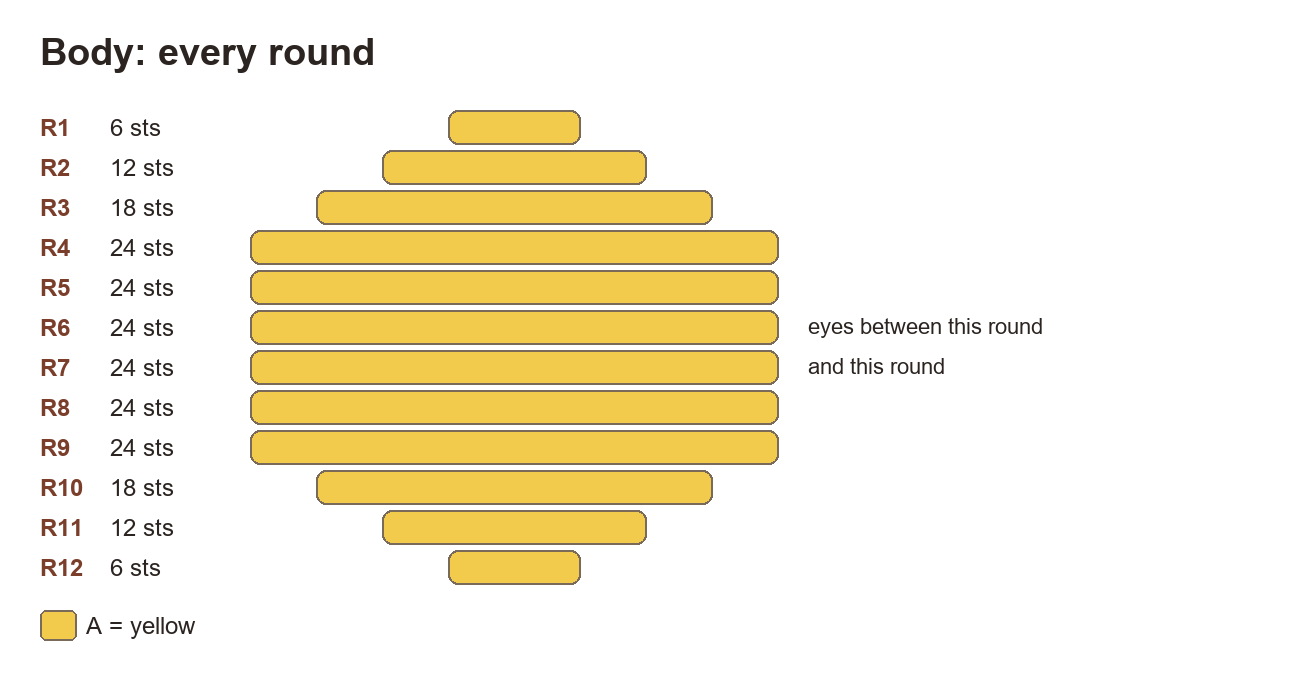
- Rnd 1: 6 sc in a magic ring. (6)
- Rnd 2: Inc ×6. (12)
- Rnd 3: (sc, inc) ×6. (18)
- Rnd 4: Sc, inc, (2 sc, inc) ×5, sc. (24)
- Rnds 5–9: Sc around. (24)
- Rnd 10: Sc, dec, (2 sc, dec) ×5, sc. (18)
- Rnd 11: (sc, dec) ×6. (12)
- Rnd 12: Dec ×6. (6)
Placement: Eyes in C: two French knots between R6 and R7, 5 sts apart.
Placement: Beak centered between the eyes, one round lower.
Finish: Stuff firmly after R11, FO and close the hole; pull 3 loops of A through the top for a tuft.
Beak
Color: start with B (orange).
- Rnd 1: 4 sc in MR. (4)
- Rnd 2: (sc, inc) ×2. (6)
Finish: FO, flatten, sew on with the tail.
Wing (make 2)
Color: start with A (yellow).
- Rnd 1: 6 sc in a magic ring. (6)
- Rnd 2: (sc, inc) ×3. (9)
- Rnd 3: Sc around. (9)
Finish: FO, flatten and sew on at the sides, between R6 and R9.
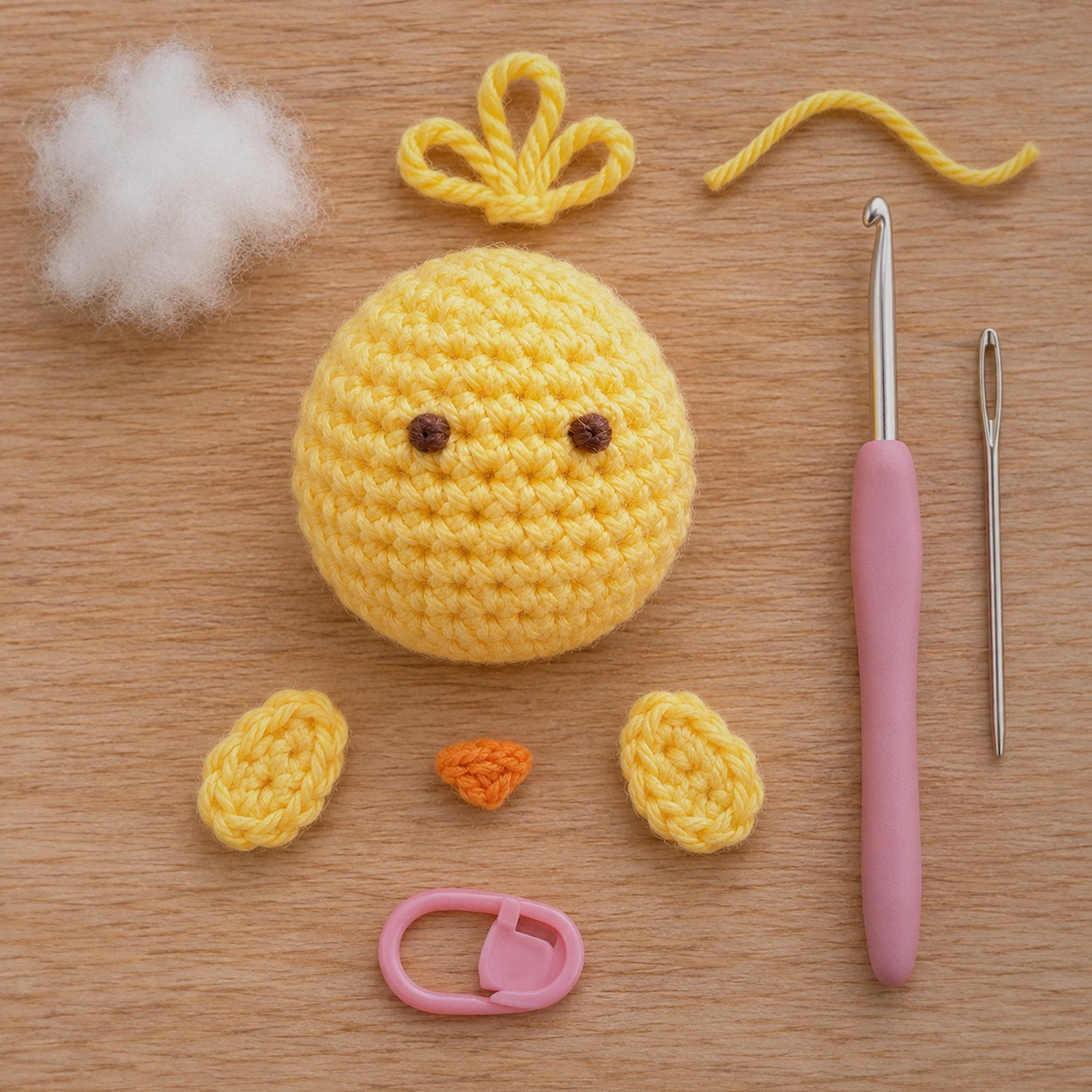
Assembly
- Sew the beak on between the eyes and one round lower.
- Sew a wing on each side, between rounds 6 and 9.
- Pull three loops of yellow yarn through the top of the head, trim them to about 0.3 in / 8 mm and tie a knot inside.
FAQ
How do you pronounce amigurumi?
Ah-mee-goo-roo-mee, with even stress on each syllable.
Is amigurumi crochet or knitting?
Either, but almost all amigurumi patterns, including every one on this site, are crochet.
What should I make first?
Something that is mostly one ball: the chick above, a mini bauble or one of our mini keychains. Then try a toy with a few pieces, like the amigurumi cat.