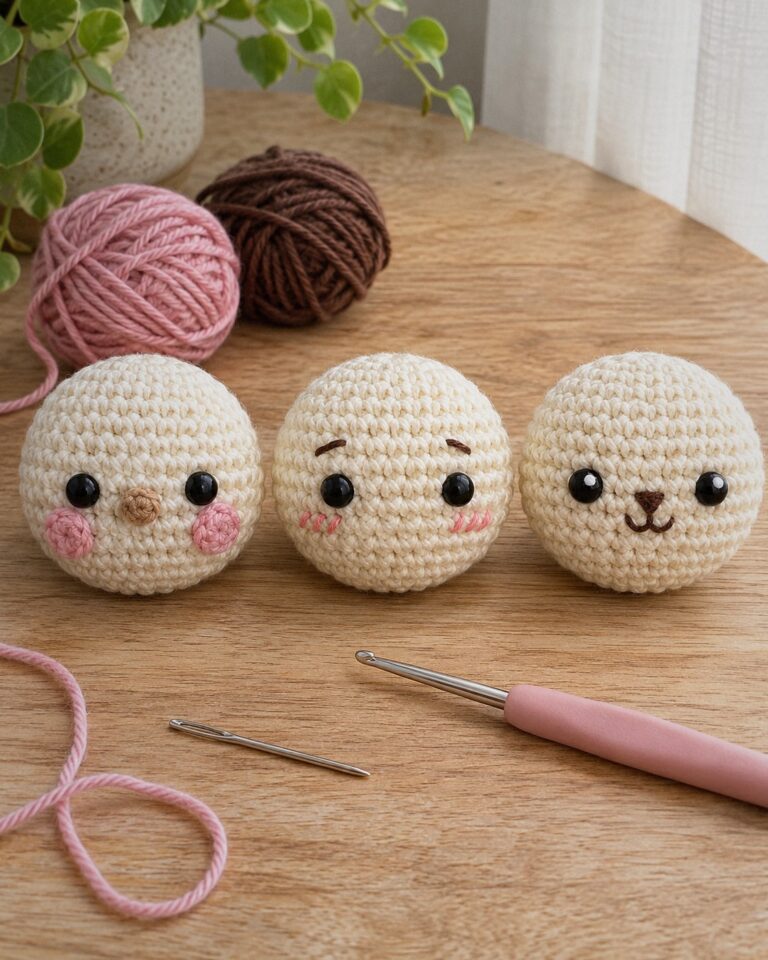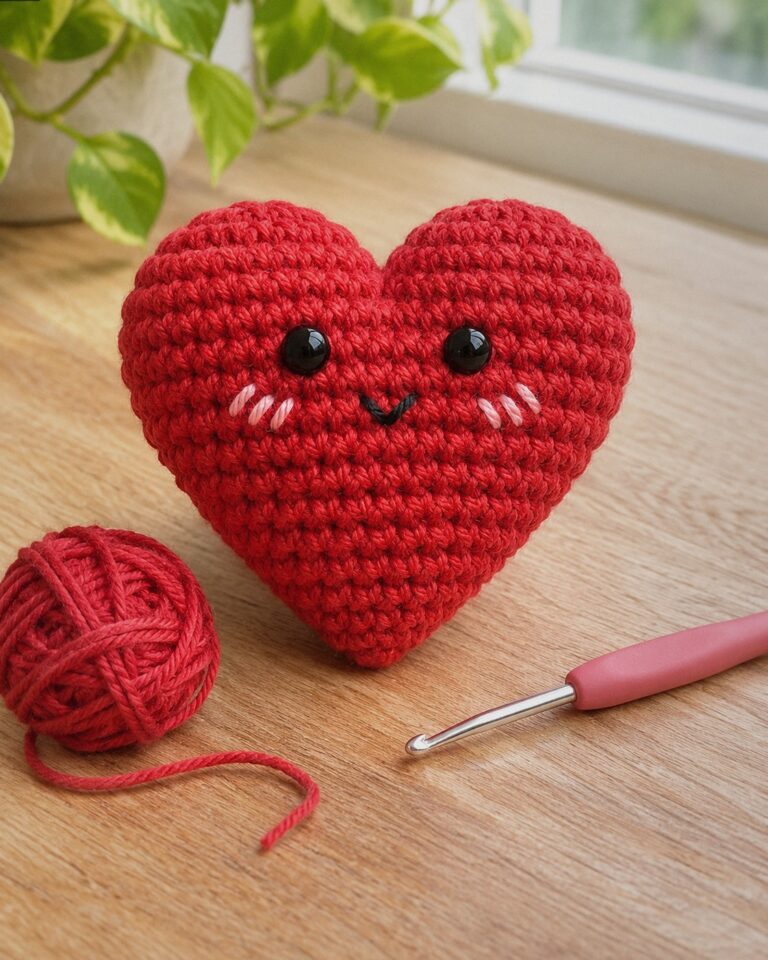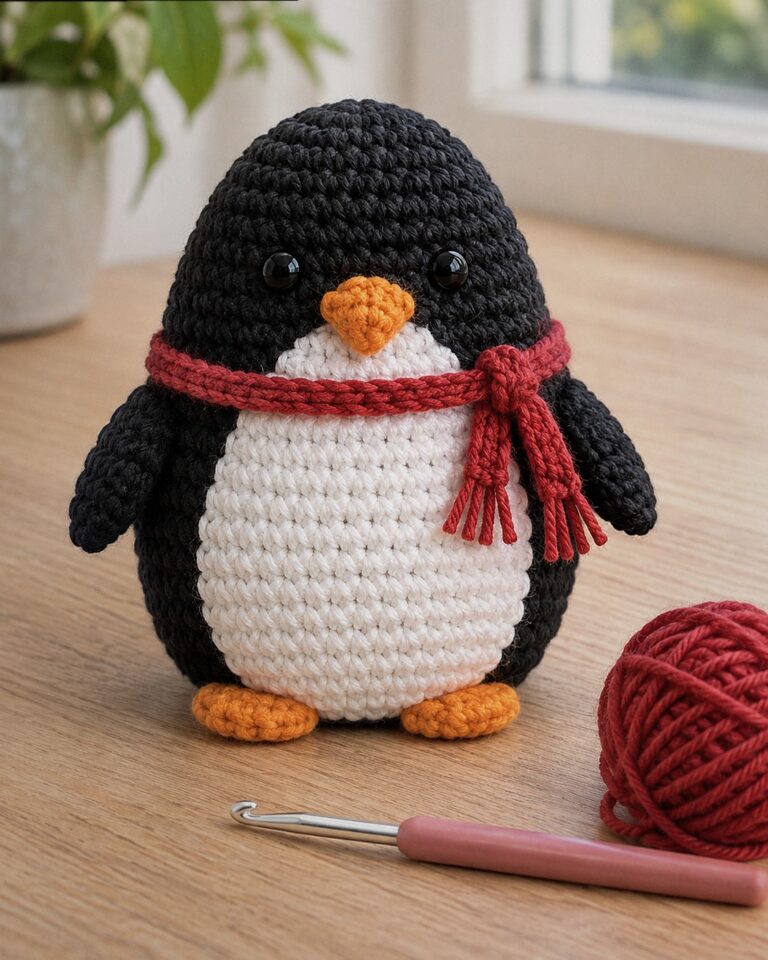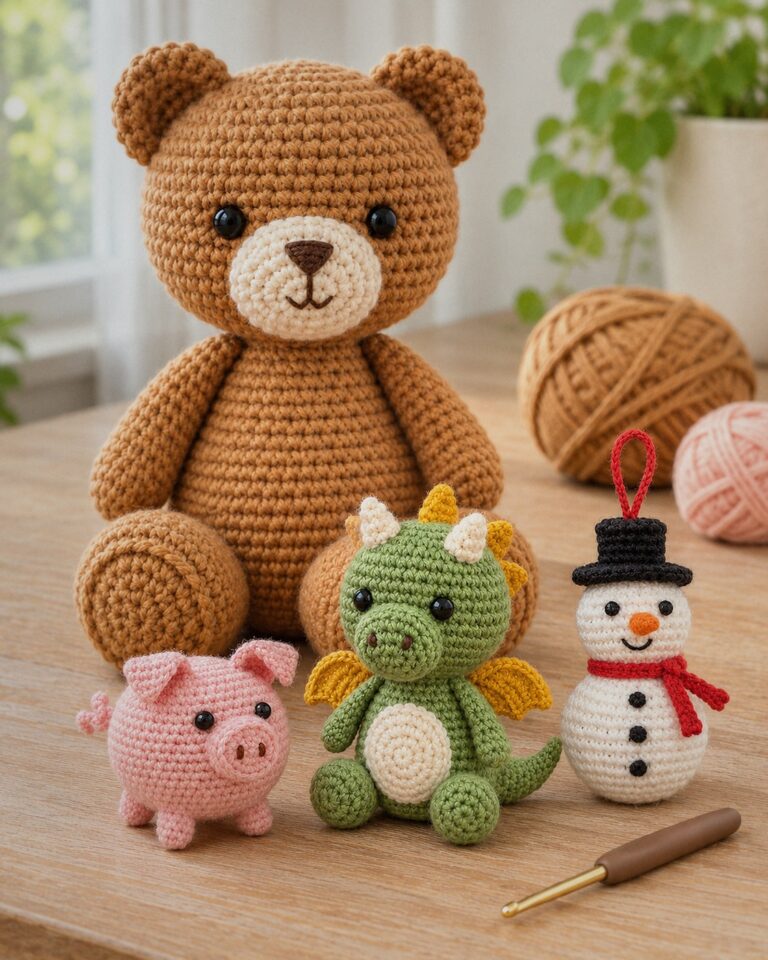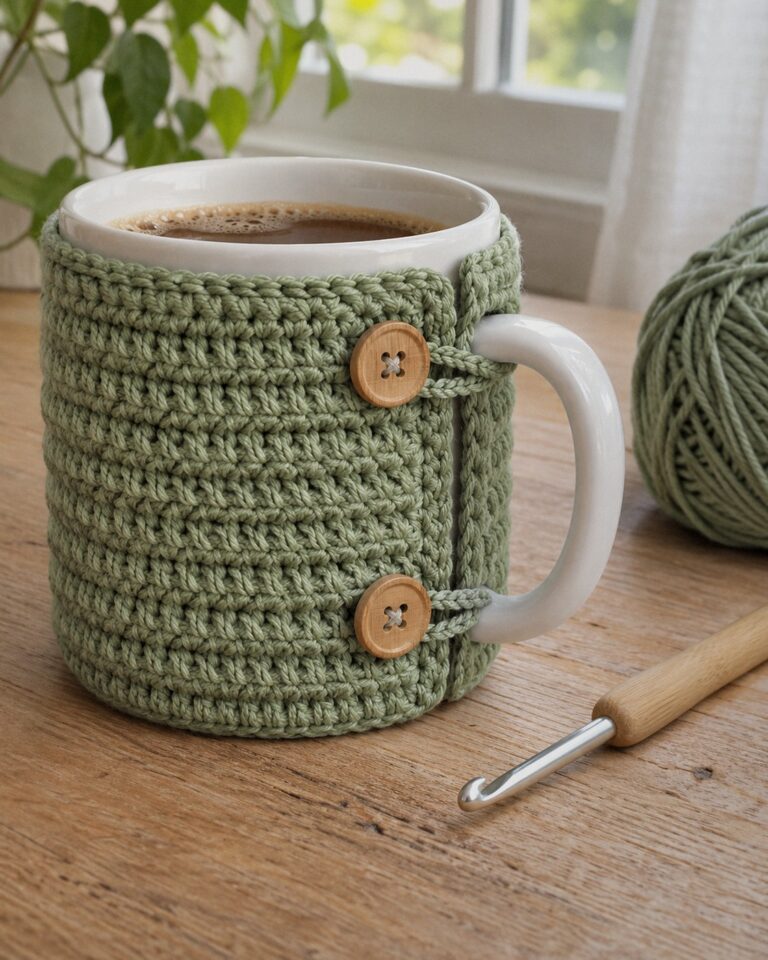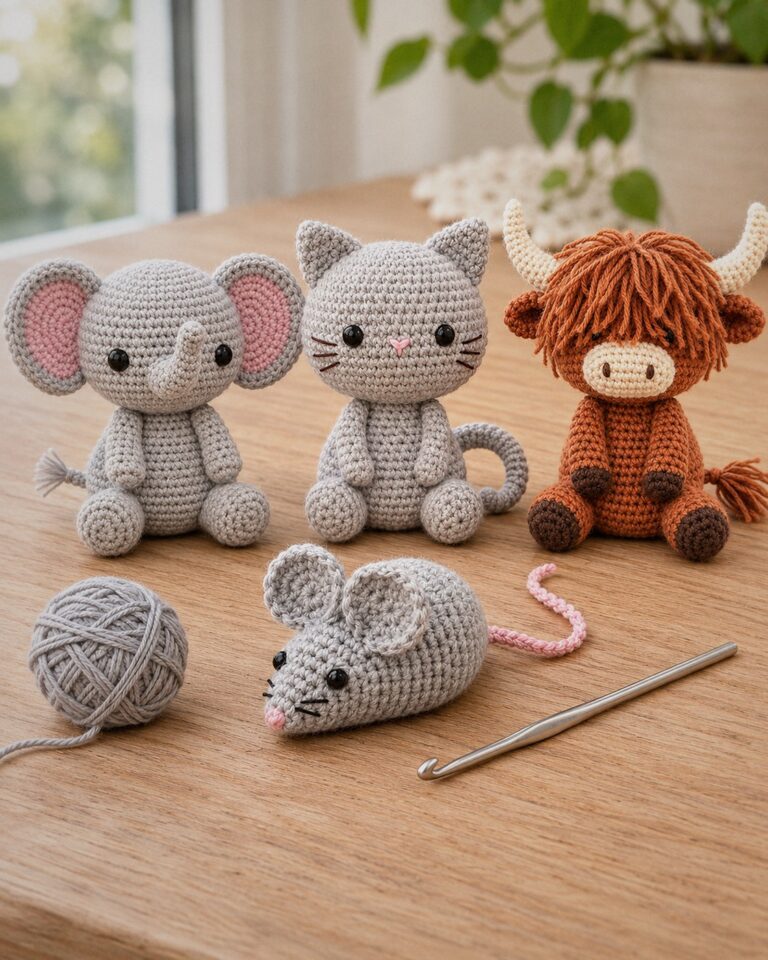
Worsted weight yarn is the yarn most of us already have in a drawer, and it makes good amigurumi. You only need to change two things compared with the ball band: a much smaller hook and a bit more stuffing. Toys come out bigger and work up faster than in DK cotton.
Below: which hook to use, how big your toy will be, how much stuffing to buy, and a quick practice pattern (a chubby seal) to try it on.
In this post8 sections
What worsted weight means
- Weight number: 4 (medium) on the standard yarn weight scale. In the UK and Australia the closest weights are aran and 10 ply.
- Length: usually about 170 to 220 yd per 100 g / 3.5 oz ball. Check the band: the yard count tells you more than the name.
- Ball band hook: 5 to 5.5 mm (US H/8 to I/9). That is for garments and blankets, not for toys.
Which hook for worsted amigurumi
Amigurumi needs a tight fabric so the stuffing does not show through. With worsted yarn that usually means a 3.5 mm (US E/4) hook, and 3.25 mm or 3.75 mm if your tension is loose or very tight. Make a small test circle of 5 rounds and stretch it: if you can see light through the stitches, go down a size. Our hook guide covers grips and materials.
How big will my toy be?
The same pattern gets bigger as the yarn gets thicker. This is the seal below, the same 26 rounds in three weights (length of the body):
| Yarn | Hook | Gauge per inch | Seal length |
|---|---|---|---|
| DK (3) | 2.5 mm | 6 sc x 6.5 rnds | about 4.0 in / 10 cm |
| Worsted (4) | 3.5 mm | 5 sc x 5.5 rnds | about 4.7 in / 12 cm |
| Bulky (5) | 5 mm | 4 sc x 4.5 rnds | about 5.8 in / 15 cm |
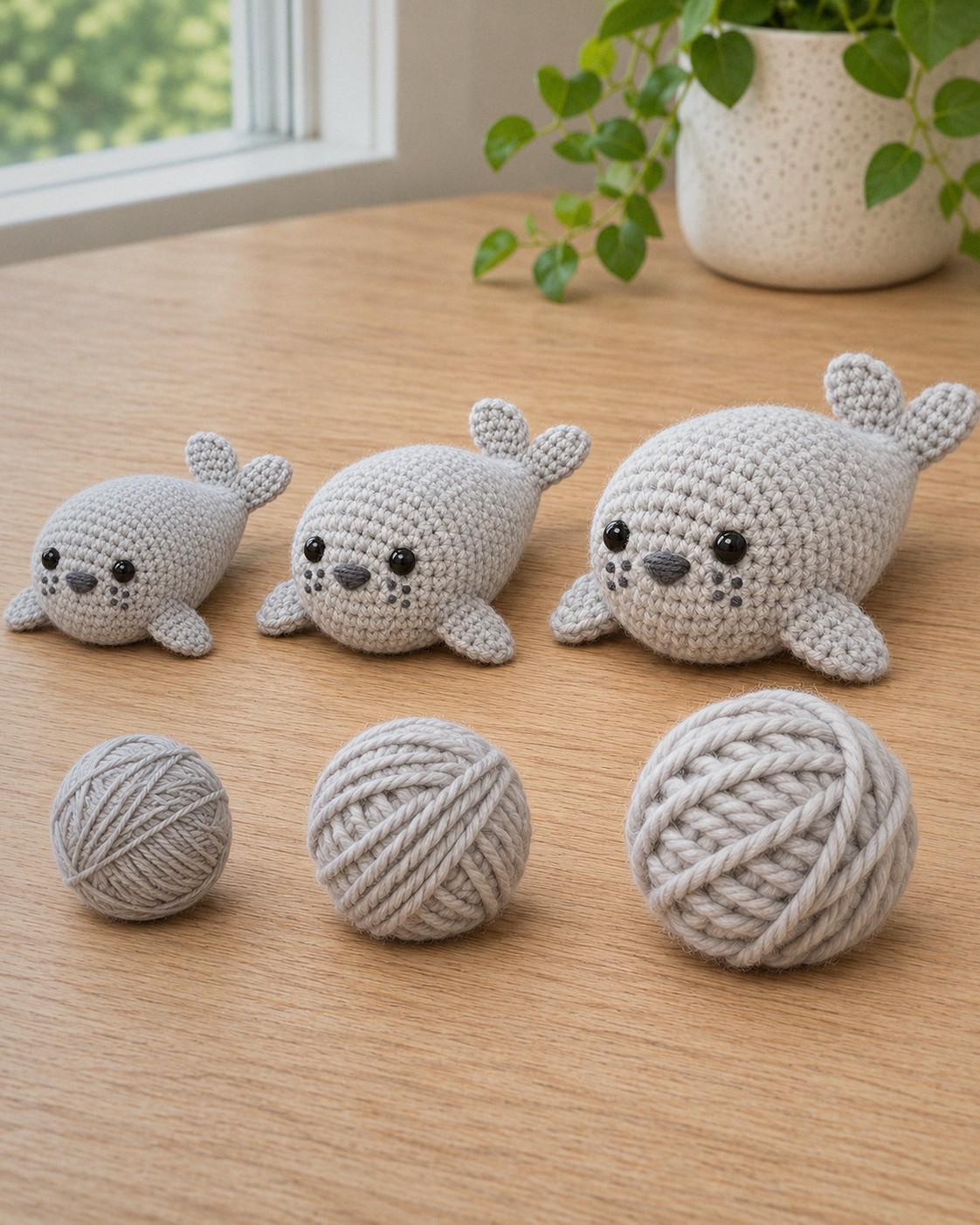
For any pattern written for DK cotton, multiply the finished size by about 1.2 to get the worsted size, and plan on about 1.5 times the yarn.
Acrylic, cotton or a blend?
- Acrylic worsted: soft, cheap, comes in every color and washes well. Stitches are a little fuzzy, so counting is harder.
- Cotton worsted: crisp stitches and sharp shapes, but harder on the hands and heavier.
- Cotton blends: a middle way. Our best yarn for amigurumi guide compares them in detail.
Stuffing and eyes
- A toy in worsted takes about 1.5 to 2 times the fiberfill of the same toy in DK. Buy a full bag for anything over 6 in / 15 cm. The stuffing guide shows how firm is firm enough.
- Eyes go up one size: 9 to 12 mm instead of 6 to 8 mm.
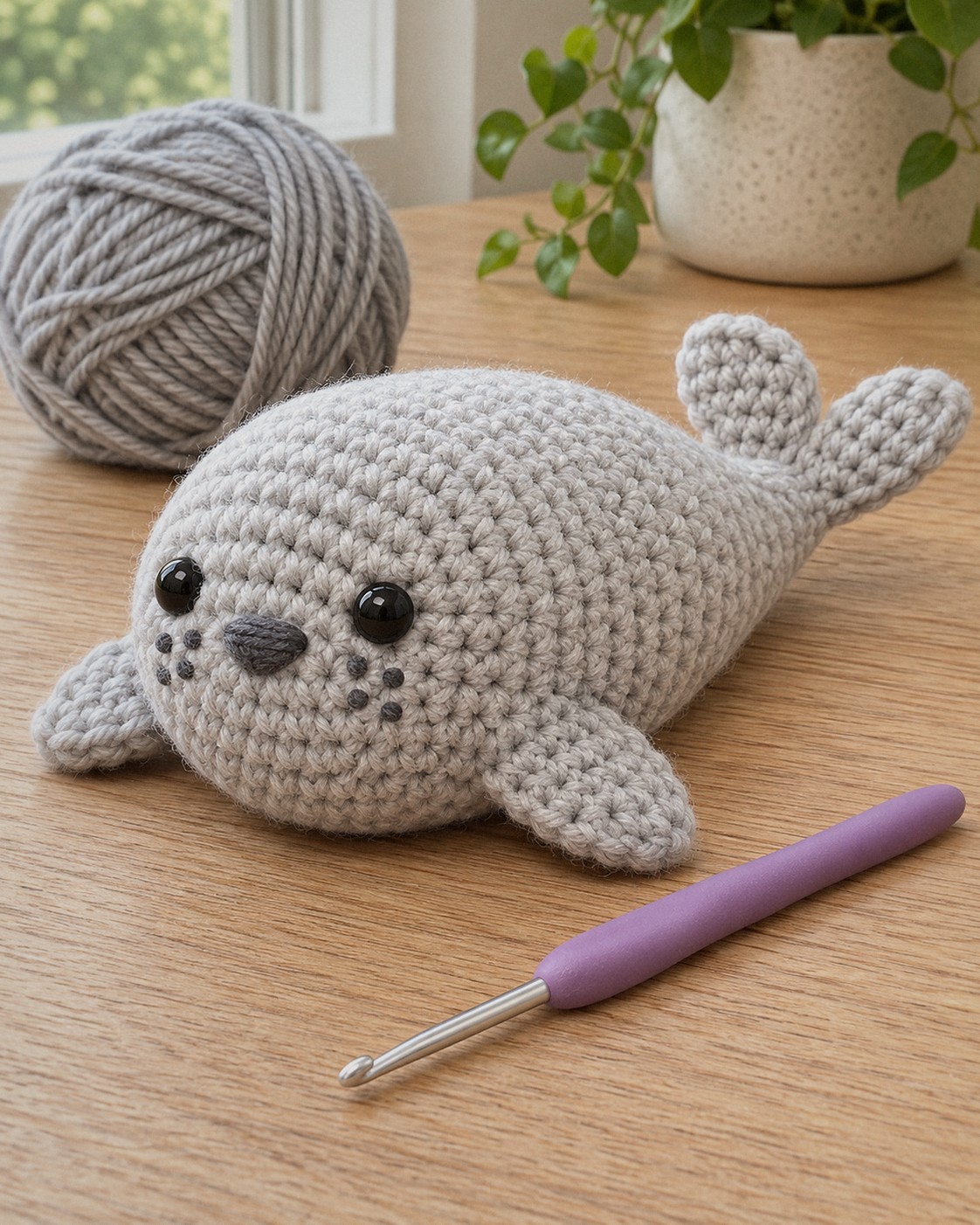
Practice pattern: chubby worsted seal
A quick seal that shows how worsted works: about 4.7 in / 12 cm long, with a 3.5 mm (US E/4) hook and about 54 yd / 50 m of light gray worsted acrylic. You also need two 10 mm safety eyes, a little dark gray yarn for the face and some fiberfill.
Abbreviations (US terms)
- MR magic ring · sc single crochet · inc 2 sc in one stitch · dec invisible decrease · FO fasten off
- blo / flo back loop only / front loop only · ch chain · sl st slip stitch · hdc / dc half double / double crochet
Body
Color: start with A (light gray).
Start at the face end.
- Rnd 1: 6 sc in a magic ring. (6)
- Rnd 2: Inc ×6. (12)
- Rnd 3: (sc, inc) ×6. (18)
- Rnd 4: Sc, inc, (2 sc, inc) ×5, sc. (24)
- Rnd 5: (3 sc, inc) ×6. (30)
- Rnd 6: 2 sc, inc, (4 sc, inc) ×5, 2 sc. (36)
- Rnds 7–14: Sc around. (36)
- Rnd 15: (4 sc, dec) ×6. (30)
- Rnds 16–17: Sc around. (30)
- Rnd 18: 2 sc, dec, (3 sc, dec) ×5, sc. (24)
- Rnds 19–20: Sc around. (24)
- Rnd 21: (2 sc, dec) ×6. (18)
- Rnds 22–23: Sc around. (18)
- Rnd 24: Sc, dec, (sc, dec) ×5. (12)
- Rnd 25: Sc around. (12)
- Rnd 26: Dec ×6. (6)
Placement: Eyes: 10 mm safety eyes between R7 and R8, 7 sts apart (insert before R20).
Placement: Nose in B: a small satin-stitch triangle over R4-R5, point down, centered under the eyes.
Placement: Whisker dots in B: three tiny stitches on each side of the nose on R5.
Placement: Front flippers: at each side on R12-R13, angled back.
Placement: Tail flippers: flat against the closed end, side by side.
Finish: Stuff firmly after R25, FO and close; lay the seal on its tummy, the magic ring end is the face.
Front Flipper (make 2)
Color: start with A (light gray).
- Rnd 1: 6 sc in a magic ring. (6)
- Rnd 2: (sc, inc) ×3. (9)
- Rnds 3–5: Sc around. (9)
Finish: FO, flatten, sew on by the open edge.
Tail Flipper (make 2)
Color: start with A (light gray).
- Rnd 1: 6 sc in a magic ring. (6)
- Rnd 2: (sc, inc) ×3. (9)
- Rnd 3: (2 sc, inc) ×3. (12)
- Rnds 4–5: Sc around. (12)
Finish: FO, flatten, sew the two side by side onto the tail end in a V.
Assembly
- Sew the front flippers to the sides on rounds 12 and 13, angled back.
- Sew the tail flippers side by side over the closed tail end so they open in a V.
- Embroider the nose as a small satin-stitch triangle, point down, over rounds 4 and 5 and add three tiny whisker dots on each side.
FAQ
Can I use worsted for a pattern written for DK?
Yes, keep every round the same and use a 3.5 mm hook. Only the size, the yarn amount and the eye size change.
Is worsted good for beginners?
Yes. The stitches are big and easy to see, which makes it easier to count. Light colors are easier than dark ones.
Next steps: amigurumi for beginners and the worsted teddy bear pattern.