The best crochet hook for amigurumi is a small one: usually 0.5 to 1 mm smaller than the yarn label suggests. A smaller hook makes tighter stitches, the fabric gets dense, and the stuffing stays inside instead of peeking through. Beyond size, the shape of the hook head and the handle matter more than the brand.
Below is a hook size chart for every common amigurumi yarn, the difference between inline and tapered hooks, and a 15-minute test ball to find your own size.
In this post6 sections
Amigurumi hook size chart
| Yarn weight | Label hook | Amigurumi hook |
|---|---|---|
| Fingering / sock (1) | 2.25–3.25 mm | 1.75–2.25 mm |
| Sport (2) | 3.25–3.75 mm | 2.25–2.75 mm |
| DK / light worsted (3) | 3.75–4.5 mm | 2.5–3.0 mm |
| Worsted / aran (4) | 4.5–5.5 mm | 3.25–3.75 mm |
| Chunky (5) | 5.5–6.5 mm | 4.0–5.0 mm |
| Chenille / velvet (5–6) | 6–8 mm | 4.0–5.0 mm |
Start in the middle of the amigurumi range. If you can see stuffing between the stitches, go down 0.25 to 0.5 mm. If your hand hurts or the stitches are very hard to get into, go up.
Every pattern on this site uses DK cotton and a 2.5 mm (US B/1–C/2) hook. Our best yarn for amigurumi guide covers the yarn side.
Inline or tapered?
- Inline hooks have a head the same width as the shaft and a deep, straight-cut throat. They hold the loop firmly, which many people find helps keep stitches even and tight.
- Tapered hooks have a rounded head that is wider than the throat. They slide into tight stitches easily and are popular with people who hold the hook like a pencil.
Neither is better for amigurumi. If your stitches are uneven or you keep splitting the yarn, try the other type before you blame your tension.
Handles
Amigurumi means hundreds of very tight stitches, so a soft ergonomic handle is the one upgrade most people notice. If your hand or wrist aches after a round or two, a thicker handle helps more than any change in hook size.
Metal, wood or plastic?
- Aluminium: smooth and fast, the usual choice for cotton.
- Steel (below 2 mm): for thread and very fine yarn.
- Wood and bamboo: a bit of grip, nice with slippery yarn, but small sizes can snap.
- Plastic: fine for chunky and chenille yarn; small plastic hooks bend.
Find your size: the hook test ball
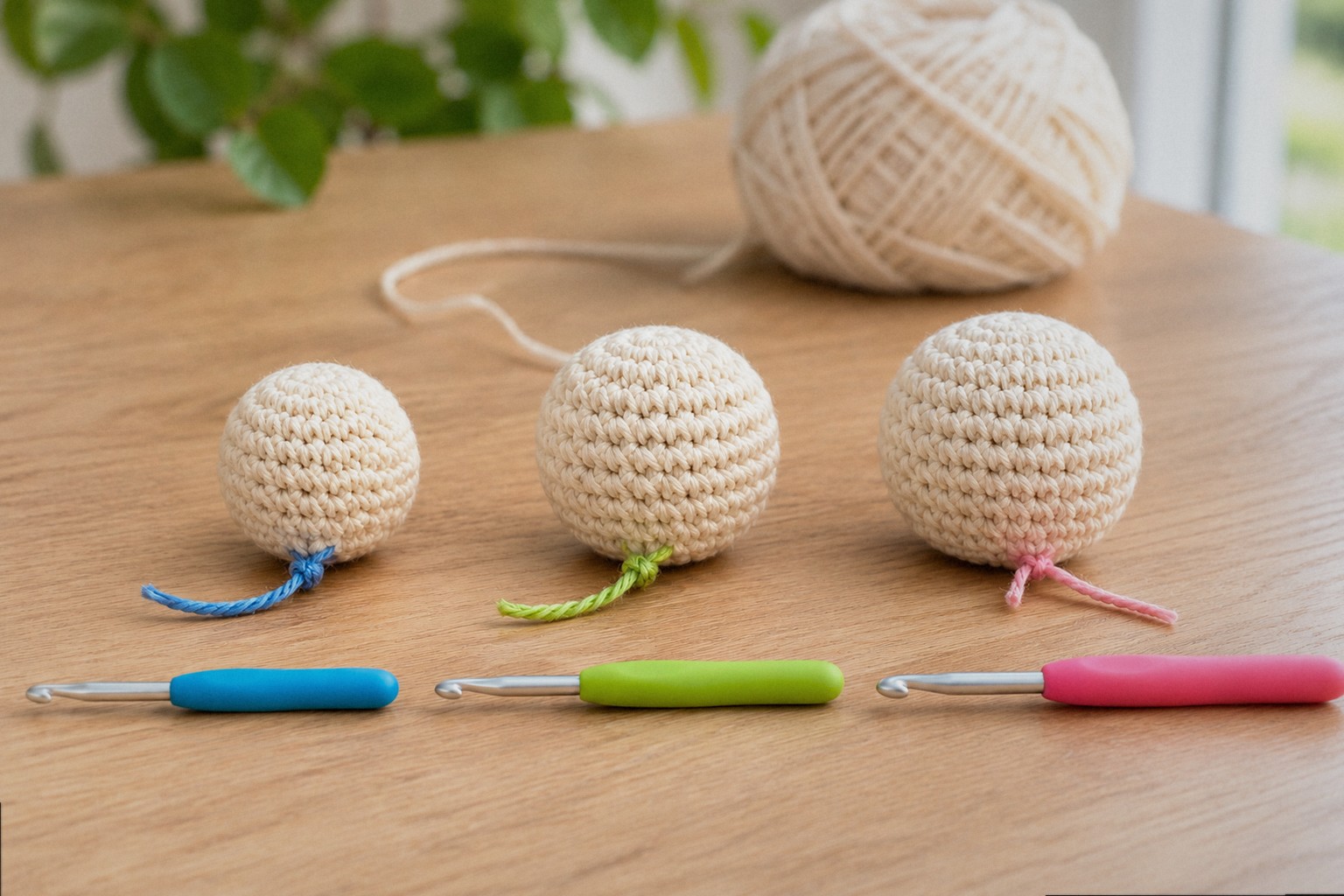
Crochet this small ball with each hook you own, using the same yarn. Tie a short tail of a different color to each one so you know which hook made it. Then compare: the right hook gives the smallest size where you still enjoy crocheting and no stuffing shows.
In DK cotton the ball comes out about 0.83 in / 2.1 cm with a 2.0 mm hook, 0.94 in / 2.4 cm with 2.5 mm and 1.02 in / 2.6 cm with 3.0 mm. Your numbers will be a little different, and that is the point.
- Yarn: about 8 yd / 7 m of DK cotton per ball
- Abbreviations: MR magic ring, sc single crochet, inc 2 sc in one stitch, dec invisible decrease, FO fasten off
Test Ball
Color: start with A (cream).
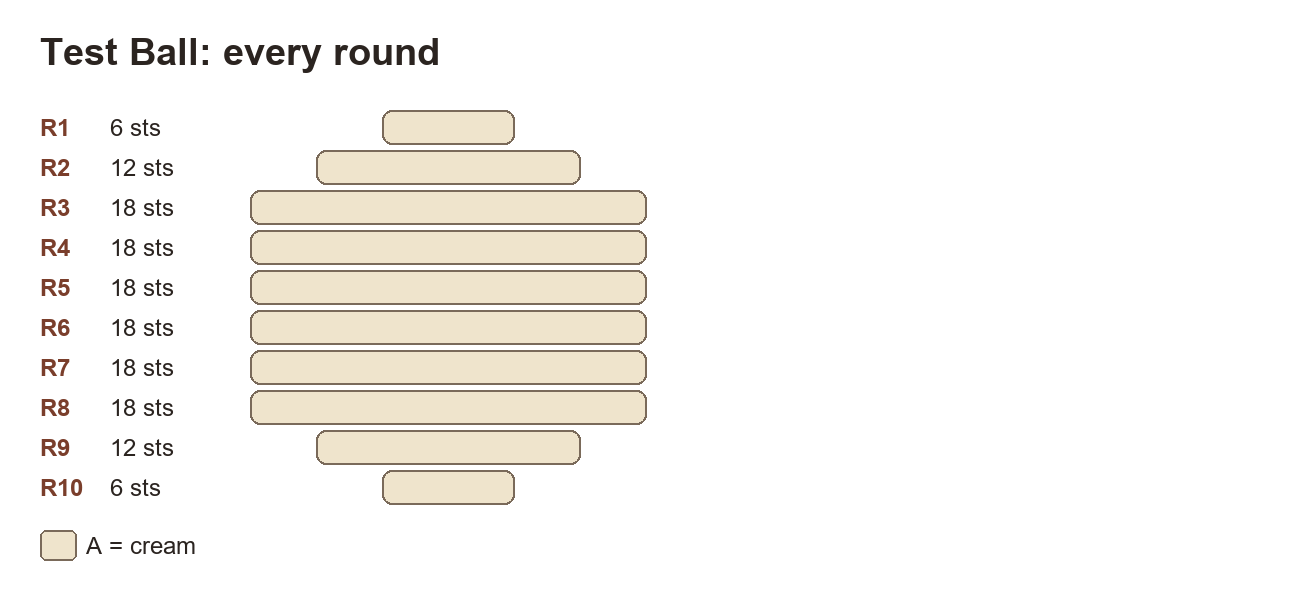
- Rnd 1: 6 sc in a magic ring. (6)
- Rnd 2: Inc ×6. (12)
- Rnd 3: (sc, inc) ×6. (18)
- Rnds 4–8: Sc around. (18)
- Rnd 9: (sc, dec) ×6. (12)
- Rnd 10: Dec ×6. (6)
Finish: Stuff after R9, FO and close; tie a short tail of a contrast yarn to mark which hook you used.
FAQ
What size hook for amigurumi with worsted yarn?
3.25 to 3.75 mm. Most people land on 3.5 mm (US E/4).
Can I use a bigger hook and just crochet tighter?
You can, but holding the yarn very tight all the time tires your hand quickly. Going down a hook size gets the same fabric with a relaxed grip.
Next step: what is amigurumi explains the rest of the basics, and how to stuff amigurumi covers the stuffing.